

Sacramento is the oldest incorporated city in California, dating back to 1850. The physical footprint you see today is a direct result of early struggles against the rivers and the rapid expansion that came with the railroad boom.
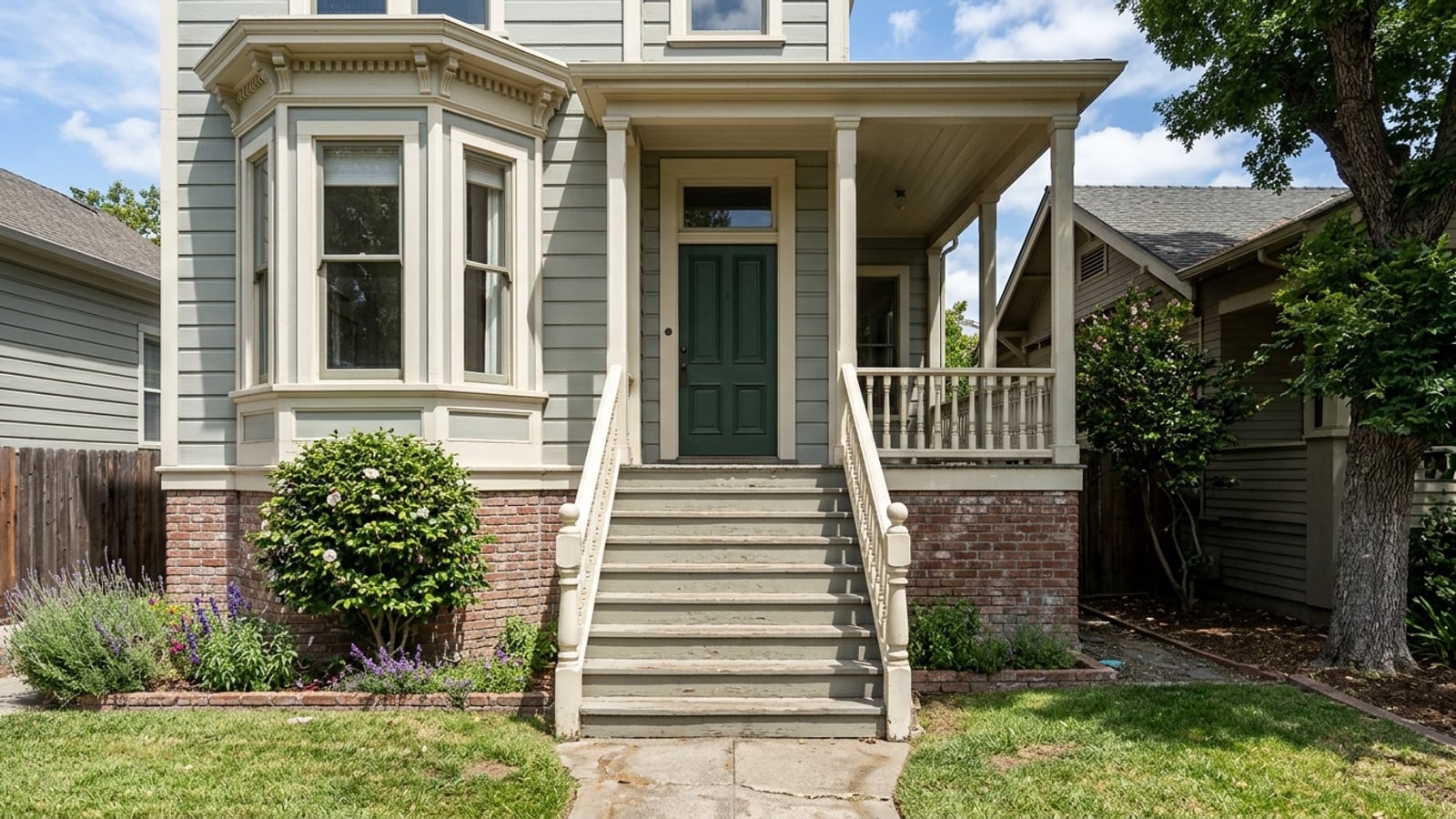
Every era of development left behind a distinct housing type, from raised-foundation Victorians to postwar tract homes. The age and style of the property you buy here will dictate what kind of maintenance to plan for and how much competition you'll face.
Key takeaway
Sacramento grew from John Sutter's 1839 fort into a gold rush supply port, raised its downtown streets to survive floods, and became California's capital and the western start of the first transcontinental railroad. That history left a city of detached houses, with single-family homes making up 1,653 of 1,835 sales in the 30 days ending September 30, 2026. If you want a home with that history, start with the pre-war central city and streetcar-era neighborhoods. If you want room to negotiate, the much smaller condo segment is the alternative.
Who this guide is for
You want to understand how Sacramento came to be and are weighing whether an older home in its historic core, a postwar house, or a newer condo fits what you want.
How Sacramento's history shaped its homes
Sacramento's history is the reason it remains an overwhelmingly detached-house city. The settlement began as a flood-prone river port that had to raise its own streets to survive, then spread outward on streetcar lines, then expanded again through massive postwar tract subdivisions. Each of those chapters produced a different kind of housing stock, and those differences still show up clearly in how long a property sits before it sells.
For the bigger picture, see Pros and Cons of Living in Sacramento.
In the 30 days ending September 30, 2026, single-family homes sold in a median 29 days. The condo segment, which saw just 103 sales in that same period, sat for a median 71 days. That gap matters when you're writing an offer.
The era of housing you choose largely decides whether you'll compete against multiple offers or have time to think. You can check the latest pricing trends across all property types to see how these segments currently compare.
Before the city: the Nisenan and Sutter's Fort
The land where Sutter's Fort State Historic Park now sits has been the homeland of the Nisenan people since time immemorial. The rivers provided a natural center for villages long before European arrival.
In 1839, Swiss immigrant John Sutter founded a settlement here on a Mexican land grant. From 1839 to 1849, this adobe fort operated as the economic center of the first permanent European colonial settlement in California's Central Valley. The site mattered because it offered access to two major rivers, vast farmland, and a natural landing for boats, and the fort itself sat on higher ground east of the riverfront.
That placement was an early signal of the high-ground versus floodplain divide that still dictates where and how homes are built across the region.
The gold rush and the founding of Sacramento
In January 1848, James W. Marshall discovered gold at Sutter's Mill in Coloma. The find drew massive numbers of gold-seekers to the region and changed the settlement's trajectory entirely.
By December 1848, John Sutter Jr. and Sam Brannan began laying out the City of Sacramento, placing the new grid two miles south of the original fort, right along the riverfront, to operate as a supply port for the mines. The city incorporated on February 27, 1850, making it the oldest incorporated city in California.
The lettered and numbered street grid laid out during this period still defines downtown and midtown. It's also why central-city lots are narrow and houses sit close to the sidewalk. The riverfront location that made the city rich was also its weakest point.
Floods, fires and the raised streets of Sacramento
A devastating fire swept through in 1852, burning 55 blocks of the business district and destroying roughly 70 percent of the building stock. Back-to-back floods followed in 1852 and 1853, and then the particularly destructive floods of the winter of 1861-1862 settled the question of what had to be done.
The city raised its street levels in the business district by approximately 10 to 12 feet. That engineering effort buried original first floors and left hollow spaces beneath the new sidewalks. Because of this history, much of the city still sits behind a vast network of levees.
Look up any property address on the FEMA flood map and ask your lender whether flood insurance is required. Check the property tax bill for specific flood-control or reclamation-district assessments, and read more about the region's atmospheric rivers to understand what the local climate delivers. Levees reduce flood risk. They don't remove it, and insurance costs will vary by zone.
The railroad and the capitol
On January 8, 1863, Governor Leland Stanford turned the first spade of earth in Sacramento to begin construction of the Central Pacific Railroad. After more than six years of labor, Central Pacific crews met the Union Pacific at Promontory, Utah, where Stanford drove the gold spike on May 10, 1869, completing the First Transcontinental Railroad and cementing the city as a major transit hub.
Construction of the present California State Capitol building began in 1860 and was completed in 1874. Rail shops and state government jobs created steady, long-term employment for residents, and that economic base drove demand for the Victorian and Italianate homes that still survive near the downtown and midtown cores. You can review how these architectural styles compare to newer builds across the region.
The rail yards that built the city also left a large industrial gap north of downtown that sat underutilized for over a century.
Streetcar suburbs and early growth
By the early 1900s, streetcar lines began pushing residential development outward from the original grid. These annexations let buyers move away from the dense central city into newer residential blocks, and this era produced the bungalows, Tudors, and craftsman designs that remain the dominant older housing type in Sacramento. Streets in these areas often feature mature tree canopies and detached garages at the end of long driveways. You can check current pricing in these older sections of town to see how they compare to the suburbs.
When buying a home from this era, order a sewer-lateral scope, an electrical check for older wiring, and a thorough foundation inspection. Ask the seller for the permit history on any additions, garage conversions, or major system replacements. Original-era character often comes with deferred systems and unpermitted work.
Postwar growth: bases, freeways and tract homes
The military and aerospace industries drove massive expansion in the mid-twentieth century. McClellan Air Force Base was built in 1935 as the Pacific Air Depot, bringing thousands of personnel to the region. Freeways and tract subdivisions followed, spreading the population outward into entirely new zip codes.
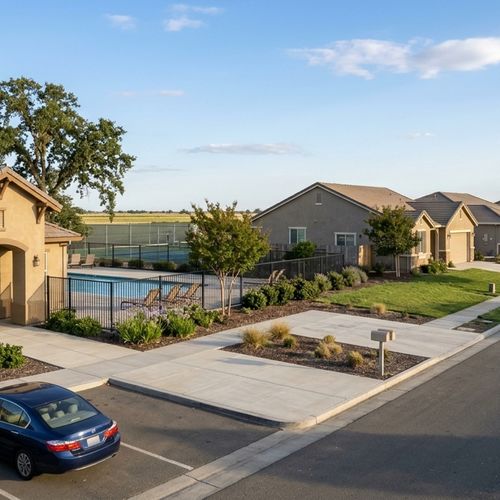
This is when Sacramento firmly established itself as a city of single-story detached houses on standard suburban lots, and that housing stock still dominates the local market, moving much faster than attached properties. You can see how today's freeway and transit lines connect these subdivisions back to the city center.
The oldest tract homes from this expansion are now 60 to 70 years old. Ask about the age of the roof, HVAC ducts, and supply plumbing before you get too far down the road on any of them.
Old Sacramento and historic preservation
The construction of Interstate 5 cut the original waterfront off from the rest of downtown. Preservation efforts responded by turning the oldest section of the city into a protected zone. The Old Sacramento Historic District was designated a National Historic Landmark District on January 12, 1965, and added to the National Register of Historic Places in October 1966. Visitors can still see the archaeology beneath the raised streets, a direct result of the 1860s flood response.
The city now has designated historic districts where exterior changes must go through a specific design review process. Under Section 17.604.300 of the City's Planning and Development Code, projects involving landmarks or contributing resources are subject to site plan and design review.
Before planning exterior changes, ask the City of Sacramento preservation office whether the address is in a historic district and what rules apply. You can find information on visiting the historic park and local museums when you tour the area. Preservation protects a street's character, but it can add considerable time and cost to window, siding, and addition projects.
Sacramento since the 1990s: base closures and infill
The region shifted again when the federal government closed Mather Air Force Base in 1993 and McClellan Air Force Base in 2001. The city pivoted toward urban infill and downtown revitalization.
Golden 1 Center broke ground on October 29, 2014, and opened on September 30, 2016, acting as a catalyst for the broader Downtown Commons and Sacramento Railyards redevelopment. The Railyards remains one of the nation's largest urban infill projects, with a renovated convention center reopening in 2021 and a planned Kaiser Permanente medical center scheduled to open in 2029.
This recent infill added more condos and townhouses to a city that historically had very few attached options. The attached segment is still small and currently softening, with the condo median sale price falling 4.2% year over year in the 30 days ending September 30, 2026. That softening means buyers looking at attached units have room to negotiate. You can browse what builders are currently adding to the downtown skyline.
Newer attached homes come with HOA dues and building-specific rules. Ask the HOA for current dues, the latest reserve study, and FHA approval status and monthly costs before you go under contract.
What Sacramento's history means for buying a home
Detached homes from every era represent the most competitive segment of the market. In the 30 days ending September 30, 2026, single-family homes led all segments with the highest share of sales above list price, compared to just 12% of condos. Plan to write a strong first offer on houses and expect room to negotiate on condos.
Condos recently ran $306 per square foot versus $339 for single-family homes, so a condo's lower price mostly buys less space, not a better deal per foot. Townhouses showed the lowest median price per square foot among all segments, based on 32 sales, so treat that figure with caution.
Do you want a house built before World War II? Read "Streetcar suburbs and early growth" and "Old Sacramento and historic preservation," then work through the old-house checks outlined in those sections. Is room to negotiate more important to you than the type of home? Condos and townhouses offer the most flexibility. Are you looking near the Sacramento or American River? Read "Floods, fires and the raised streets of Sacramento" for the flood checks before you shortlist properties.
If you want an older detached home from the streetcar era or earlier, start with the pre-war central city and streetcar-era neighborhoods. The single-family segment recorded 33.4% of sales above list price, so expect competition and budget for sewer-lateral, wiring, and foundation checks.
If you want room to negotiate on price and terms, start with condos. The condo median sold at 97.5% of list with 4.9 months of supply, giving you more listings to compare and more time to decide.
If you want the most space per dollar in an attached home, start with townhouses. They had the lowest median price per square foot, though verify that with recent comparable sales for the specific area.
You can review the longer-term outlook for where the market is heading next. These market figures describe broader trends, not a specific home's value. Older homes cost less to compete for only if you've priced in the inspections and updates flagged in the earlier sections.
How to research the history of a Sacramento home
You can piece together a property's past using local archives and public records. Start by finding the build year and permit history through city building records.
From there, look at historic fire-insurance maps, known as Sanborn maps, and old city directories at the Center for Sacramento History. Check whether the address sits in a designated historic district, as noted in the preservation section above, and look up the address on the FEMA flood map.
For illustration only: imagine you're researching a 1920s bungalow in the central city. You'd first pull the original permit from the city building department to confirm the exact year it was built. Next, you'd check the Sanborn maps at the history center to see if the footprint has changed since the 1920s. Finally, you'd cross-reference the address with the city's historic district map to see if exterior changes require special design review.
Always confirm hours and record-request procedures directly with the Center for Sacramento History and city building records before visiting. Records are often incomplete for early-1900s homes, so a permit gap is a question to ask the seller, not definitive proof of a problem.
Related guides: Commute Times From Sacramento, Cost of Living in Sacramento.
At a glance
- All homes: median sale price $597,628, up 2.2% year over year; 1,835 homes sold (30 days ending 2026-09-30)
- All homes: median 37 days on market, 99.4% sale-to-list, 29.6% sold above list, 3 months of supply, 5,372 homes for sale, $336 median price per sq ft (30 days ending 2026-09-30)
- Single family: median sale price $603,555, up 1.4% year over year; 1,653 sold; median 29 days on market (30 days ending 2026-09-30)
- Single family: 99.5% sale-to-list, 33.4% sold above list, 2.8 months of supply, 4,533 for sale, $339 median price per sq ft (30 days ending 2026-09-30)
- Condo: median sale price $340,054, down 4.2% year over year; 103 sold; median 71 days on market (30 days ending 2026-09-30)
- Condo: 97.5% sale-to-list, 12% sold above list, 4.9 months of supply, 517 for sale, $306 median price per sq ft (30 days ending 2026-09-30)
- Townhouse (based on 32 sales, so read with caution): median sale price $376,961, down 5.8% year over year; median 66 days on market; 97.6% sale-to-list; 14.7% sold above list; 3.9 months of supply; 110 for sale; $276 median price per sq ft (30 days ending 2026-09-30)
Sacramento history FAQs
What is Sacramento most known for?
Sacramento's official Latin motto is 'Urbs Indomita,' meaning 'Indomitable City.' The city is most known as California's capital, the gold rush supply port, and the western start of the first transcontinental railroad. It also carries nicknames including 'Sactown,' 'Sac,' 'City of Trees,' 'River City,' and 'Camellia City,' and has marketed itself as 'America's Farm-to-Fork Capital' since 2012.
How did Sacramento get its name?
The city took its name from the Sacramento River. In 1808, Spanish cavalryman Gabriel Moraga surveyed and named the Río del Santísimo Sacramento, meaning Most Holy Sacrament River, after the Blessed Sacrament.
What was Sacramento originally called?
Swiss immigrant John Sutter founded the first permanent European colonial settlement here in 1839 and named his Mexican land grant 'New Helvetia,' meaning New Switzerland. The riverfront town laid out in 1848 later took the river's name.
How did Sacramento become the state capital?
California's capital moved through Monterey, San Jose, Vallejo, and Benicia between 1774 and 1854. The legislature voted on February 24, 1854, to relocate the capital to Sacramento, and it became the permanent seat of government the next day.
What do people from Sacramento call themselves?
Residents of the city are commonly referred to by the demonym 'Sacramentan.' The city itself carries the informal nickname 'Sactown.'
What county is Sacramento, CA in?
Sacramento is located in Sacramento County and is its county seat. The county was incorporated on February 18, 1850, as one of California's original 27 counties formed at statehood.
What is the population of Sacramento, CA?
According to 2020 U.S. Census data, approximately 524,943 people lived in the city of Sacramento. The population grew massively during the gold rush, though reliable figures for 1850 are unavailable.
Sources
- Redfin: Data Center
- California State Parks: Sutter's Fort State Historic Park
- Wikipedia: Sacramento, California
- FOX40: How old are the cities in the Sacramento region?
- City of Sacramento: City-Wide Historic Context
- California Historical Landmarks: CHL 780
- California State Library: Previous California Capitals
- Wikipedia: McClellan Air Force Base
- Wikipedia: Old Sacramento State Historic Park
- American Legal Publishing: Sacramento City Code Chapter 17.604
- Wikipedia: Golden 1 Center
- Kiddle: Sacramento, California facts for kids
- Sacramento County: County History
Check out this article next