


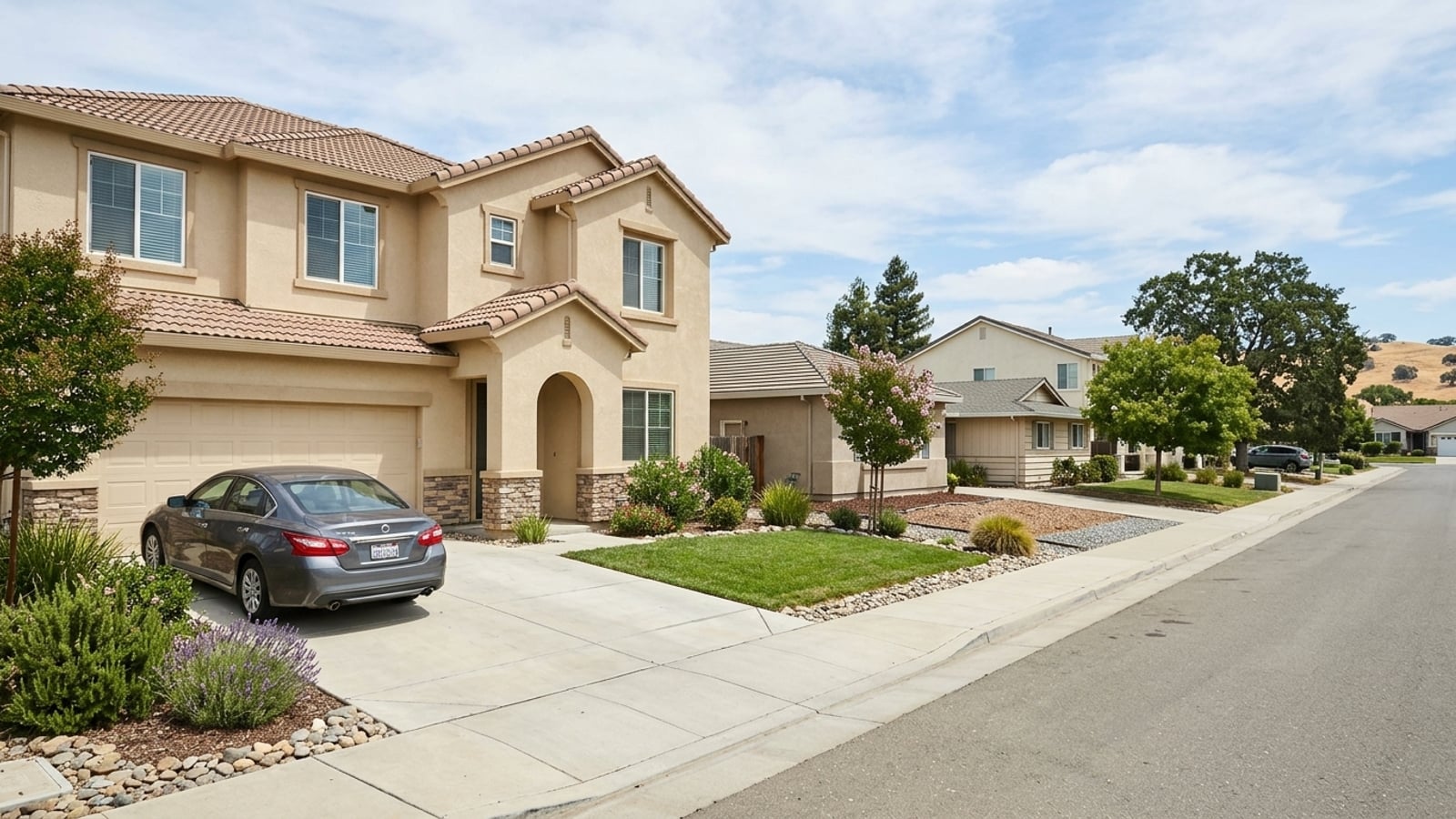
Single-family homes dominate the housing market in Lincoln, CA, making up 272 of the 279 properties sold in the 90 days ending September 30, 2026. In a market where detached houses account for all but seven sales, the monthly carrying costs of that property type are the local cost of living.
Beyond the purchase price, your budget hinges on what's attached to the parcel. Special taxes, association dues, and utility rates dictate your monthly cash flow just as much as the mortgage payment does.
Key Takeaway
Lincoln is expensive in one specific way: nearly every home that sells is a detached house, so you're budgeting for a house with no cheaper condo option to fall back on. The lowest monthly cost usually comes from a resale home with no HOA and no Mello-Roos line on its tax bill. If you want a newer subdivision, price in those special taxes and dues before you set your range, or compare renting first.
Who This Guide Is For
You're weighing a move to Lincoln and need to know what a home here will cost each month before you commit to a price range.
Is It Expensive to Live in Lincoln, CA?
In Lincoln, the cost of living is the cost of a detached house. Single-family homes made up 272 of 279 sales in the 90 days ending September 30, 2026, at a $624,751 median. There's practically no condo step-down in this market, so buyers need to prepare for detached-home pricing right from the start.
At a median of $341 per square foot for a single-family house, every extra 100 square feet adds about $34,000 to the purchase price. That baseline leaves little room to haggle, which means the monthly cost you can control comes from what's attached to the parcel. Mello-Roos special taxes, homeowner association dues, insurance premiums, and summer power bills differ from house to house.
Lincoln Home Prices at a Glance
The following figures reflect the 90 days ending September 30, 2026. Condo and townhome sales were too few to report separately during this window, so buyers should review the single-family metrics for an accurate picture of the active market.
These baseline numbers help set expectations before your first offer. You can check the local housing market forecast to see how these trends are shifting as inventory changes.
- Median sale price, all homes: $620,704 (90 days ending 2026-09-30)
- Median sale price, single-family: $624,751 (90 days ending 2026-09-30)
- Year-over-year change in median price: +3.5% all homes, +4.1% single-family (90 days ending 2026-09-30)
- Homes sold: 279 all homes, of which 272 were single-family (90 days ending 2026-09-30); condo and townhome types had fewer than 10 sales, so no separate median is reported
- Median price per square foot: $338 all homes, $341 single-family (90 days ending 2026-09-30)
- Median days on market: 37 all homes, 36 single-family (90 days ending 2026-09-30)
- Sale-to-list ratio: 99.2% for all homes and single-family (90 days ending 2026-09-30)
- Share sold above list: 19.6% all homes, 20.1% single-family (90 days ending 2026-09-30)
- Months of supply: 2.9 for all homes and single-family (90 days ending 2026-09-30)
- Inventory: 266 all homes, 261 single-family (90 days ending 2026-09-30)
What a Lincoln Home Costs Each Month
To see how these costs stack up, consider a worked example at the single-family median. This illustration assumes a 20% down payment of about $124,950, leaving a loan balance of roughly $499,800.
Every property carries a unique combination of taxes, dues, and insurance premiums. Local buyer closing costs show the one-time cash needed to close; the breakdown below covers the recurring monthly obligations.
Mortgage Payment
The payment on a $499,800 loan balance depends entirely on the rate you secure. For illustration only: the 30-year fixed-rate mortgage averaged 7.24% for the week of October 29, 2026, which would produce a principal and interest payment of roughly $3,400 a month.
You can compare current mortgage rates to see where daily averages sit. Rates move weekly, so the same house can cost noticeably more per month a few weeks later. Lock timing matters as much as the purchase price.
Property Tax and Mello-Roos
Under California's Proposition 13, your base property tax is 1% of the purchase price, which equals about $6,250 a year on our median example. Placer County applies additional voter-approved debt-service rates on top of this statutorily fixed base rate, with the City of Lincoln taking a specific share of the countywide allocation. You can review local property tax rules to understand these layers.
Many newer Lincoln subdivisions also sit in Community Facilities Districts (CFDs) that add a separate Mello-Roos special tax line to the bill. CFD No. 2005-1 (the Sorrento Project), for example, levied over $1 million in special tax liability across 493 taxed parcels for fiscal year 2024-25. CFD special taxes are set by each district's terms, can rise each year, and don't end until the district's term ends. Ask for the property's latest tax bill and the CFD maturity date before you write an offer.
HOA Dues
Many master-planned areas charge monthly homeowner association dues, and some feature separate sub-associations with their own fees. Older neighborhoods in town often have no association at all, which changes the fixed monthly overhead considerably.
Because dues come out of the same monthly budget as your mortgage, lenders count them in your debt-to-income ratios. You can compare local homeowner association fees to see how amenities affect the cost. Dues can rise, and special assessments for roads, pools, or reserves can land on top, so ask the HOA for current dues, the reserve study, and any pending assessments before you close.
Homeowners Insurance
Insurance is the carrying cost most out-of-area buyers underestimate when budgeting for a California property. Carriers have adjusted their exposure across the state, changing both the availability of coverage and the annual premiums for new policies.
A high premium can alter your monthly total enough to affect your loan qualification. Quotes vary by roof age, location, and carrier availability, so get at least two before you remove your contingencies.
Newer Subdivisions vs Older Neighborhoods
Your monthly housing bill changes based on the trade-off between newer homes with community amenities and older neighborhoods with fewer attached costs. Two Lincoln homes at the same price can carry different annual tax bills because one sits in a Mello-Roos district and the other doesn't.
Specific parts of town let you control which recurring bills land on your plate. Buyers looking for the lowest fixed monthly bill on a detached house often start with older resale homes, while those who can carry special taxes look toward recent development.
Twelve Bridges
If you want a newer home with community amenities and can carry special taxes, start with Twelve Bridges. This master-planned area features newer construction and integrated community spaces, which comes with a specific cost structure.
The newer-home convenience comes with recurring special taxes and dues that sit on top of the mortgage. This area is covered by Community Facilities Districts, meaning the monthly figure from the worked example above is a floor, not a total. Pull the tax bill for each specific address, because Mello-Roos coverage can differ within the area.
Sun City Lincoln Hills
If you want golf, clubhouse, and fitness access bundled into one association fee, Sun City Lincoln Hills is a primary option. This is an active adult community restricted to residents 55 years of age and older.
The association dues cover the shared amenities, replacing the need for separate gym or country club memberships. Association dues apply regardless of amenity use, and age-qualification rules limit who can live in the home, so confirm both with the association before you buy.
Brookview and Joiner Parkway
If you want the lowest fixed monthly bill on a detached house, start with Brookview and Joiner Parkway. These areas generally lack homeowner association dues, removing one recurring line item from your monthly budget.
Homes without HOA dues keep the fixed monthly bill lower, but no HOA doesn't automatically mean no special taxes. You still need to check each tax bill for CFD or assessment lines, and you need to budget for maintenance an HOA would otherwise handle, such as fences and landscaping.
Old Town and Downtown Lincoln
Older housing near the historic core offers a different cost picture, where attached fees tend to be lighter. Downtown Lincoln properties rarely carry Mello-Roos taxes or HOA dues, keeping the base monthly payment closer to just principal, interest, taxes, and insurance.
The house itself requires more scrutiny during the inspection period. Older systems like the roof, HVAC, plumbing, or electrical panel can turn a lower monthly bill into large one-time repair costs, and insurers price older roofs higher. Get inspection and insurance quotes at the same time.
Everyday Costs Beyond Your Home
Outside of the mortgage and property taxes, your budget needs to account for daily living expenses. Utility structures and commute distances change the math depending on where you settle in town.
Lincoln sits at the northern edge of the Sacramento metro area, so driving patterns and climate control dictate a large portion of your monthly spending.
Electricity and Water Bills
Lincoln's hot summers make cooling the swing cost in your budget. Under PG&E time-of-use pricing, the same kilowatt-hour costs more during the evening peak window than at midday, meaning a large house cooled through the late afternoon costs more to run. Solar panels can cut these bills, but a leased system adds its own monthly payment to your debt load.
City services also operate on a set schedule. Effective July 1, 2026, the City of Lincoln implemented a scheduled utility rate increase that bumped water and wastewater by 3% and solid waste by 5%, with the base solid-waste charge for one can previously sitting at $38.58 a month. Summer bills on a large, west-facing house can run far higher than the yearly average suggests, so ask the seller for 12 months of PG&E bills and confirm whether any solar is owned or leased.
Gas, Commuting, and Groceries
Lincoln's housing cost advantage over closer-in suburbs can shrink once daily driving is added. Most commuters use Highway 65 to reach Roseville or Sacramento, and AAA reported the Sacramento metro area average regular gas price at $6.13 per gallon as of October 19, 2026.
Big-box and grocery options in Lincoln and nearby Roseville keep food and healthcare costs near regional norms. You can review local commuting routes for transit and traffic patterns. A two-commuter household pays the fuel cost twice, so time your actual commute at rush hour before choosing a location on the far side of town.
How Much Room Is There to Negotiate?
At a sale-to-list ratio of 99.2%, the list price on a Lincoln home is close to the final price. Only 19.6% of homes sold above list, meaning about four in five properties closed at or below the seller's asking price.
A 37-day median time on market and 2.9 months of supply give buyers room to inspect the property and ask for repair credits or closing-cost credits rather than pushing for a large price cut. Single-family home prices rose 4.1% over the past year, so waiting hasn't made entry cheaper. If you want the most room to negotiate on price, start with listings that have been on the market longer than the 37-day median. Sellers of longer-listed homes are more likely to discuss terms.
Renting vs Buying in Lincoln
Because the market consists almost entirely of detached houses, a temporary rental lets a newcomer learn which subdivisions carry Mello-Roos and HOA costs before committing to a 30-year purchase. Renting provides a fixed monthly cost while you learn the different neighborhoods and commute times.
You can compare average rent to current mortgage payments, or review options for first-time buyers. If you're weighing nearby cities, comparing Lincoln with Roseville or Rocklin can help clarify where your monthly budget stretches furthest.
How to Work Out What You Can Afford in Lincoln
A realistic budget looks past the purchase price to the documents that dictate your monthly cash flow. Start by answering a few basic questions about your timeline and lifestyle:
- Do you need to own right away, or would renting for a year help you learn which subdivisions carry special taxes? Review the renting vs buying section and rent FAQ for more details.
- Can your budget carry Mello-Roos special taxes and HOA dues on top of the mortgage? Review the property tax and HOA details in the monthly cost section.
- Do you want a newer home with amenities, or the lowest fixed monthly bill? Review the newer subdivisions vs older neighborhoods comparison.
- Will you commute daily on Highway 65? Review the gas, commuting, and groceries section.
Once you identify a target property, ask for the most recent property tax bill to look for Community Facilities District or special assessment line items, and ask when each CFD special tax ends. Get at least two homeowners insurance quotes before removing contingencies, ask the seller for 12 months of utility bills, and confirm whether any solar system is owned or leased. Johnny Jennings at Made 4 More Realty can pull tax bills and HOA documents for homes on a shortlist to help you verify these costs.
Lincoln, CA, Cost of Living FAQs
What Is the Sales Tax in Lincoln, CA?
The combined sales and use tax rate for the City of Lincoln, CA, is 7.25% for 2026. This rate includes the 6% state rate, a 0.25% Placer County rate, and a 1% district tax. There is no additional city-specific tax applied on top of these.
What Income Do You Need to Afford a Home in Lincoln, CA?
Affordability for a median-priced home depends on current interest rates and lender debt-to-income limits. Fannie Mae guidelines cap the maximum total DTI ratio at 36% for manually underwritten loans, extendable to 45% with strong credit, while Desktop Underwriter casefiles max out at 50%. Confirm current rates and the debt-to-income limits that apply to you with a lender, and review the local job market to compare salaries.
Is Lincoln, California, Affluent?
Lincoln's single-family median sale price sits well below the statewide median. According to the California Association of REALTORS, the statewide median price of an existing single-family home was $899,720 in September 2026. This places Lincoln housing costs below the California average.
How Much Is Rent in Lincoln, CA?
Rent figures fluctuate based on the size and location of the detached houses that make up most of the market. You can review the average rent page for current figures. Official Census data often lags behind current asking rents.
Is Lincoln Cheaper than Roseville or Rocklin?
Lincoln's baseline home prices differ from its neighbors, but the final monthly cost depends on local tax districts. You can compare the details on the Lincoln vs Roseville and Lincoln vs Rocklin pages. Mello-Roos and HOA costs can change the monthly comparison even if the purchase prices look similar.
What Is the Crime Rate in Lincoln, California?
Per the FBI's 2024 Uniform Crime Report, the Lincoln Police Department reported 369 total offenses. This included 54 violent crimes and 315 property crimes. You can review local safety statistics for a full breakdown.
Is Lincoln, CA, a Good Place to Live?
For buyers, the local market consists almost entirely of detached houses, and a 37-day median time on market gives you time to inspect properties before committing. You can review the pros and cons of living here for a full lifestyle breakdown. The area offers a mix of historic neighborhoods and newer master-planned communities.
Where Does Lincoln, CA, Get Its Water?
The City of Lincoln's water system delivers treated water purchased primarily from the Placer County Water Agency (PCWA), with some supply coming from the Nevada Irrigation District and local city-owned groundwater wells. The city bills residents directly, and rates are based on the city's published utility schedule. PCWA's Zone 6 service area covers the majority of the city.
Sources
- Redfin: Data Center
- Freddie Mac: Mortgage Rates Decrease
- Placer County: FY 2026-27 Tax Rates
- City of Lincoln: CFD No. 2005-1 Admin Report
- Sun City Lincoln Hills: Community
- City of Lincoln: Utility Rate Information
- AAA: Sacramento Metro Gas Prices
- Avalara: Lincoln, CA Sales Tax
- Fannie Mae: Debt-to-Income Ratios
- California Association of REALTORS: September 2026 Sales
- FBI: Crime Data Explorer
- City of Lincoln: Water
Check out this article next