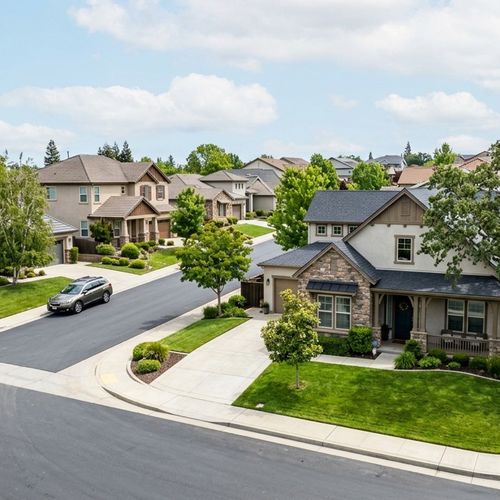


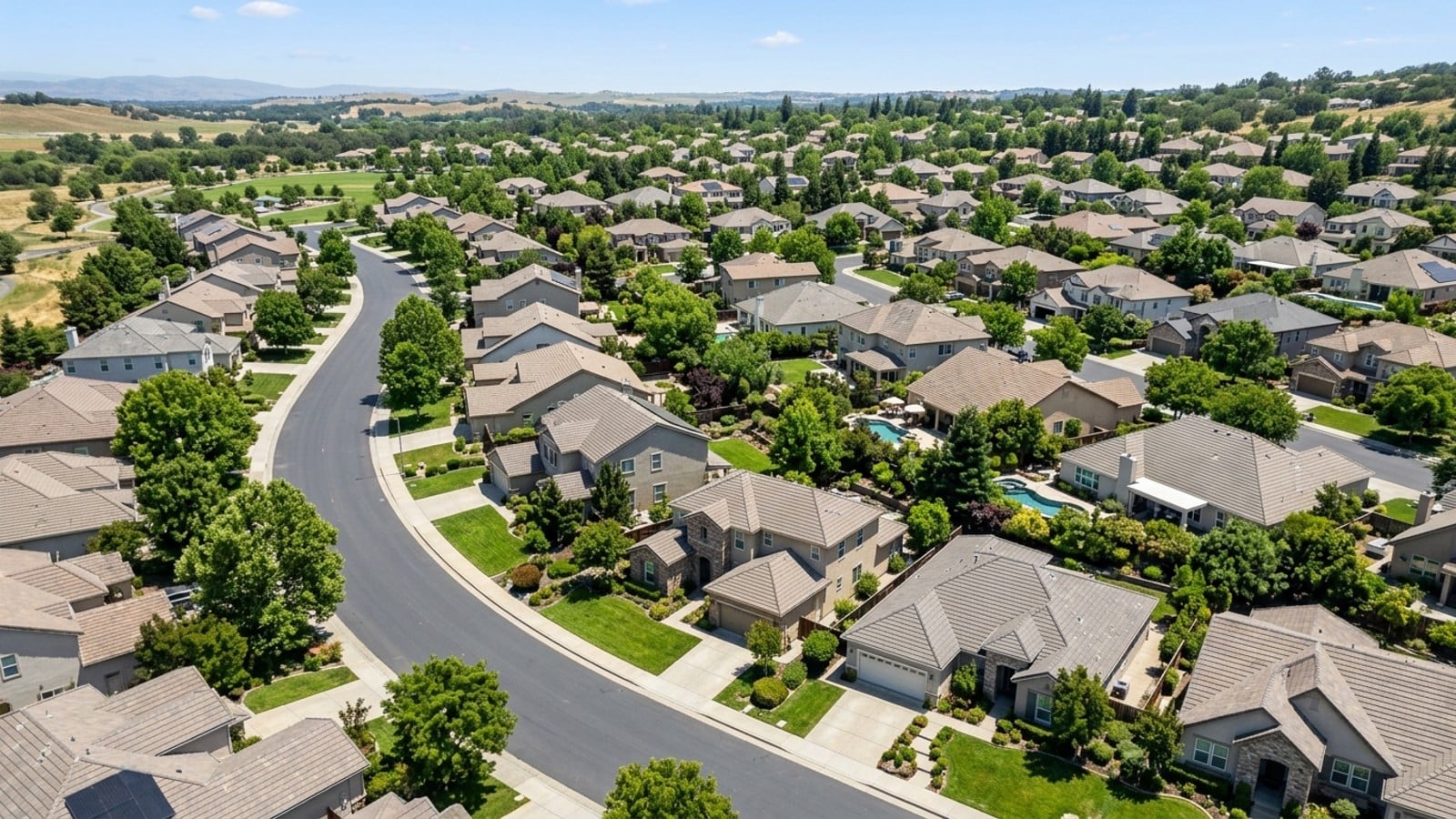
The median sale price across various types of homes in Lincoln, CA is currently around $617,000, and properties are moving fast - roughly 28 days on the market before going under contract.
When properties are selling at nearly 100% of list price, you can't afford to figure out your financing after you've found the house. With 231 available homes in the area, the buyers who've already done their rate homework are the ones writing competitive offers. Understanding where rates actually sit right now helps you budget for real monthly payments - not ballpark guesses.
Average Interest Rates for California Buyers
As of late August 2026, data from Zillow puts the average 30-year fixed mortgage rate in California at about 6.75%. Freddie Mac's national survey comes in slightly lower, at 6.65% for the same loan type.
Think of those figures as your floor - a starting point for what a monthly payment on a typical Lincoln house might look like. Your actual APR will move up or down from there based on your credit score, down payment, and debt-to-income ratio.
Fixed-Rate Loan Options
The 30-year fixed is what most buyers choose, and the reason is simple: spreading payments over 30 years keeps the monthly number manageable. If you'd rather own the house outright sooner and you can handle a higher payment, the 15-year fixed is worth a look.
The current 15-year fixed rate in California averages 6.125%, with national figures around 5.95%. You'll pay more each month, but the lower rate saves tens of thousands of dollars over the life of the loan. Whether that tradeoff makes sense depends on your cash flow.
Adjustable-Rate Mortgages (ARMs)
An ARM gives you a lower rate for an introductory period - typically five to seven years - before it starts adjusting annually based on broader market indexes. The appeal is a lower payment in the short term.
Buyers who plan to sell or refinance before that initial fixed phase ends sometimes use ARMs for exactly that reason. If there's any chance you'll still be in the loan when the adjustments kick in, make sure you've run the numbers on what higher payments would look like.
Financing Options Available in Placer County
At a $617,000 median, Lincoln sits comfortably below the 2026 conforming loan limit for Placer County, which is $832,750 for a single-family property. That matters because staying under that threshold keeps you in conventional loan territory - jumbo loans come with stricter underwriting and, often, tighter terms.
Depending on your situation and where the property is located, there are also government-backed options worth knowing about.
FHA Guidelines and Limits
FHA loans let you put down as little as 3.5% and are generally more flexible on credit scores. For 2026, the FHA loan limit in Placer County is $763,600 for a single-family home.
Multi-unit properties have higher limits. A duplex goes up to $977,550, a three-unit property to $1,181,650, and a four-unit building to $1,468,500.
USDA and VA Loan Availability
VA loans offer zero-down financing for eligible military veterans and active-duty service members. USDA Section 502 loans also go to zero down, but eligibility is tied directly to the property's address - there's no blanket county rule.
The USDA evaluates each address individually. Certain pockets just outside Lincoln's city center do qualify, while denser nearby areas - parts of Rocklin, for example - do not. If you're interested in a USDA loan, you need to check the specific address, not just the general area.
Steps to Lower Your Monthly Payment
Your rate isn't set by the market alone - lenders look at your credit score and debt-to-income ratio to decide what they'll actually offer you. Those two factors are where you have the most direct control.
Borrowers with stronger credit profiles represent less risk, and lenders price that accordingly. Pull your credit report, look for errors, and pay down revolving balances before you go in for pre-approval. It's one of the few things in this process you can actually influence.
Comparing Local Lenders
Don't take the first offer. Request loan estimates from several sources - national banks, credit unions, and local mortgage brokers - and then compare them.
Local brokers have access to wholesale lenders that consumers can't reach directly, and they tend to know the area-specific costs that can catch buyers off guard, like Mello-Roos taxes on new construction in parts of Lincoln. When you're comparing offers, look at the APR, not just the rate - the APR folds in origination fees and closing costs and gives you a truer read on what each loan actually costs.
Buying Down Your Rate
You can pay mortgage points at closing to lock in a permanently lower rate. One point costs 1% of the loan amount and typically reduces the rate by about 0.25%.
More cash out of pocket upfront, lower payment every month after that. Before you go this route, calculate your break-even point - how long it takes for the monthly savings to exceed what you paid at closing. If you're planning to stay in the house long enough, it can make sense. If not, it probably doesn't.
Frequently Asked Questions
How do mortgage rates in Lincoln compare to the rest of Placer County?
Rates in Lincoln generally align with the broader Placer County and California averages, which currently sit around 6.75% for a 30-year fixed loan. Your specific rate depends on your personal credit profile, down payment, and the lender you choose rather than the specific city boundaries within the county.
When is the best time to lock in my mortgage rate when buying a house in Lincoln?
It depends on your closing timeline and market volatility. With homes in Lincoln currently spending a median of 28 days on the market, buyers should consider locking their rate once their offer is accepted to protect against sudden market increases before closing.
Do mortgage rates differ if I'm buying in a 55+ community like Sun City Lincoln Hills?
No, standard mortgage rates do not change simply because a property is located in an age-restricted community. However, buyers should factor the community's homeowner association fees into their debt-to-income ratio, which impacts overall loan qualification.
What happens to my pre-approval amount if interest rates go up while I'm house hunting in Lincoln?
If rates increase, your maximum borrowing power decreases because the higher interest pushes up your projected monthly payment. Buyers shopping near the $832,750 conforming loan limit or the $763,600 FHA limit should ask their lender to recalculate their pre-approval if rates shift.
Can local Lincoln mortgage brokers get me a better rate than the big national banks?
It depends on your specific financial situation and the loan products available at the time. Local brokers can shop your application across multiple wholesale lenders, which sometimes yields lower rates or lower fees than a single national bank can offer.
Check out this article next