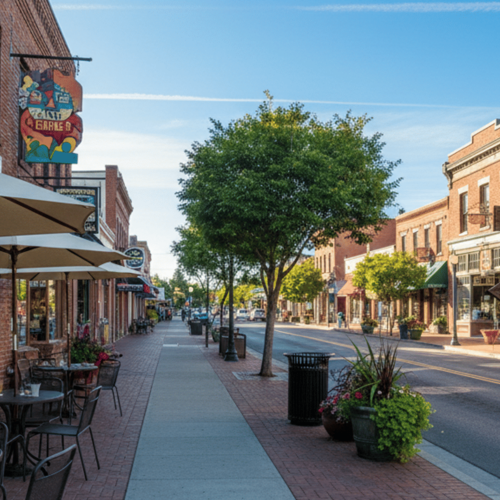

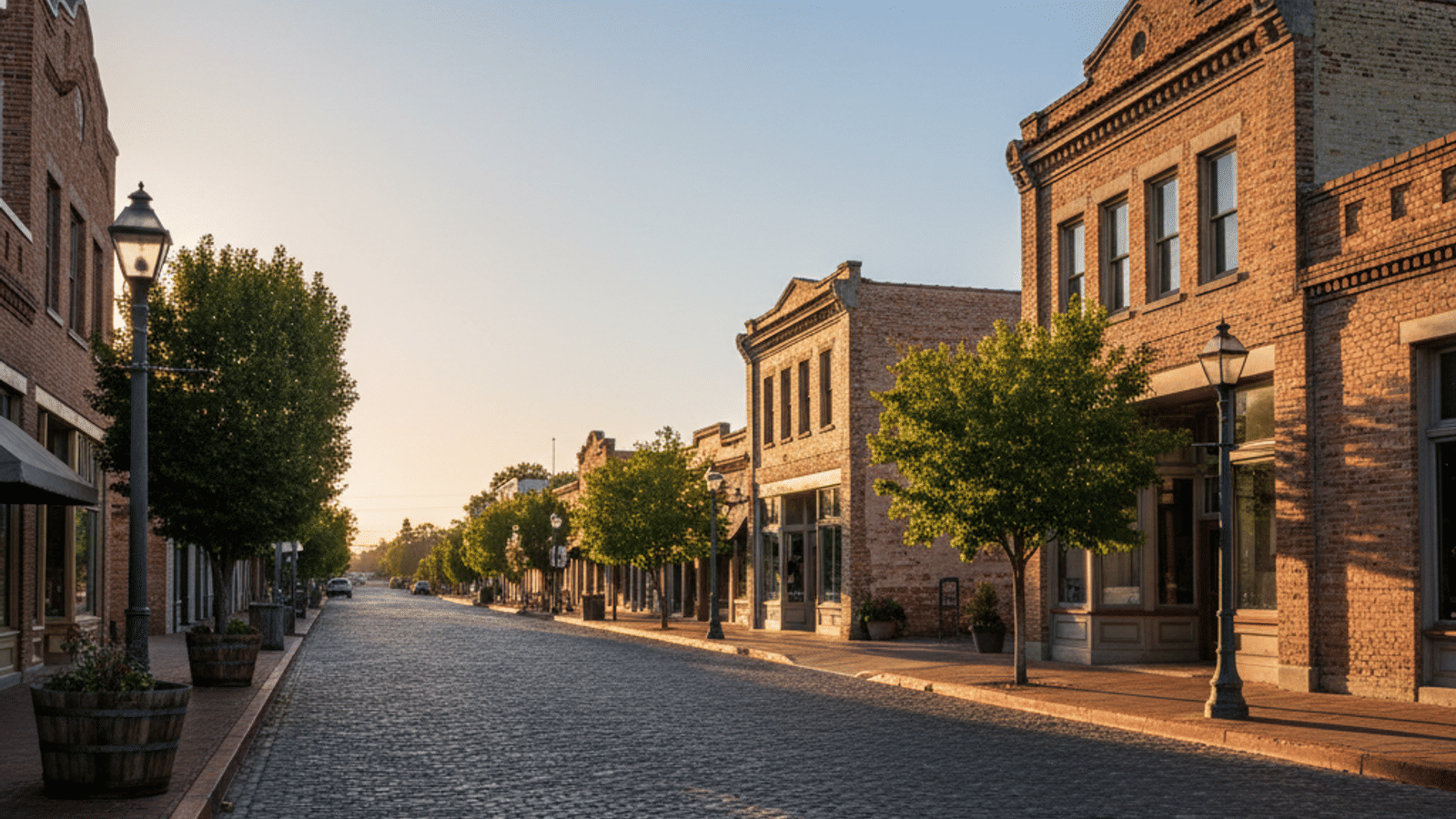
If you drive through Lincoln today, especially around the newer developments, it’s easy to see it as just another booming suburb in the Sacramento region. We’ve got the shopping centers, the beautiful parks, and the master-planned neighborhoods that draw people here. But if you take a walk down G Street, you start to notice something different. The brick buildings, the terra cotta details, and the sheer weight of history make it clear: this isn't just a commuter town.
Lincoln is distinct because it has serious roots. While it’s famous for being one of the fastest-growing cities in California over the last few decades, its story actually starts way back in the Gold Rush era. But unlike its neighbors in the foothills, Lincoln wasn’t built on gold. It was built on two things that are much less glamorous but arguably more enduring: the railroad and clay.
For anyone thinking about living in Lincoln CA, understanding this history adds a lot of depth to the experience. You aren't just buying a house; you're moving into a town that helped build the skyline of San Francisco.
1859: A Town Born on the Tracks
The story of Lincoln really kicks off in 1859. If you know your local history, you know that was a time when everyone was obsessed with connecting the West via rail. The town was laid out by none other than Theodore Judah, the brilliant engineer who dreamt up the Transcontinental Railroad.
Originally, this spot was the village of Ba-Mu-Ma, home to the Nisenan (Maidu) people who had lived on these lands for generations. When the rail lines came through, the area became the temporary terminus for the California Central Railroad. It was the end of the line, which meant it was the perfect place for a town to sprout up.
There is one thing we almost always have to clear up for newcomers: the name. Despite what many assume, the city was not named after President Abraham Lincoln. It was named in honor of Charles Lincoln Wilson, one of the directors of the California Central Railroad. He was the money and influence behind the project, so he got his name on the map. The town officially incorporated later in 1890, but its identity was forged right there on the tracks in '59.
The "Clay City": Gladding, McBean & Co.
Railroads get things moving, but industry keeps a town alive. For Lincoln, that industry was clay. In 1873, people were actually digging around looking for coal. They didn't find a massive coal haul, but they accidentally struck a vein of high-quality clay.
Two years later, in 1875, Charles Gladding, Peter McBean, and George Chambers founded Gladding, McBean & Co. This wasn't just a small pottery shop; it grew into a massive factory that became the economic engine of the entire town. For a long time, Lincoln was affectionately known as "Clay City."
The impact of this factory is hard to overstate.
- Economic Backbone: For decades, if you lived in Lincoln, you probably worked at the pottery or knew someone who did.
- Architectural Legacy: The clay pipes and architectural terra cotta produced here were shipped all over the world.
- Famous Facades: If you look at the classic buildings in San Francisco or the State Capitol in Sacramento, you are often looking at Lincoln clay.
The factory is still operating today, which is rare for 19th-century industries. It’s a living piece of history that still fires up the kilns.
Wheat, Ranching, and the Fruit Basket
While the pottery works were churning out terra cotta, the surrounding land was hard at work too. Because Lincoln sits in Western Placer County—more valley than mountain—it wasn't the place for gold mines. It was the place for farming.
In the early days, it was all about dry farming. Farmers relied on the rainfall to grow massive amounts of wheat and barley. As irrigation improved and the markets shifted in the late 19th and early 20th centuries, the landscape changed again. The grain fields gave way to fruit orchards and cattle ranching.
The railroad remained crucial here. You would see fruit packing sheds lining the tracks, ready to ship Placer County produce across the country. That rural, agricultural spirit is still very much alive on the outskirts of town. Even with all the new construction, you don't have to drive far to see cattle grazing or remnants of the old orchards. It’s a big part of the Western Placer lifestyle that residents still cherish.
Preserving History: Downtown Landmarks
When you are looking for things to do in Lincoln CA, a walking tour of downtown is a great way to spend an afternoon. The city has done a good job of keeping the old "bones" of the town intact, and you can see the Gladding McBean influence everywhere.
Beermann Plaza is the heart of the downtown action. It was dedicated in 1991 and named after the Beermann family, who were pioneer harness makers and civic leaders in the area. It’s the spot for community gatherings and gives you a sense of the town's tight-knit feel.
Then there is the Carnegie Library, built in 1909. This is a classic example of the revival architecture of that period. It was built with funds from Andrew Carnegie (like many libraries of that era) but also with significant support from Gladding McBean. Naturally, it showcases the local clay products beautifully.
The entire Historic Downtown District is lined with brick buildings and terra cotta facades that give the city a character you just don't find in newer master-planned communities. It feels authentic because it is.
The 21st Century Boom and Modern Identity
If the 1800s were about the railroad and the 1900s were about clay, the 2000s were about the boom.
The transformation of Lincoln in the early 21st century was staggering. We went from a quiet town of about 11,000 people to a population of over 40,000 in just a single decade. In fact, during that time, Lincoln was the fastest-growing city in the United States, growing by 282%.
A major catalyst for the region's economic shift was the resurgence of the United Auburn Indian Community. In 2003, they opened the Thunder Valley Casino Resort. It brought jobs, tourism, and a new economic dynamic to Western Placer County.
By 2006, Lincoln had won the All-America City Award, recognizing how the community managed to pull together during such intense growth. Today, as we sit in 2026, that "boom" era has settled into a steady rhythm. The city has successfully transitioned into a desirable bedroom community known for strong schools, expansive parks, and a high quality of life, all while keeping one foot firmly planted in its history.
Lincoln Today: Honoring the Past
Lincoln has managed a tricky balancing act. It embraced the modern demand for housing and amenities without bulldozing its heritage. When you consider moving to Lincoln CA, you are joining a community that respects where it came from.
From the visible history in the downtown architecture to the active archives at the local museum, the town honors the railroad workers, the clay artisans, and the ranchers who built it. It’s a place where you can enjoy a modern suburban lifestyle, but still feel the grit and craftsmanship of the 19th century beneath your feet.
Frequently Asked Questions
Who is Lincoln, CA named after?
Lincoln is named after Charles Lincoln Wilson, who was a director and major financier of the California Central Railroad. A common misconception is that the town was named after President Abraham Lincoln, but the name actually honors the man who brought the trains to the area.
What is Lincoln, CA famous for producing?
The city is famous for its clay products, specifically architectural terra cotta and sewer pipes produced by Gladding, McBean & Co. Since 1875, the local factory has supplied materials for famous buildings worldwide, earning the town the nickname "Clay City."
When was Lincoln, CA founded?
Lincoln was founded in 1859 when Theodore Judah laid out the town site along the proposed path of the railroad. It was officially incorporated as a city significantly later, in 1890.
What is the fastest growing city in California history?
Lincoln holds the record for being the fastest-growing city in the United States during the decade from 2000 to 2010. During that housing boom, the population exploded by roughly 282%, transforming it from a small rural town into a major suburban city.
Check out this article next