

Sacramento County's unemployment rate stood at 4.8% in June 2026, as the regional economy added 7,600 nonfarm jobs over the previous 12 months.
Key takeaway
Most Citrus Heights residents earn their paychecks elsewhere in the Sacramento region, so judge the city by the commute to your job and by what that pay buys here. If one regional salary has to cover a single-family house, expect competition: 42.2% of houses sold over asking in the last 90 days. If you want to buy on a single entry-level or hourly income, start with Citrus Heights condos, the one segment where buyers have room to negotiate.
Who this guide is for
You have, or are chasing, a job in the Sacramento region and are deciding whether Citrus Heights works as the place to buy or rent near it.
Citrus Heights job market overview
Citrus Heights has a modest in-town job base, so the useful question is where your regional job is and what that pay buys here.
Unemployment rate in Citrus Heights
City-level unemployment rates are modeled from county data and published with a lag. Read them as a general direction, not a count of local openings, and check the state's employment department for the latest sub-county rate.
How Citrus Heights compares with Sacramento County and California
In June 2026, Sacramento County's rate matched the Sacramento-Roseville-Folsom metro rate. City, county and state rates side by side show whether the area runs tighter or looser than California overall. They won't show anything field-specific, because a healthy county rate can hide a tight market in your profession.
Why most residents work outside the city
Census OnTheMap data from 2015 counted 36,279 employed residents but only 17,095 jobs filled in Citrus Heights. Just 6% of residents worked inside city limits. Living here almost always means a daily drive, so judge the commute as carefully as the job posting.
Jobs in Citrus Heights
The in-town economy runs on retail, food service, clinics, schools and city government, mostly hourly or part-time work close to home. That income usually points toward renting first or toward the condo market.
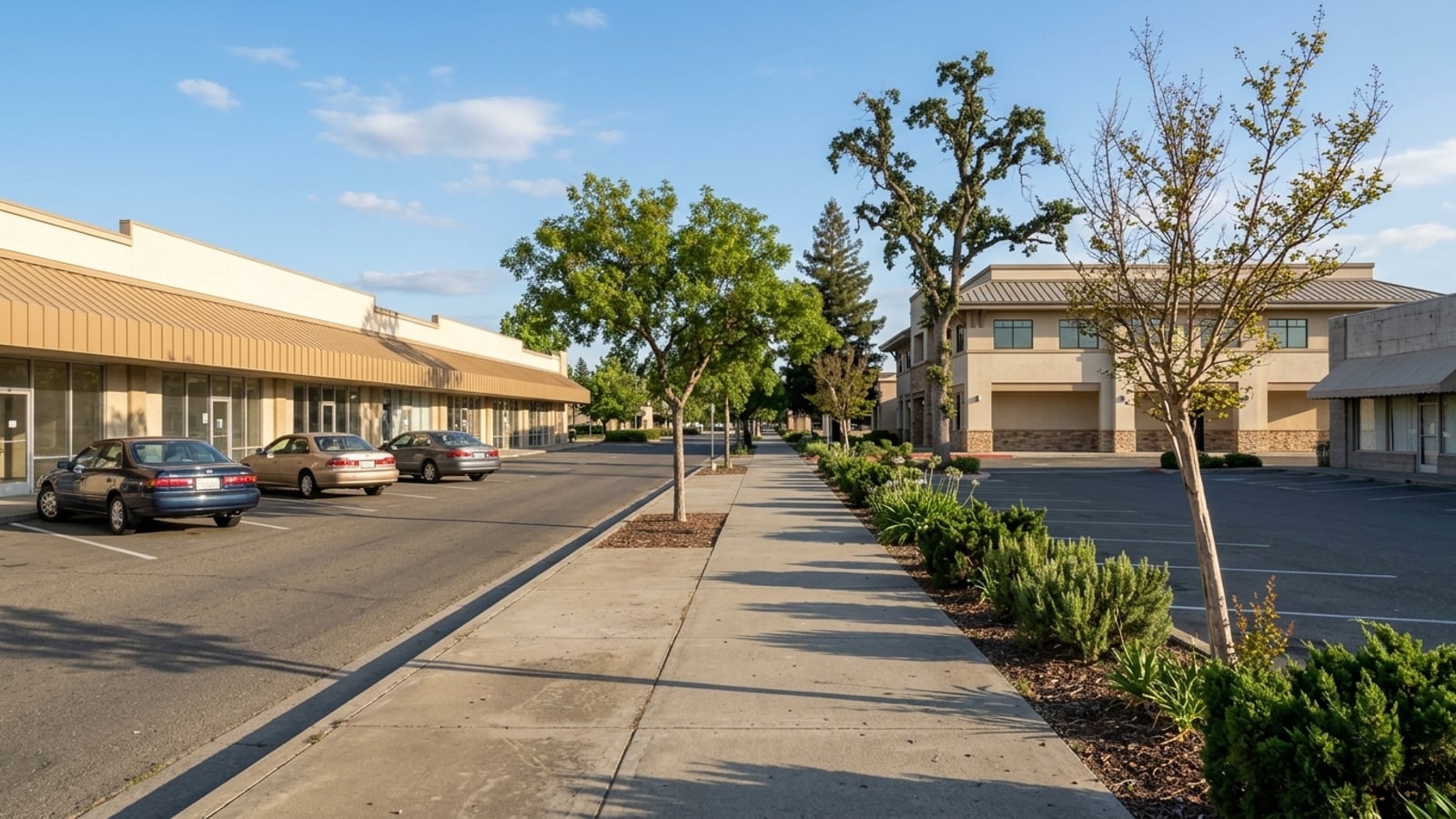
Retail around Sunrise Mall and Sunrise MarketPlace
This is the city's largest commercial district and its biggest source of hourly retail jobs. The city adopted the Sunrise Tomorrow Specific Plan in 2021 to redevelop the mall site into a mixed-use destination. In 2026, the city council authorized an agreement to explore a proposed sports center there. Redevelopment can shift or close tenants during construction, so a mall job may not be a long-term one.
Grocery and big-box stores
Safeway and Walmart regularly post part-time openings close to residential neighborhoods. Variable shift hours can be hard to count toward a mortgage, so ask a lender how they treat fluctuating hours before you shop for homes.
Restaurants and food service
Restaurants offer plentiful openings, flexible schedules and a quick start after a move. Tip income has to be documented to count toward a loan, so ask your lender how many months of records they require.
Health care clinics and senior care
Outpatient clinics, dental offices and senior-care facilities offer standard medical office hours and steady demand. The higher-paying hospital roles sit outside the city.
Behavior technician and in-home care jobs
Behavior-therapy roles appear repeatedly in local part-time listings and offer an accessible entry into health care. You often drive between client homes, so ask about mileage reimbursement before you accept.
San Juan Unified School District
The district employs teachers and classified staff at several Citrus Heights campuses. Many classified roles follow the school calendar, so summer income can drop. Check the role's work year on the district careers page.
City of Citrus Heights jobs
The city formed its own police department in 2006 and hires for administrative, public works and law enforcement roles. A small city government posts few openings at a time, so don't count on landing one quickly.
Gig, delivery and part-time work
Rideshare, delivery and seasonal work fill gaps between permanent jobs, and you can start immediately. Lenders usually want a track record before counting self-employment income, so ask yours how long a history they need.
Major employers within commuting distance
The jobs that typically pay for a single-family house sit outside city limits, and your commute direction determines which highways you use.
State of California in downtown Sacramento
The state is the region's dominant employer, with roles across hundreds of departments, long-term stability and strong benefits. Hiring runs through exams and eligibility lists that can take months, so check the exam timeline for your classification on CalCareers before you assume the job is close.
Sacramento County
County departments hire across administrative and social service fields, with a pension system similar to the state's. County offices are spread across the region, so confirm the work site before you judge the commute.
UC Davis Health
This academic medical center in Sacramento is one of the metro's highest-paying health employers, with clinical, administrative and research jobs. The main campus is a cross-town trip, so check your shift start time against traffic.
Sutter Health
Sutter's hospitals and clinics around the metro post steady clinical and support openings. Confirm which facility has the opening before you plan a home search around it.
Kaiser Permanente
Kaiser runs hospitals and medical offices across the Sacramento area, with union-represented health care roles. As with Sutter, the facility sets the commute, not the employer name.
Mercy San Juan Medical Center in Carmichael
This Dignity Health hospital just west of Citrus Heights puts health jobs very close to home. Hospital shifts include nights and weekends. The short distance is the benefit; the schedule is the cost.
Intel in Folsom
This tech campus east of the city offers high-paying engineering and corporate roles. The tech sector runs in cycles, so check recent layoff notices before you buy on this paycheck.
VSP Vision Care in Rancho Cordova
This headquarters south of the city offers private-sector corporate and tech jobs without a downtown commute. The route crosses the American River into US-50 traffic, so ask about hybrid days to cut the weekly drive.
L3Harris (Aerojet Rocketdyne) in Rancho Cordova
This aerospace and defense employer south of the river hires for engineering, manufacturing and technician jobs. Some roles require security clearance, which can delay a start date and the income a lender sees.
SMUD
Sacramento's public electric utility hires for trades, engineering and customer service roles with strong job security and public benefits. Openings draw many applicants, so watch SMUD's careers page and expect a long process.
Union Pacific in Roseville
Rail operations just north of Citrus Heights hire for high-paying mechanical and operating crafts. Rail work runs around the clock, so on-call schedules can matter more than the short drive.
Roseville retail and the Westfield Galleria
This large retail cluster north of the city offers thousands of sales and management jobs. Pay is similar to Citrus Heights retail, so the commute adds cost without a raise.
McClellan Park
This business park on the former McClellan Air Force Base, west of the city, houses industrial, logistics and office tenants. Tenants change over time, so check who currently leases there before targeting it for long-term work.
Jobs in high demand around Citrus Heights
The state's employment department projects growth in specific fields across the Sacramento-Roseville-Folsom metro. Your field shapes whether you can realistically rent, buy a condo or buy a house.
Nursing and health care support
The metro's projections for 2022 to 2032 show nurse practitioners growing 58.2% and physical therapist assistants 48.8%. Licensed roles need schooling and exams first, so the income arrives later.
Behavioral health and social services
Therapy aide and case management roles show consistent growth in local job listings. Entry wages are modest, and higher pay usually requires a credential or degree.
Skilled trades and construction
Electricians, HVAC technicians and plumbers remain in demand as the region builds housing. Solar photovoltaic installers are projected to grow 45.2% over the decade. Trades pay well without a college degree, but apprenticeships pay less at first and construction work rises and falls with building activity.
Public administration and office work
State and county analyst and clerical jobs provide thousands of openings a year, and some don't require a degree. Public hiring slows when budgets tighten, so check whether your target department is actively filling roles.
Teaching and school support staff
Credentialed and classified school roles remain open across local districts, with state benefits. Credential requirements add time before you can teach.
Warehousing, logistics and driving
Distribution jobs sit along the I-80 corridor and at McClellan Park. Taxi drivers are projected to see 100% growth over the decade. Shift and overtime pay vary week to week, which complicates loan qualifying.
Food service and retail
These fields offer the most openings and the quickest hires, so they are the fastest way to replace a lost paycheck. On one income, this pay points toward renting or a condo, not a house.
What a Sacramento-area paycheck buys in Citrus Heights
Prices and competition differ sharply between houses and condos, so judge a job offer against each market separately.
Buying a single-family home
Houses sell at 100.5% of list price, with just 2.1 months of supply. Offers at or above list are normal, so get full preapproval and a cushion above list price before you shop.
Buying a condo
Condos sell below list on average, at 97.6% of the asking price, with 3.9 months of supply, based on 20 condo sales in the last 90 days. A buyer can negotiate on price or credits, which makes this the realistic path for one entry-level income. Because the sample is small, ask for recent comparable sales in the specific complex. Monthly HOA fees reduce what you can borrow, so ask the HOA for current dues and reserve levels before you offer.
Income needed for a house vs. a condo
The single-family median price sits at $489,805, while the condo median is $202,979. For illustration only: at a 7.24% average 30-year fixed rate with 10% down, a house requires a much larger gross income than a condo to keep housing costs near a third of your pay. Taxes, insurance and HOA dues are left out of that calculation and raise the real income needed, so get a lender's preapproval for your own numbers.
Renting while you start a new job
Renting through a job's probation period can make sense before committing to a mortgage. Rent builds no equity, though, so set a date to decide on buying.
Down payment help for first-time buyers
State and local down payment programs can close the cash gap on an entry-level income, but income limits and approval steps add time, so check eligibility before you write offers.
Property taxes and closing costs
Your property tax bill and buyer closing costs require cash on hand when you finalize the purchase, well beyond the down payment itself.
Citrus Heights housing numbers at a glance
- Median sale price (90 days ending 2026-09-30): all homes $479,772; single family $489,805; condo $202,979 (based on 20 condo sales)
- Year-over-year price change (90 days ending 2026-09-30): all homes +2.4%; single family -1%; condo -41.9% (based on 20 condo sales; likely reflects which units sold, not a like-for-like value drop)
- Homes sold (90 days ending 2026-09-30): all homes 215; single family 176; condo 20
- Median days on market (90 days ending 2026-09-30): all homes 24; single family 22; condo 37 (based on 20 condo sales)
- Sale-to-list ratio (90 days ending 2026-09-30): all homes 100%; single family 100.5%; condo 97.6% (based on 20 condo sales)
- Share sold above list price (90 days ending 2026-09-30): all homes 37.7%; single family 42.2%; condo 25% (based on 20 condo sales)
- Months of supply (90 days ending 2026-09-30): all homes 2.5; single family 2.1; condo 3.9
- Homes for sale (inventory, 90 days ending 2026-09-30): all homes 177; single family 123; condo 26
- Median price per square foot (90 days ending 2026-09-30): all homes $318; single family $332; condo $220 (based on 20 condo sales)
Commuting and remote work from Citrus Heights
Office days change the trade-off. A five-day commute makes traffic a daily cost, while fewer office days shift the weight onto the home itself.
Commuting to downtown Sacramento
State and county offices sit downtown, reached by I-80 or Business 80. Rush-hour commute times differ sharply from off-peak, so test the drive at your actual start time.
Commuting to Roseville and Rocklin
Health, rail and retail jobs sit just north in Placer County. I-80 congestion can still make the short drive feel long.
Commuting to Folsom and Rancho Cordova
Tech, aerospace and corporate jobs sit east and south on a route that avoids the downtown freeway interchange. River crossings funnel traffic onto a few roads, so you have few alternatives if one backs up.
Public transit options
SacRT provides bus and light-rail service, but multiple transfers can make a transit commute much longer than driving, so check routes and transfer times to your work site before counting on it.
Working from home
Fully remote work removes the commute, leaving housing cost as the only test. Remote terms can change, so ask whether your remote status is written into your offer.
Return-to-office rules for state workers
California required state employees to return to the office at least four days a week, with the start date postponed to July 1, 2026. Ask your department which schedule applies to you before you buy a house.
How to find a job in Citrus Heights
Many public-sector roles don't appear on commercial job boards, so start with the official portals.
Search CalCareers for state jobs
CalCareers handles all state applications and includes filters for remote roles and classifications that don't require a degree. Most classifications require passing an exam or assessment before you can apply, so check the exam bulletin first.
Check Sacramento County and city job portals
The county and the City of Citrus Heights post public works, administrative and law enforcement openings on their own boards. Filing windows can be short, so set alerts.
Visit a Sacramento Works job center
The America's Job Center on Sylvan Road in Citrus Heights, operated in partnership with PRIDE Industries, offers free job-search help and training referrals.
Register with CalJOBS
The state's CalJOBS database aggregates thousands of local openings. It overlaps with private boards, so expect duplicate listings.
Train at a Los Rios community college
Certificates in nursing support, trades and IT from the regional community college district lead into the in-demand fields above at affordable rates. Programs take semesters to complete, and some have waitlists.
Filter job boards by commute distance
Use Indeed, LinkedIn and ZipRecruiter with a strict radius filter. Listings marked "Citrus Heights" may be anywhere in the region, so confirm the street address.
Check WARN notices before you accept an offer
The state's WARN report shows planned layoffs by employer and county, including recent notices in Placer and Sacramento counties. It covers only larger layoffs, so a clean report isn't a guarantee of job security, but check it before you commit.
Line up housing once the offer is firm
Ask your lender whether a signed offer letter counts as income before your start date. Changing jobs mid-escrow can upset loan approval, so tell your lender before you switch.
Does Citrus Heights fit your job and budget?
Where is your job?
If you work inside the city, start with the local retail and service employers. If you commute to downtown Sacramento, Roseville or Folsom, check the major employers and commute entries. A job in a different county can make a nearer city a better base. The pros and cons of living in Citrus Heights help confirm if the area matches your lifestyle.
How many days are you in the office?
Fewer office days widen your choice of homes. State workers should check the return-to-office rules first. Office-day policies can change after you buy.
Can one income carry the purchase?
One regional salary points to a house; one entry-level income points to a condo or renting. The income comparison for a house versus a condo shows which is the realistic target.
How secure is the offer?
Weigh the probation period, WARN history and contract terms before buying a home. Buying before probation ends adds real risk if the job falls through. If you want help finding a property that fits your new paycheck, reach out to start the search.
Citrus Heights job market FAQs
What county is Citrus Heights, CA in?
Sacramento County, so county government jobs and the county job portal apply to residents.
Is Citrus Heights part of the city of Sacramento?
No. It became its own incorporated city in 1997, inside Sacramento County. Many job listings still label it "Sacramento."
Is it hard to find a job in Citrus Heights?
It depends on your field. Regional payrolls grew over the year ending June 2026, and openings in health care and trades are plentiful, while other sectors may take a longer search.
What is a good salary in Citrus Heights?
It depends on whether you plan to buy. Compare your offer with the Bureau of Labor Statistics median annual wage for the Sacramento-Roseville-Folsom metro, then with the income the median house or condo requires.
Is Citrus Heights growing or declining?
The population is slightly declining. The California Department of Finance estimated 86,487 residents as of January 1, 2026, down 0.9% from the previous year.
How much is rent in Citrus Heights, CA?
The median gross rent was $1,827 in the Census 2020-2024 five-year estimates.
Is Citrus Heights a wealthy area?
It varies by neighborhood, but overall housing costs sit near the regional middle. The all-homes median sale price was $479,772, and the median price per square foot was $318, in the 90 days ending September 30, 2026.
Sources
- Redfin: Data Center
- State of California Employment Development Department: Sacramento-Roseville-Folsom MSA Nonfarm Employment
- City of Citrus Heights: Comprehensive Transit Plan
- City of Citrus Heights: Sunrise Tomorrow FAQ
- City of Citrus Heights: Culture and History
- State of California Employment Development Department: WARN Report
- State of California Employment Development Department: Occupational Projections
- Freddie Mac: Primary Mortgage Market Survey
- Sacramento Employment and Training Agency: Community Resource Guide
- California Department of Finance: E-1 Population Estimates
- U.S. Census Bureau: QuickFacts Citrus Heights city, California
Check out this article next