

Citrus Heights houses were built decades before the city itself officially existed. The area spent over a century as rural farmland and postwar subdivisions under Sacramento County governance before residents voted to incorporate in 1997.
That timeline directly shapes the housing inventory you'll see on the market today. The area's transition from agricultural plots to a regional shopping hub explains why detached ranch-style houses dominate the streets and what you should look for during a home inspection.
Key takeaway
Citrus Heights was farm country, once known as Sylvan, that filled with postwar tract homes and became its own city only in 1997, so most houses you'll tour are older than the city itself. Those detached houses are still the heart of the market and sell fast, so plan for an inspection that accounts for the home's era and a competitive offer. If you prefer more negotiating room, the town's small condo market is the alternative.
Who this guide is for
You're weighing a home in Citrus Heights and want to know how the town came to be and what its building eras mean for the houses you'll see.
The story behind Citrus Heights
Citrus Heights started as a rural settlement called Sylvan, was rebranded and subdivided to sell orchard lots, and eventually grew into a massive postwar suburb run by Sacramento County. The City of Citrus Heights incorporated on January 1, 1997, becoming the fifth city in the county after voters approved a ballot measure in November 1996. That long suburban build-out is why the local market is almost entirely older single-family houses.
Detached houses account for the vast majority of recent sales. Those houses sell at a competitive sale-to-list ratio, meaning buyers have little room to underbid. The town's thin condo market is where you'll find more room to negotiate, with recent sales closing below list price after a median 37 days on market.
Where the name came from
The area was originally called Sylvan, meaning wooded, after the many oak trees covering the terrain. In 1910, real estate developer Walt Trainor began buying large farms in northeast Sacramento County and subdividing them into smaller five- to ten-acre parcels. He named the subdivisions Citrus Heights because citrus fruit was a popular, profitable crop at the time, which helped increase the land's appeal to prospective buyers.
Despite the branding, citrus never became the area's lasting crop. A severe winter freeze in 1932 destroyed most of the working orchards, and fruit farming stopped entirely. Little citrus production ever developed in the area after that freeze.
You can read more about this early land-company marketing in publications like "Sylvan Recollection" and "Citrus Heights: An Illustrated History." The Citrus Heights Historical Society preserves these records and the deeper story of the town's agricultural start.
Three eras that built the town
The housing stock in Citrus Heights developed in three distinct waves. The original pioneer settlement established the main roads, the postwar boom brought the vast majority of residential neighborhoods, and the push for local control changed who managed building permits and how the area was governed. Each period left a mark on the properties available today.
The Sylvan farm era
A schoolhouse was built in 1862 on land donated by W.A. Thomas at the northwest corner of Sylvan Corners and named Sylvan School, giving the surrounding rural area the name Sylvan District. That same year, early settler Daniel Lewis donated land for the Sylvan Cemetery, which was formally established as a district in 1926 and remains the oldest district cemetery in Sacramento County. Urbanization picked up in 1912 with the construction of the state highway system and Highway 40, the predecessor to Interstate 80.
Auburn Boulevard was once part of the cross-country Lincoln Highway, and you can still see "Lincoln 40" signs marking the route today. The downside for buyers seeking vintage architecture is that very little farm-era building survives, making true historic homes rare. If a listing calls a house historic, look up the home's year built and recorded square footage on the Sacramento County assessor record before trusting the label.
Postwar subdivisions and Sunrise Mall
A substantial influx of newcomers after World War II strained the area's water supply as developers built new subdivisions of one-, two-, and five-acre lots. Postwar activity at McClellan Air Force Base, a Pacific Rim supply center, and the Southern Pacific Roseville railyards attracted new residents. By 1960, the population of rural Citrus Heights had reached 22,600.
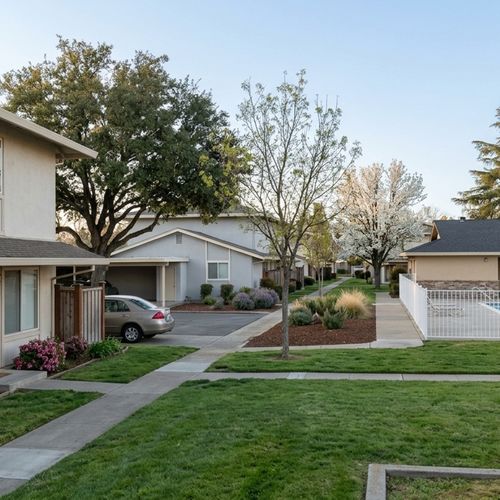
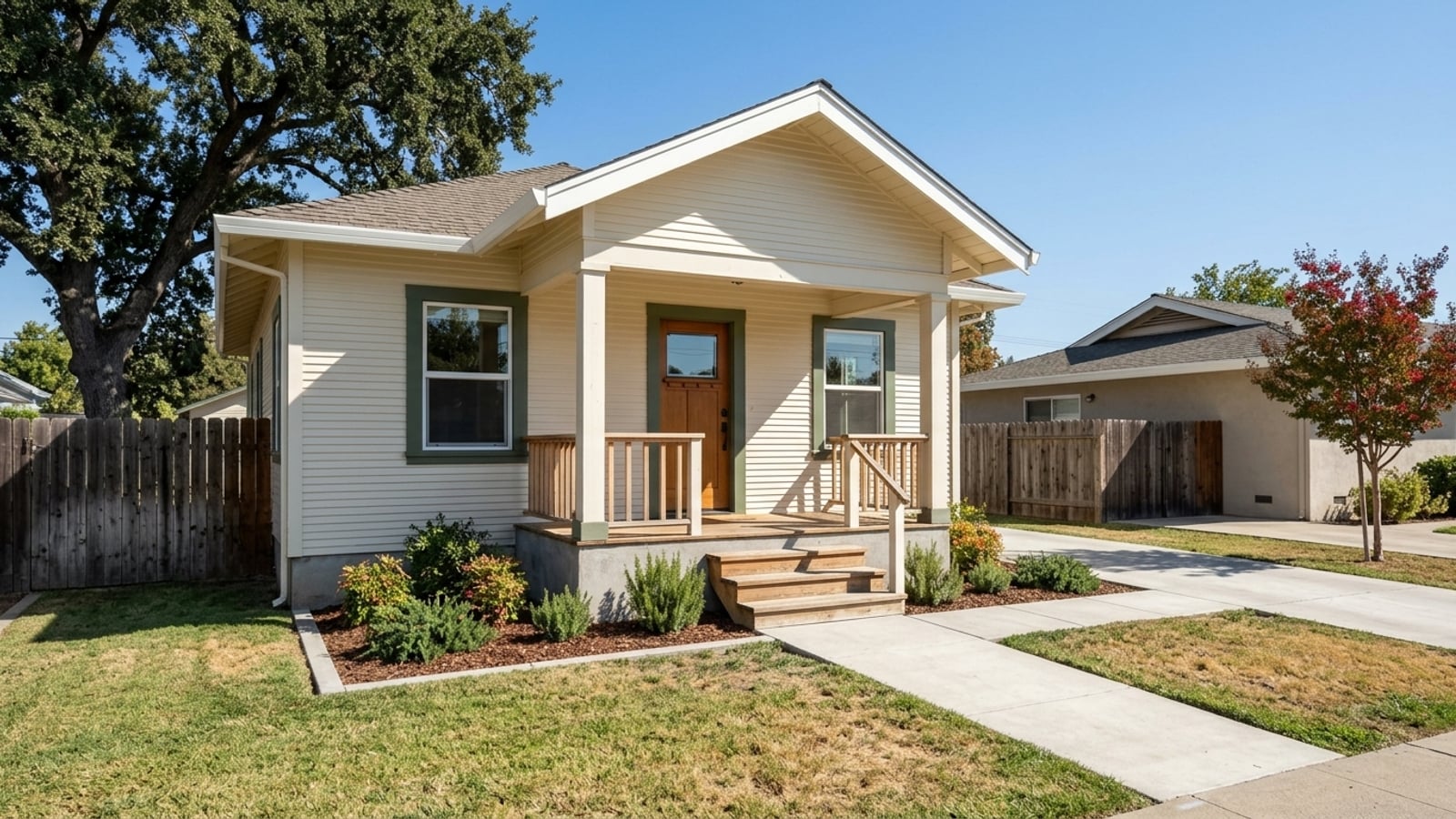
The area became a regional shopping destination when Sunrise Mall opened on April 19, 1972, serving as the largest shopping center in Sacramento County and the largest commercial complex in Greater Sacramento at the time. Ranch-style detached homes from this build-out make up much of the housing stock you'll tour today.
What you give up is modern construction. Homes from this era are now decades old, and whether a property's original roof, plumbing, electrical panel, and sewer line have been replaced varies house by house. Ask the seller which major systems have been updated and when, and ask your inspector to focus on what's typical for that construction decade.
Incorporation in 1997
Citrus Heights has been a city only since 1997, which makes the municipality younger than most of the houses in it. Voters approved the measure to incorporate on November 5, 1996, with the measure winning 62.5% of the votes after a 12-year battle with Sacramento County. The incorporation effort itself dated back to 1974, and the new city government officially took over on January 1, 1997.
The consequence for buyers is practical. Permits for work done before incorporation may be held by Sacramento County rather than the city, so checking whether an older addition, garage conversion, or ADU was permitted can mean searching two different government offices.
How the past shapes today's housing market
Postwar detached houses dominate what sells here: 176 of the 215 homes sold in the 90 days ending September 30, 2026 were single-family homes, and they are what buyers compete for most. Single-family homes sold at a 100.5% sale-to-list ratio in that period, so a well-priced house rarely leaves room to bid under asking. You can check the local housing market page to see how these price trends have shifted over the past year.
The condo market is much smaller and softer, closing at 97.6% of list and a 37-day median time on market, based on only 20 condo sales. That gives condo buyers more room to negotiate, but the small sample size means one or two sales can swing the numbers. For condos, ask the HOA for current dues, what they cover, recent or planned special assessments, and whether the complex is FHA-approved.
If you are targeting a mid-century house or a newer condo, review current mortgage rates and financing options before you start touring. If you need help pulling a home's permit history and year built before writing an offer, I can help you track down the records.
Places to see the town's past
The Citrus Heights Historical Society maintains local archives and presents quarterly history programs at Citrus Heights City Hall, located at 6360 Fountain Square Drive. You can reach the society by mail at P.O. Box 14, Citrus Heights, CA 95610, or call them at (916) 802-7241 to learn more about their publications.
The Historic Rusch Home within Rusch Park is one of the oldest homes in the area. According to the Sunrise Recreation and Park District, the house was ordered from the Sears Catalog in 1916, arrived by train at the Roseville station, and was designated a California Point of Historical Interest in 1991. The surrounding botanical garden still contains unusual trees, including a rare Jujube tree.
Along Auburn Boulevard, the "Lincoln 40" signs mark the road's history as part of the early cross-country highway system. You can find more details about these sites and other local attractions on the things to do page.
Deciding if the area fits your plans
The town's history and your daily needs both shape your choice of a home here. Consider these questions as you look at properties:
- Do you want a detached house with a yard, or the lowest entry price and more room to negotiate? Houses are the competitive side and condos the softer side.
- Are you comfortable with a home built decades ago, and the questions about updated systems that come with it?
- Does the home you like have additions or conversions? Know where its permits would be filed before you write an offer.
- Is the town's past part of the draw for you?
If you want a detached house with a yard, the kind of home the town was built on, start with single-family listings with a pre-approval ready and a plan to offer at or near asking. If you want a lower entry price and room to negotiate, start with condos after checking HOA dues and FHA status. You can weigh the overall fit by reviewing the pros and cons of living here and what to expect when moving to the area.
At a glance
- All homes: median sale price $479,772, up 2.4% year over year, 215 homes sold, 177 homes in inventory, 2.5 months of supply (90 days ending 2026-09-30)
- Single family: median sale price $489,805, down 1% year over year (90 days ending 2026-09-30)
- Single family: median 22 days on market, 100.5% sale-to-list, 42.2% sold above list (90 days ending 2026-09-30)
- Single family: 176 homes sold, 2.1 months of supply, median $332 per square foot (90 days ending 2026-09-30)
- Condo: median sale price $202,979, down 41.9% year over year. Based on only 20 condo sales, so the drop likely reflects which units sold rather than a true change in values (90 days ending 2026-09-30).
- Condo: median 37 days on market, 97.6% sale-to-list, 25% sold above list, 3.9 months of supply, median $220 per square foot. Based on 20 condo sales (90 days ending 2026-09-30).
Citrus Heights history FAQs
What county is Citrus Heights, CA in?
Citrus Heights is in Sacramento County. The area was governed directly by the county for decades until voters approved a measure to incorporate. It officially became the fifth city in Sacramento County on January 1, 1997.
What is the zip code for Citrus Heights, CA?
Citrus Heights uses ZIP codes 95610 and 95621 for standard delivery. The city also uses 95611 exclusively for PO Box addresses.
Is Citrus Heights its own city or part of Sacramento?
Citrus Heights is its own incorporated city, not a neighborhood within the City of Sacramento. While it sits in the broader Sacramento metro area, it has operated independently since 1997. The city even launched its own Police Department in June 2006, ending its contract with the Sacramento County Sheriff's Office.
What is Citrus Heights known for?
The city is known for Sunrise Mall, which opened in 1972 as the largest shopping center in Sacramento County. It's also recognized for the Historic Rusch Home in Rusch Park, a 1916 Sears Catalog house. Auburn Boulevard runs through the city as well, marking a stretch of the historic Lincoln Highway.
How big is Citrus Heights, CA?
The city covers a land area of 14.22 square miles. As of April 2020, the Census counted 87,583 residents. The population estimate for 2025 places the count at 86,348.
Where is Citrus Heights in California?
Citrus Heights is located in Northern California, just northeast of downtown Sacramento. The city is accessible via Interstate 80 and Auburn Boulevard. You can check local commute times to see how long the drive takes during morning traffic.
Sources
- City of Citrus Heights: Part 5 1994 - Present
- Citrus Heights Historical Society: Small Family Farm Era
- City of Citrus Heights: Part 3 1915 - 1969
- City of Citrus Heights: Part 2 1862 - 1914
- Wikipedia: Sunrise Mall (Citrus Heights, California)
- Citrus Heights Historical Society: Contact
- Sunrise Recreation and Park District: Fun Facts
- City of Citrus Heights: Community Profile
- U.S. Census Bureau: QuickFacts Citrus Heights city, California
- Redfin: Data Center
Check out this article next