



Thinking about buying a home? Download the Made 4 More app to explore accurate listings while you prepare for your homebuying journey. Find the right home with confidence! 🔑
Think your credit score is too low to buy a home? You might be surprised.
Many hopeful homebuyers assume they need a nearly perfect credit score to qualify for a mortgage. But that's not always true. In fact, credit scoring is changing, and those changes could open the door to homeownership for more buyers.
So before you count yourself out, here's what you need to know about today's mortgage credit score requirements, the new scoring models, and how to prepare for your home purchase.
1. You Might Be Overestimating the Credit Score You Need
Let's start with a common misconception: you need an exceptionally high credit score to buy a home.
According to Fannie Mae research, consumers have consistently overestimated the minimum credit scores needed to qualify for a mortgage. As recently as 2023, the average consumer estimate was 652.
But the traditional benchmark for many conventional loans backed by Fannie Mae and Freddie Mac has been 620.
And here's something important: 620 isn't a universal minimum for every mortgage.
Different loan programs, lenders, and individual financial circumstances can affect the credit score requirements. Some borrowers may qualify under different guidelines, while others may need a stronger credit profile.
The problem? If you assume your score isn't good enough, you might never take the first step toward finding out.
Don't let a number you guessed keep you from exploring your options.


2. Credit Scoring Is Changing, and That's Good News for Buyers
For years, mortgage lenders primarily relied on traditional FICO credit scoring models to evaluate borrowers.
Now, the mortgage industry is moving toward newer scoring options.
The Federal Housing Finance Agency (FHFA) has approved the use of additional credit scoring models, including:
- FICO 10T
- VantageScore 4.0
Why does this matter?
Because different scoring models can evaluate the same person's credit history differently. Your score may vary depending on which model is used.
For example, VantageScore says its model can evaluate approximately 33 million adults who may not have been scored under the traditional Classic FICO model.
That could be particularly meaningful for people with limited traditional credit histories.
The takeaway? The score you see on a credit-monitoring app isn't necessarily the same score your mortgage lender will use.
Credit scoring is evolving, but that doesn't mean every buyer will automatically qualify. Lenders still need to evaluate your complete financial picture.
3. Build Healthy Credit Habits Before Applying for a Mortgage
Here's the good news: even as credit scoring models change, the fundamentals of maintaining good credit remain important.
If buying a home is on your radar, start preparing now. Small financial habits can make a big difference over time.
Here are a few smart moves:
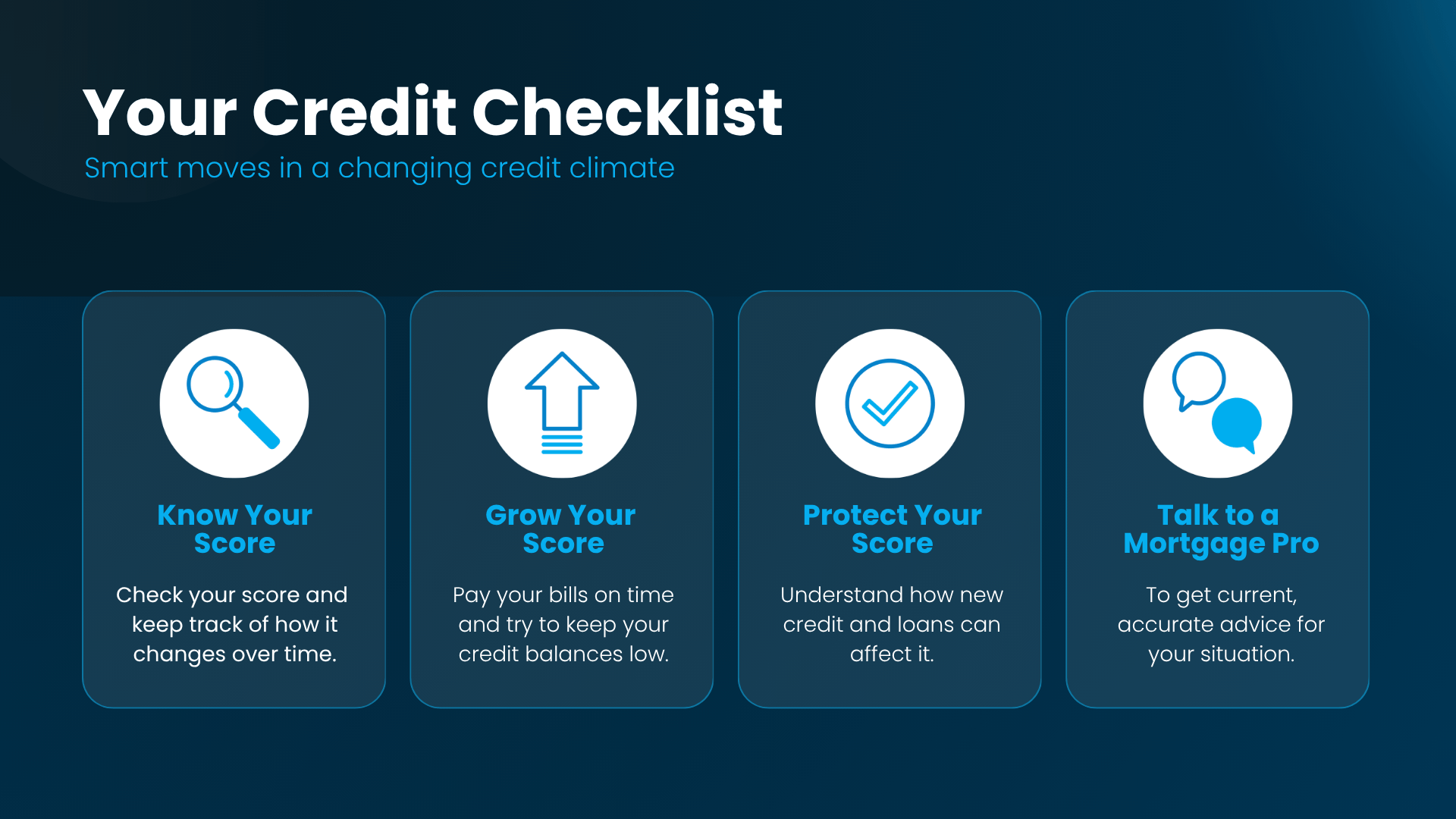
- Pay your bills on time. Payment history is an important part of your credit profile. Avoid missed or late payments whenever possible.
- Keep credit card balances low. Using too much of your available credit can negatively affect your credit profile.
- Avoid unnecessary new debt. Taking out new loans or opening multiple credit accounts before applying for a mortgage can complicate your financial picture.
- Check your credit reports. Review them for errors, outdated information, or accounts you don't recognize.
- Be consistent. Building a stronger credit profile takes time. Don't expect overnight changes.
And here's another important tip: avoid making major financial changes right before or during the mortgage application process without discussing them with your loan officer.
Buying a home is a big financial decision. Preparing early can help you approach it with more confidence.
Don't Guess. Talk to a Mortgage Professional.
Credit score requirements can be confusing, especially with new scoring models entering the mortgage process.
That's why you shouldn't base your homebuying plans on a random credit score chart, a mobile app, or advice from someone who bought a home years ago.
A qualified mortgage professional can review your financial situation, explain which loan programs may fit your needs, and help you understand what steps could improve your chances of qualifying.
You don't need to have everything figured out before starting the conversation.
Sometimes, the first step is simply asking the right questions.
The Bottom Line: Don't Let Your Credit Score Stop You Too Soon
You might be closer to homeownership than you think.
Credit scoring is changing, and what you assume you need to qualify for a mortgage may not tell the whole story. Whether you're a first-time buyer or planning your next move, understanding your credit and exploring your financing options can help you make a smarter decision.
Call or text Made 4 More Realty at 855-935-MORE. We'll help you take the next step toward finding a home that fits your goals.
Check out this article next