



Cash or mortgage, finding the right home starts with the right information! Download the Made 4 More app for accurate listings, no data selling, and more confidence in your home search. 🔑
Cash buyers are making headlines in real estate—but does that mean you need a pile of cash to compete for a home? Not even close.
According to the National Association of Realtors (NAR), 27% of homes sold in September were purchased entirely with cash. That’s more than 1 in 4 homes. With affordability still challenging for many buyers, that number is worth paying attention to.
But here’s what many people overlook: not every cash buyer is a wealthy investor. Some are everyday homeowners who have built enough equity to purchase their next property without a mortgage.
So, who’s buying homes with cash, where is that money coming from, and what does it mean for your next move? Let’s break it down.
Who’s Really Buying Homes with Cash?
When you hear “cash buyer,” you might picture an investor snapping up properties left and right. While investors are part of the picture, they’re only one piece of the puzzle.
Cash buyers generally fall into three groups:
- Homeowners moving up or downsizing. They sell their current home and use the proceeds to purchase their next one.
- Second-home buyers. They purchase vacation properties or additional homes without financing.
- Real estate investors. They use available funds to purchase properties for rental income, resale, or long-term investment.
That first group is especially interesting. Why? Because these buyers may have started exactly where you are today—with a mortgage, monthly payments, and a home that gradually builds wealth over time.
Home Equity Could Be Your Biggest Advantage
Here’s something homeowners shouldn’t ignore: the equity sitting inside their current home could open doors they never expected.
According to the Cotality figure provided in the source material, the average homeowner with a mortgage has approximately $310,000 in equity. Actual equity varies significantly depending on the property, mortgage balance, and local market.
Think of equity as a financial stepping stone. As you pay down your mortgage and your property’s value changes, you may build a resource that can help fund your next home.
For some homeowners, that equity could be enough to purchase another property outright. For others, it could provide a substantial down payment.
Either way, your current home could give you more options than you realize.
Why Buying with Cash Can Be Appealing
Purchasing a home without a mortgage can offer several advantages:
- No monthly mortgage payment. Buying outright eliminates the need for a traditional mortgage payment, although property taxes, insurance, maintenance, and other expenses remain.
- No mortgage-rate concerns. You won’t need to worry about borrowing at today’s interest rates if you don’t need a loan.
- A potentially faster closing. Without mortgage underwriting and lender approval, the transaction may move faster, provided the other requirements are met.
- A stronger offer in some situations. Sellers may appreciate the simplicity of a cash transaction, though price, contingencies, and other terms still matter.
And what if your equity doesn’t cover the entire purchase price? That’s okay. A larger down payment can reduce the amount you need to borrow and may lower your monthly mortgage payment.
The key is knowing what your numbers look like before making a move.
Where Are Cash Buyers Most Common?
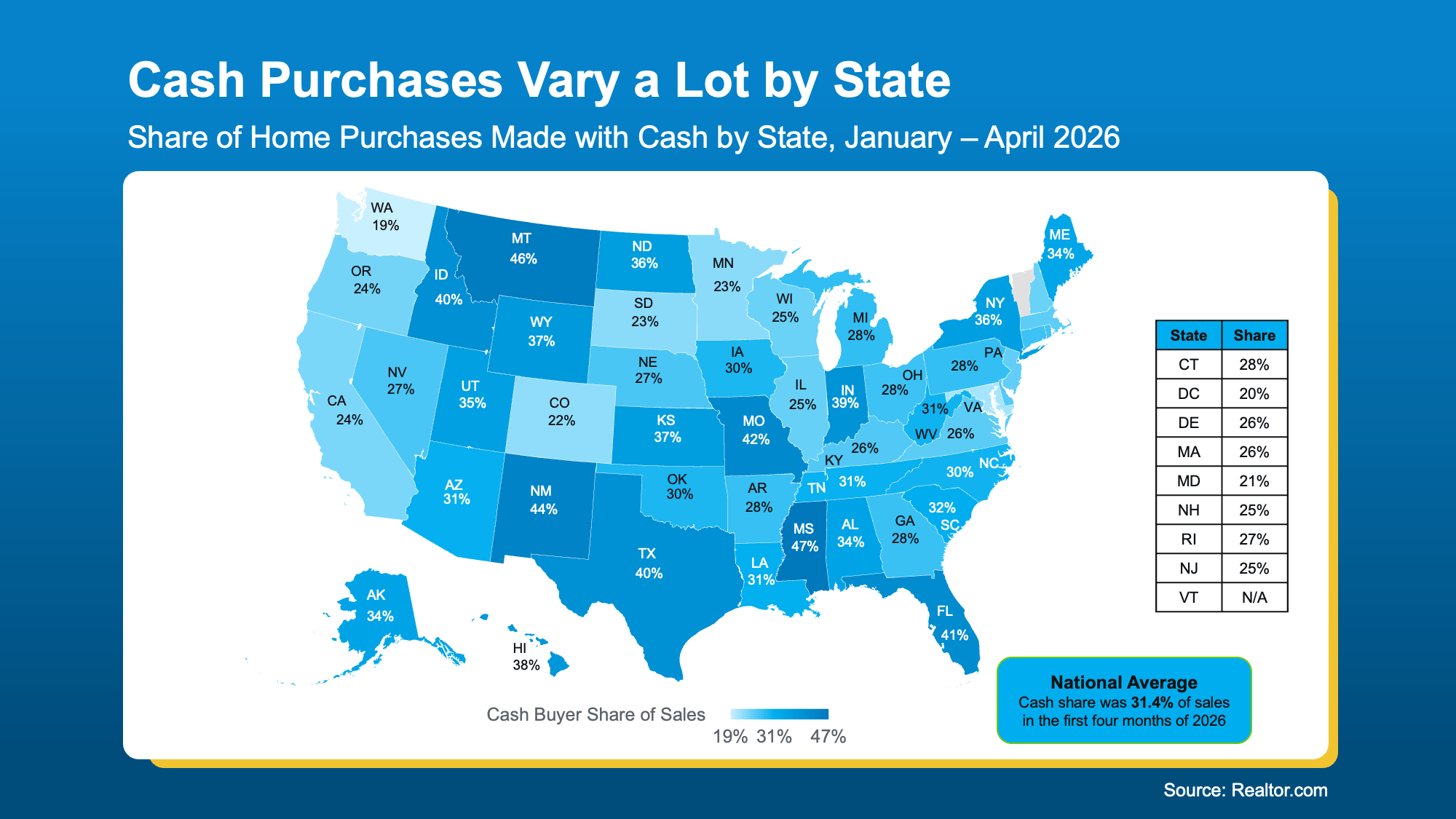
Cash purchases don’t happen at the same rate everywhere. Your local housing market can look very different from the national picture.
The source material cites Realtor.com data showing that earlier this year, cash buyers accounted for nearly 47% of home sales in Mississippi and 46% in Montana.
Why the difference?
According to the source material, cash-buying activity reflects a combination of affordability, wealth, and buyer demographics. Areas with lower home prices may make all-cash purchases more attainable, while locations popular with retirees and second-home buyers may attract more people who can purchase without financing.
That’s why national headlines only tell part of the story.
What matters most is who’s buying in your local market.
If you’re buying or selling in the Sacramento region, understanding local inventory, price ranges, buyer demand, and competing offers can help you make better decisions. A knowledgeable real estate professional can help you interpret those conditions instead of relying on national statistics alone.

Not Paying Cash? You’re Still in the Majority.
Let’s clear up one common misconception: cash buyers aren’t the entire housing market.
Based on the NAR figure cited earlier, approximately 73% of home sales in September involved something other than an all-cash purchase. That means buyers using mortgages still represent the majority.
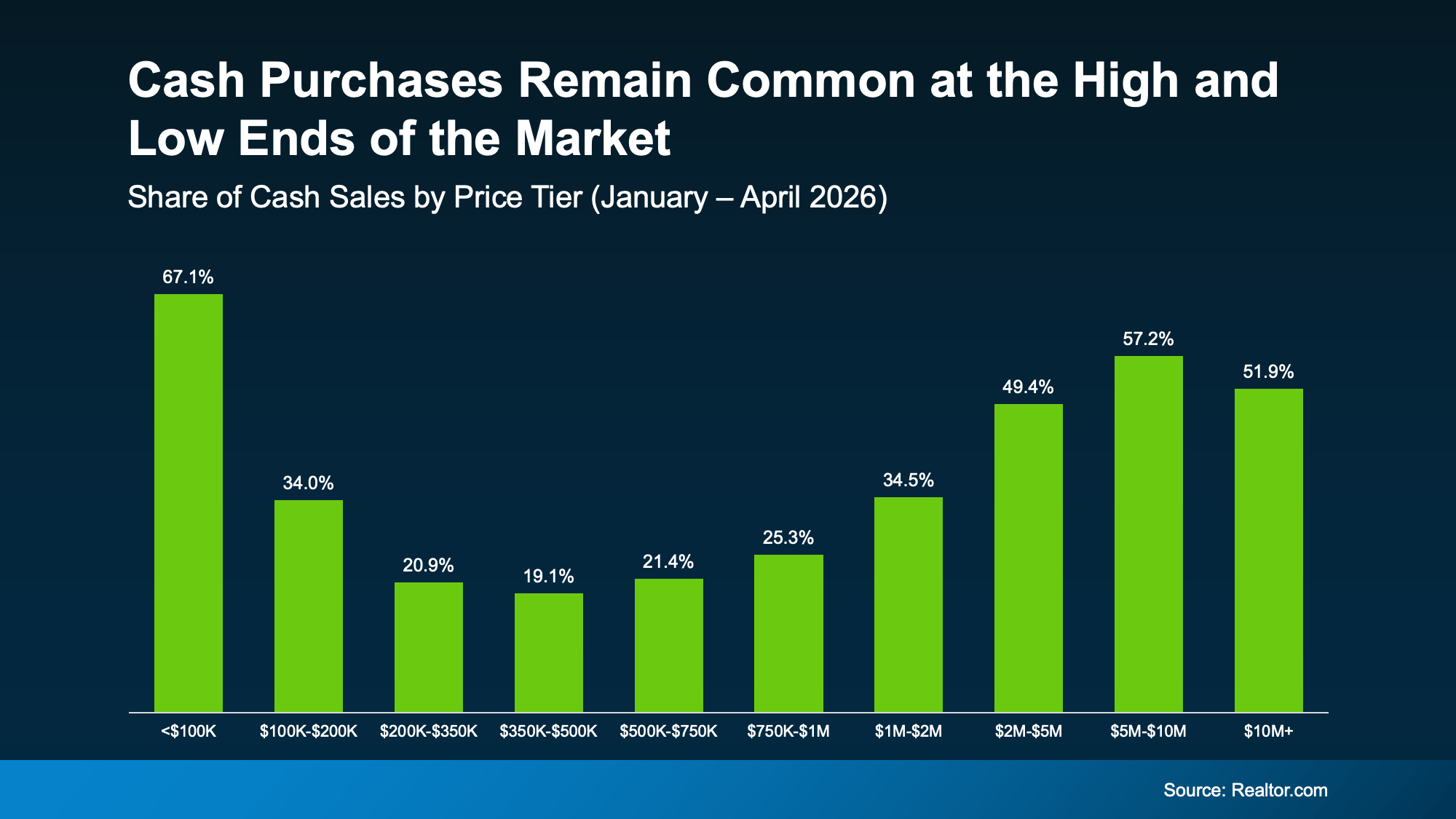
Realtor.com data cited in the source material also indicates that only about 1 in 5 homes priced between $200,000 and $750,000 sold for cash.
So, if you need a mortgage to buy your next home, take a breath. You’re not automatically at a disadvantage.
You can still compete by getting pre-approved, understanding your budget, choosing the right property, and structuring an offer that makes sense for your situation.
A well-prepared financed buyer can still make an attractive offer. The goal isn’t to imitate cash buyers; it’s to understand your own strengths and use them wisely.
What Cash Buyers Mean for Home Sellers
Cash buyers aren’t just relevant to people looking to purchase a home. Sellers should pay attention, too.
If you’re preparing to sell, knowing how buyers are financing their purchases can help you understand your competition and evaluate offers more effectively.
A cash offer may come with fewer financing-related hurdles, but cash doesn’t automatically mean the best offer.
Before accepting, consider the full picture:
- Net proceeds: How much money will you actually walk away with after expenses?
- Contingencies: Does the offer include inspection, appraisal, or other conditions?
- Closing timeline: Can the buyer close when you need them to?
- Proof of funds: Has the buyer demonstrated that the money is available?
- Overall terms: Does the offer fit your financial goals and moving plans?
Sometimes, a financed offer with a higher price and favorable terms may be more attractive than a lower cash offer. Every situation is different.
The right decision comes down to more than how the buyer plans to pay.
Whether you’re buying your first home, selling your current property, or planning your next move, don’t let headlines make the decision for you.
Start by looking at your own financial picture.
The Bottom Line: Your Next Move Starts with the Right Information
Cash buyers are an important part of today’s housing market, but they’re not the whole story. Some are investors. Others are homeowners putting years of built-up equity to work. And most buyers are still using financing.
The real question isn’t whether everyone else is paying cash. It’s what makes sense for you.
Call or text us at 855-935-MORE. Whether you’re buying, selling, or exploring your options, let’s talk about a strategy that fits your goals.
Check out this article next