


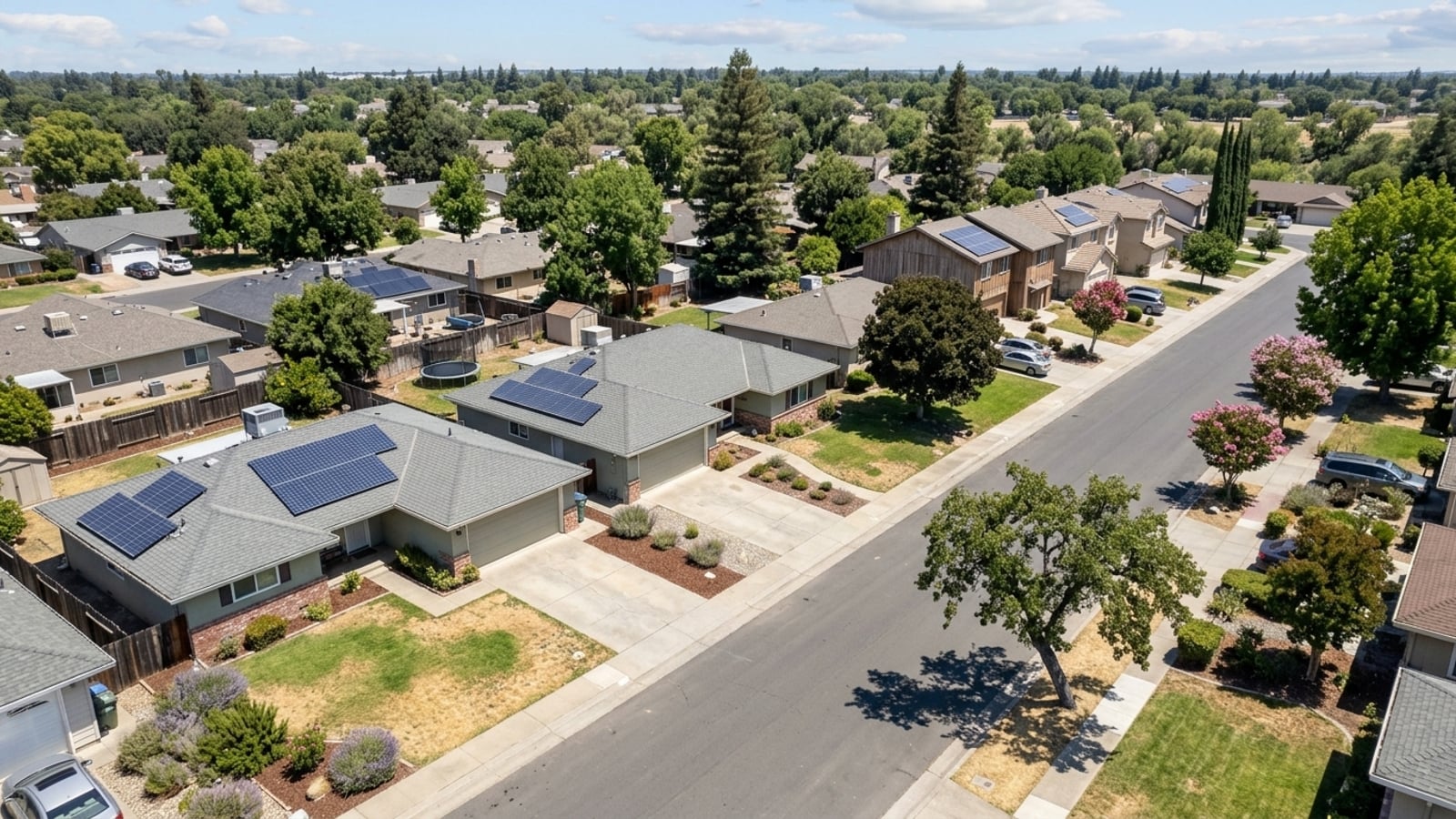
Citrus Heights officially incorporated as a city in Sacramento County in 1997, which means it manages its own municipal footprint but relies on a mix of regional and district providers for utilities. Buy a house here and you won't write one check to a city utility department each month. Water, sewer, trash, electricity, and natural gas come from different entities, and the specific parcel determines several of those providers.
With single-family homes selling at a median of around $489,805, and roughly 42.2% of those selling above list price recently, buyers need to know their fixed monthly carrying costs before writing an offer. Finding out who provides your water or how sewer is billed after your offer is accepted leaves you guessing on your monthly budget. Getting the seller's utility history and checking the district rate sheets upfront prevents surprises after closing.
Key Takeaway
Before you offer on a Citrus Heights house, confirm which water district serves the parcel and how sewer and trash are billed, then estimate SMUD and PG&E costs from the seller's last year of bills. Houses go pending in a median 22 days, so this check has to happen before you write. If you want fewer separate utility accounts, the alternative is a condo whose HOA dues cover water, sewer, and trash.
Who This Guide Is For
You're weighing a specific Citrus Heights house or condo and need to know which providers serve it and what utilities will add to your monthly cost before you commit.
How Utilities Work in Citrus Heights
In Citrus Heights, the utility bill you inherit is set by the parcel, not the city. The home's location determines which water district serves it, how sewer and trash are billed, and whether condo HOA dues already cover water, sewer, and trash. A house buyer has to run that check before the offer, while condos leave more time to read the HOA documents.
This guide splits these services into two categories: costs tied to the property (water, sewer, trash) and costs tied to how you live (electricity, gas). The property-tied costs are mostly fixed base rates set by the district or city; usage-tied costs fluctuate with the seasons and your home's systems. If you're planning to relocate here, compare a cash offer or standard financing with these fixed carrying costs in mind before you finalize your moving budget.
Questions to Narrow Your Utility Budget
Narrowing down your monthly utility expenses means looking at the specific property type and its exact address. A house on the east side of town will have a different water rate structure than one near Interstate 80.
To figure out exactly what you'll pay, ask yourself these four questions about the property you want to buy:
- Is the home a house or a condo/townhome with an HOA? If it has an HOA, start with the "Condo vs. house utilities in Citrus Heights" section and ask what the dues cover before you budget anything else.
- Which water district serves the address? Look it up first (see "Water service in Citrus Heights"). Your water rate and billing cycle depend on it, and the worked example later in this guide uses that district's rate sheet.
- Will you run central air through the summer, or add solar or an EV charger? If so, electricity is your biggest variable. Read the electricity section and the rebate FAQ.
- Are you closing within a few weeks? Go to the section on setting up utilities for which accounts transfer automatically and which you must open yourself.
Utilities Tied to the Property: Water, Sewer, and Trash
The base costs for water, sewer, and trash collection come with the address. You can't shop around for different providers for these three services; they're determined by geographic boundaries and city franchise agreements.
Because these providers are fixed, your main task as a buyer is to verify the current rates and billing methods for the specific parcel. Some charges arrive as bi-monthly bills, while others are collected directly through the city or on your annual tax bill.
Water Service in Citrus Heights
Two houses in the same city can pay different water rates because different water districts serve different parts of Citrus Heights. Citrus Heights Water District (CHWD) provides drinking water to about 60% of the city, along with parts of neighboring towns. The western portion of the city, generally west of Dewey Drive and Greenback Lane toward I-80, falls under Sacramento Suburban Water District's (SSWD) Division 3 territory. Enter the address in the district service-area lookup before anything else, then pull that district's current residential rate sheet.
CHWD bills bi-monthly, and for 2026, the standard residential ¾-inch meter service base charge is $71.57 per billing period. Usage adds approximately $1.38 per ccf unit, plus a small infrastructure charge. In SSWD territory, the 2026 fixed monthly charge is $39.04 for a 5/8-inch meter, with usage billed at $1.22 per ccf for the first 15 units.
Rate sheets show the fixed charge but not what a given yard uses. Ask the seller for 12 months of water bills, since summer irrigation can make one house's bill very different from its neighbor's even under the same district.
Sewer
Sewer service across the city comes from the regional Sacramento Area Sewer District (SacSewer). For single-family residential customers, the combined charge is roughly $74.35 a month, which totals about $891 to $900 a year. The City of Citrus Heights bills $27.35 of that for sewage collection, while SacSewer sets the $47.00 treatment charge.
This service appears on a combined city utility bill, not the county property tax roll. Read the "direct charges" section of the current tax bill for the parcel and divide by 12; buyers who budget only from monthly bills often miss these items.
Trash, Recycling, and Green Waste
Republic Services handles residential garbage, recycling, and organics collection for the city. This is the one property-tied utility where the owner has some control over cost, since the fee depends entirely on the size of the garbage cart selected.
As of January 2026, the monthly rate is $30.77 for a 32-gallon cart, $34.20 for a 64-gallon cart, and $42.64 for a 96-gallon cart. Recycling and organics carts come standard at 96 gallons for no extra base cost. Ask Republic Services what cart size is currently on the account before assuming the seller's cost will match yours.
Utilities Tied to Usage: Electricity and Natural Gas
Citrus Heights homes get electricity from SMUD, a community-owned utility, and gas from PG&E, so most homes carry two energy accounts. These two bills fluctuate widely based on the season, the home's insulation, and your daily habits.
The rate sheet matters less here than the home's HVAC efficiency and appliances. The seller's past bills are your best evidence of future costs: a full year of statements shows exactly how the house performs during a Sacramento Valley summer and a chilly winter.
Electricity
SMUD provides electricity to the area using a time-of-day rate structure for residential customers. Summer weekday peak hours line up with the hottest part of the day, which is exactly when air conditioners work hardest. That cooling load drives the biggest swing in a household budget, especially during extended heat waves. You can review the local weather, heat, and cooling costs to understand what your AC unit will be up against in July and August.
An older or undersized air conditioner runs hardest exactly when peak pricing applies. Ask the seller for 12 months of SMUD bills and the HVAC system's age, and check the disclosures for its service history.
Natural Gas
PG&E supplies natural gas to the city but does not provide electricity here. Gas usage typically covers heating, water heating, and cooking, meaning bills peak during the winter months. Sacramento County is assigned to PG&E's gas baseline Territory S, which dictates the baseline allowance for residential customers.
Homes that are fully electric won't have a PG&E account at all. Gas prices can swing from winter to winter, so treat one year's bills as a guide, not a quote, and use the seller's winter months as the high end of your estimate.
Condo vs. House Utilities in Citrus Heights
The type of home you buy changes how many utility accounts you have to manage. In a condo or townhome, HOA dues often cover some combination of water, sewer, trash, and common-area power, which cuts down on the number of separate bills you receive. The tradeoff is that those costs move into a single monthly payment the board can raise over time. A single-family house means every utility account is in your name and entirely your responsibility.
Condos in the city recently sold for a median of around $202,979, based on 20 sales, presenting a much lower purchase price than detached houses. That said, factor the monthly HOA fee and the utilities it covers into the carrying cost. Ask the HOA which utilities the dues cover, whether units are individually metered, and what the current dues are. You can review how HOA fees operate locally to understand how boards budget for shared utility expenses.
Condos sit on the market for a median of 37 days and sell at 97.6% of list price, so buyers generally have time to read the HOA budget and Covenants, Conditions, and Restrictions (CC&Rs) before closing. Single-family homes move much faster, leaving less time to investigate fixed costs. You can explore the different types of homes available to see which ownership structure fits your budget.
How to Estimate Monthly Utility Costs Before an Offer
With single-family homes sitting at just 2.1 months of supply, the market moves quickly. There's rarely time to gather utility data after an offer is accepted, so request the seller's bills during your first showing or in your offer terms.
To build a monthly estimate for a house, start with water. Find the base charge from the serving district's rate sheet (CHWD or SSWD) and add the seller's average usage, converting the total to a monthly figure if the district bills bi-monthly. Next, factor in the combined SacSewer and city sewer charge of roughly $74 a month. For trash, pull the city rate for the specific cart size the seller uses, or the size you plan to request from Republic Services.
For electricity and gas, average the seller's 12 months of SMUD and PG&E bills, using their summer and winter highs as your ceiling. Then add the city's 2.5% utility users tax, which applies to electricity, gas, telephone, cable, and sewer service. This method gives you a practical monthly estimate, though it's not a guaranteed quote from any provider.
Setting Up Utilities When You Move
During closing week, you need to know which services transfer automatically and which require you to open a new account. As the buyer, you must start electricity with SMUD, natural gas with PG&E, and water service directly with your specific water district. Sewer and trash typically follow the property, but confirm the billing transition with the city and Republic Services to make sure there's no lapse in collection.
Check with SMUD and PG&E a few weeks before closing regarding their start-service lead times and any required deposits. Ask your escrow officer how any tax-bill direct charges are prorated at closing. Those prorations appear on your closing disclosure and are a standard part of your buyer closing costs; timing your utility setup calls to match the closing date prevents billing gaps.
Citrus Heights Housing Market at a Glance
Home prices in the city are relatively flat year over year, meaning your monthly carrying costs, utilities included, shape your overall affordability just as much as the purchase price. Here's a look at recent market activity for the 90 days ending September 30, 2026. You can review the broader housing market data to see how inventory is shifting.
- All homes median sale price: $479,772, up 2.4% year over year (90 days ending 2026-09-30, 215 sales)
- Single-family median sale price: $489,805, down 1% year over year (90 days ending 2026-09-30, 176 sales)
- Single-family median days on market: 22; sale-to-list: 100.5%; sold above list: 42.2% (90 days ending 2026-09-30)
- Single-family months of supply: 2.1; inventory: 123 homes (90 days ending 2026-09-30)
- Condo median sale price: $202,979, down 41.9% year over year, based on only 20 condo sales; the drop likely reflects which units sold, not a true price trend (90 days ending 2026-09-30)
- Condo median days on market: 37; sale-to-list: 97.6%; months of supply: 3.9, based on 20 condo sales (90 days ending 2026-09-30)
- All homes median price per square foot: $318; single-family: $332; condo: $220 (condo figure based on 20 sales; 90 days ending 2026-09-30)
Citrus Heights Utilities FAQs
Is Citrus Heights Part of Sacramento for Utilities?
No, Citrus Heights is its own incorporated city in Sacramento County, having officially incorporated in 1997. Residents aren't customers of City of Sacramento utilities. Service comes from regional and district providers instead.
Do Any Homes in Citrus Heights Have Well Water?
Yes, though most homes connect to a water district system. Any private well would show up in seller disclosures and falls under Sacramento County Environmental Management Department rules for permits and testing. Check seller disclosures carefully for any mention of a private well or septic system.
What Runs Up a Water Bill the Most in Citrus Heights?
Outdoor irrigation in the dry summer months is the typical driver, along with leaks and the district's usage-based charges. Citrus Heights Water District recommends watering lawns roughly every third day during the hottest months and only between dusk and dawn to minimize evaporation.
Does Citrus Heights Charge a Utility Users Tax?
Yes, the City of Citrus Heights imposes a utility users tax. The rate is 2.5% on charges for electricity, gas, telephone, cable television, and sewer service.
What Rebates Can Lower Electric Bills in Citrus Heights?
As of 2026, SMUD offers residential rebates up to $4,000 for gas-to-electric heat pump water heater conversions and up to $3,000 for gas-to-electric heat pump HVAC conversions. Confirm availability directly with SMUD before buying equipment, as incentive programs change.
How Do I Schedule a Bulky Item Pickup in Citrus Heights?
The City partners with Republic Services to provide residents three free bulk-item pickups per year through the Neighborhood Cleanup program. Each pickup allows a pile size of up to 10 cubic yards, and you can schedule it by calling their customer service line.
What Internet Providers Serve Citrus Heights Homes?
Internet availability varies by specific address. Look up the exact property on the FCC National Broadband Map and confirm service directly with the providers before closing.
Sources
- Redfin: Data Center
- Citrus Heights Water District: About
- Citrus Heights Water District: 2026 Rates
- SacSewer: Residential Rates and Fees
- City of Citrus Heights: Residential Garbage & Recycling Services
- PG&E: Gas Preliminary Statement Part A
- SMUD: Boosts Rebates for Heat Pumps
- City of Citrus Heights: FAQ
- Citrus Heights Water District: Water Efficiency
- City of Citrus Heights: Community Profile
- City of Citrus Heights: Neighborhood Cleanup
- Sacramento Suburban Water District: Rates and Charges
Check out this article next