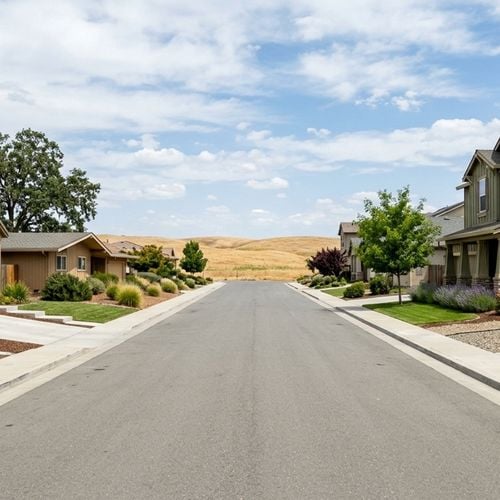


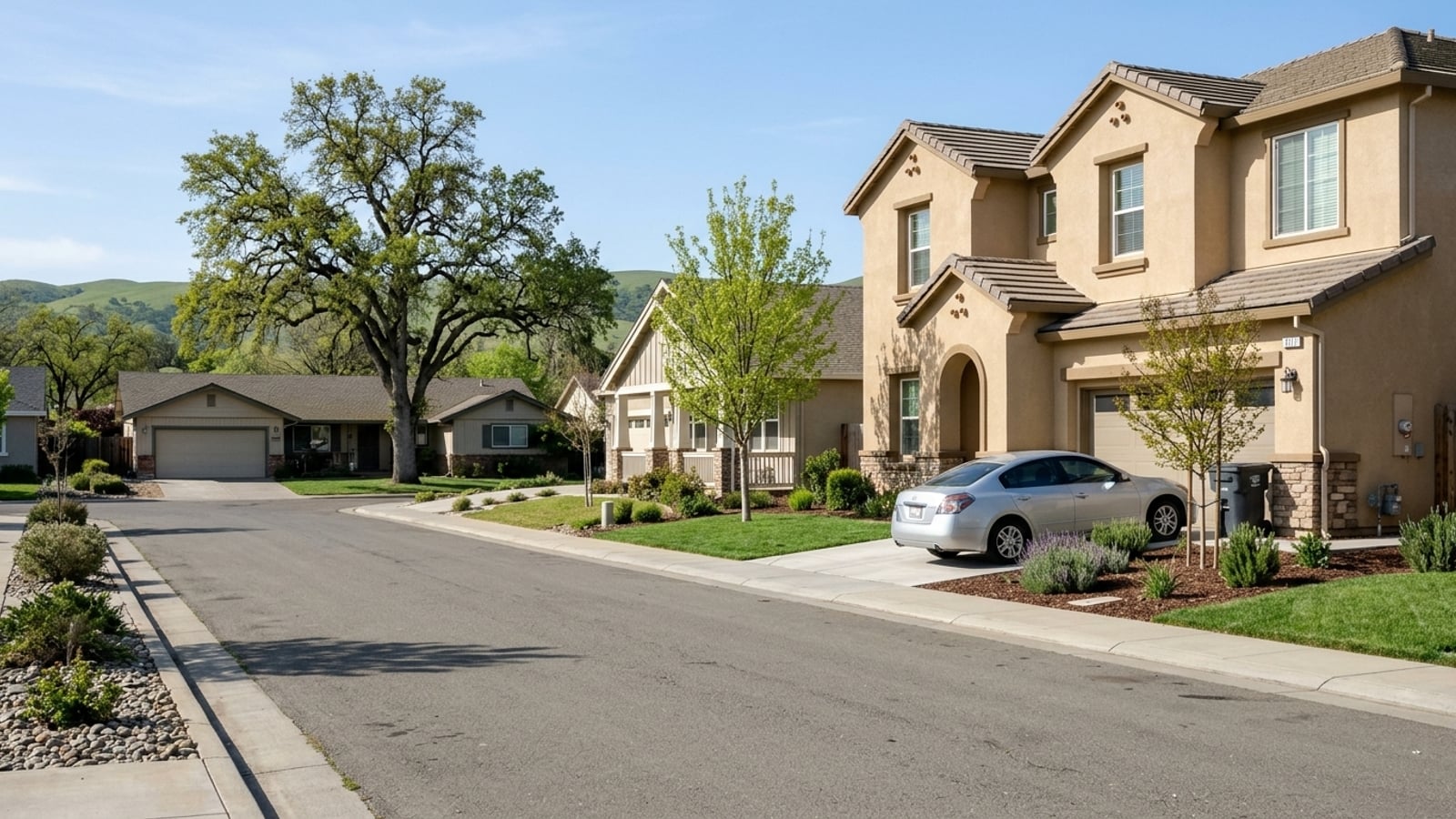
Lincoln sits on the eastern edge of the Sacramento Valley with a hot-summer Mediterranean climate that shapes everyday life in ways buyers don't always anticipate.
Key Takeaway
Lincoln has a Mediterranean pattern with long, hot, dry summers and cool winters when most of the year's rain falls. That makes cooling, smoke protection and winter drainage the main features to check in any house.
Summer is the best time to check them. Homes sold in the 90 days ending September 30, 2026, took a median of 37 days on the market, which gives you enough time to test the AC on a peak-heat afternoon without losing the house. If you prefer to move in mild weather, aim for an October or spring closing.
Who This Guide Is For
You're considering a move to Lincoln or a specific house there and want to know how the heat, rain and smoke seasons should shape what you inspect and when you buy.
What Is the Weather Like in Lincoln, CA?
Lincoln's year splits into a hot, dry half and a cool, wet half, and the questions to ask about a house split the same way. Cooling and smoke protection matter for one half; drainage and heating matter for the other.
Under the Köppen system, Lincoln is classified Csa, a hot-summer Mediterranean climate: cool, wet winters, hot, dry summers and almost no in-between.
Lincoln's Climate Type
Nearly all the year's water arrives in a few winter months, and then it stops. For the rest of the year, yards depend entirely on irrigation.
How Elevation and Valley Location Shape the Weather
Lincoln's populated areas sit at 167 feet above sea level on the valley floor, with the land rising toward the Sierra foothills to the east. That position takes the full force of valley heat, without the natural cooling that higher foothill towns get.
Evening Breezes and Winter Fog
Summer nights often cool off after hot afternoons, and opening windows at night can do some of the air conditioning's work. The evening breeze doesn't show up every night, though, so you can't count on it. In winter, dense fog settles in on cold mornings and can make valley roads slow and gray for days at a stretch.
Is Lincoln's Weather a Good Fit for You?
If long runs of summer heat wear you down, start with the cooling and orientation checks under What Lincoln's weather means for buying a home, and read July through September in the month-by-month section first. Weighing the pros and cons of living in Lincoln can help you decide if the climate aligns with your lifestyle.
If you're sensitive to smoke, read Wildfire smoke and air quality and the August through October months, then plan on a house you can seal up and filter.
If you want a big lawn or a pool, read Yards, lawns and watering rules and Pools and shade before you shortlist, because water rules and summer sun drive the upkeep.
For timing, Best time to buy or move to Lincoln weighs testing the house in summer against easier moving days in fall and spring.
Lincoln, CA Weather by Month
January in Lincoln
The coolest stretch of the year and the best time to judge a home's heating system and insulation. The downside is foggy mornings that slow commutes and showings.
February in Lincoln
The middle of the rainy season. A wet-weather inspection can surface roof leaks and grading problems that summer hides completely. The tradeoff is that roof and drainage fixes have to wait for dry days, which can stretch the repair timeline by weeks.
March in Lincoln
The rain tapers off, the hills go green and the first warm days make property tours pleasant. Late storms still happen, though, so building a spring-move timeline around perfect weather is a gamble.
April in Lincoln
One of the most comfortable months for moving, with mild days, cool nights and yard work that doesn't punish you. The catch is that mild weather hides how hot west-facing rooms will get in July. Check last summer's bills before you commit to a room that faces the afternoon sun.
May in Lincoln
The first hot days arrive, air conditioning season begins and the dry season sets in firmly by the end of the month. A house that feels comfortable at a May showing can still struggle in July.
June in Lincoln
Reliably dry and hot, with irrigation now carrying the yard. Lawns go brown fast if sprinkler zones or timer settings are off, and the city's watering schedule limits when you can run them.
July in Lincoln
Usually the hottest month of the year and the best time to see how a house performs under real heat. Cooling bills peak too, so budget for higher electricity costs.
August in Lincoln
The heat continues and wildfire smoke becomes a real risk. On smoke days, windows stay shut and filtration runs, even when evenings are cool enough to open up.
September in Lincoln
Summer-hot for much of the month, and it overlaps with the peak of local fire season. A fall move planned around cool weather may land in summer conditions.
October in Lincoln
Temperatures ease, the first rain may arrive, and it's arguably the best moving month of the year: predictable, mild and forgiving. The caveat is that dry, windy days before the rains start can bring power shutoff warnings.
November in Lincoln
The rainy season starts in earnest. The first heavy storm is often when a new owner discovers where water pools around the house, so clean the gutters before it hits.
December in Lincoln
Cool, wet, with short days. Fog and frost on early mornings make showings and moving days shorter.
Heat, Smoke and Storm Risks in Lincoln
Heat waves, wildfire smoke and heavy winter rain can each be checked for a specific address, and that is better done before you're under contract than after.
Summer Heat and 100-Degree Days
Sacramento, the nearest major National Weather Service climate station for the area, averages about 23 days per year with a high of at least 100 degrees. Heat waves can stack several triple-digit days in a row. That puts real stress on older air conditioning units and on anyone without adequate cooling, and it shifts yard work to early mornings.
Wildfire Smoke and Air Quality
Smoke from fires elsewhere in the region can affect Lincoln even when no fire is nearby. The Placer County Air Pollution Control District monitors particulate matter year-round, and during wildfires it may deploy temporary monitors in Lincoln to track smoke. Check its alerts before planning outdoor activities. Smoke seasons vary a lot from year to year, so one clear summer tells you nothing about the next.
Wildfire Hazard Zones
The City of Lincoln and the California State Fire Marshal released an updated Fire Hazard Severity Zone map in 2025. It identifies areas at increased wildfire risk based on scientific modeling and fire history data. Check a specific address with the city's interactive map tool; the seller disclosures will also note the property's status. A hazard-zone designation can affect insurance availability and cost, so get a quote before you remove contingencies.
Winter Storms and Drainage
Because the year's rain comes in a few strong storms, gutters, downspouts, grading and low spots near ravines matter more than a dry-season showing suggests. The checks are under Drainage and gutters before the rains, and flood-zone lookups are in the FAQ.
Frost and Freezes
Average annual extreme minimum winter temperatures run around 20 to 25 degrees. Light freezes matter for exposed pipes, irrigation backflow devices and tender landscaping, so insulate exposed irrigation lines before winter.
Power Shutoffs on High-Wind Days
Pacific Gas and Electric can initiate Public Safety Power Shutoffs during dry, windy fire-weather days. You can look up past events for a specific address and sign up for alerts. A shutoff during hot weather means no air conditioning, which matters if anyone in the home depends on cooling or medical equipment.
What Lincoln's Weather Means for Buying a Home
Most homes sold here are single-family houses, so roofs, attics, yards, pools and orientation carry the climate risk. Testing them before you close is how you avoid surprise repair bills in year one.
Air Conditioning and the Cooling Bill
Ask the seller for 12 months of utility bills to see the real cooling costs, not a spring-weather estimate. Get the cooling system's age and service records, and have it inspected during the hot season. A working unit isn't necessarily sized right or efficient, and replacement is a major cost to price into your offer.
Roof, Attic and Insulation
Long sun exposure ages roofs and heats attics. Check the roof's age, the attic insulation depth, the ventilation and whether there's a radiant barrier. Insulation and ventilation are easy to overlook at a showing and tend to show up later as high summer electric bills.
Which Way the House Faces
Window and backyard orientation decide how hot rooms and patios get on summer afternoons. When you're choosing a new-build lot, orientation is one of the few things you control. The lot with the best view or biggest yard may face the harsh afternoon sun.
Yards, Lawns and Watering Rules
Dry summers mean irrigation carries the landscaping, so check the city's watering schedule before you plan a big lawn. A green lawn costs real water every summer. Some homeowners associations also have rules on replacing turf, so ask before you start pulling it out.
Pools and Shade
A pool or covered patio extends summer living. Check the pool equipment's age, the shade coverage and what the pool adds to the electric bill, on top of ongoing costs for chemicals and repairs. An unshaded yard can be too hot to use at midday, however nice the pool is.
Drainage and Gutters Before the Rains
Check the gutters' condition, that the grading slopes away from the foundation, and any signs of past water intrusion. Ask the seller directly whether water has ever pooled near the foundation. A summer inspection can't watch water flow, so these questions matter more if you buy in the dry season.
Best Time to Buy or Move to Lincoln
Summer: Test the House at Its Hardest
If you want to judge a home's cooling for yourself, schedule a July through September showing and HVAC inspection. Homes sold in the 90 days ending September 30, 2026, went for 99.2 percent of list price with 2.9 months of supply. Prices sat close to asking, and buyers had room to inspect the house in real heat. Moving day in summer heat is hard on people and belongings, so book early-morning movers.
Fall and Spring: The Easiest Moving Weather
For the most comfortable moving day, aim for an October or April through May closing, when mild temperatures make moving and yard work reasonable. The tradeoff is judging the cooling system without real heat to test it against. Lean on utility bill history and a professional inspection instead.
Winter: Inspections in the Rain
A wet-season inspection shows how the roof and drainage perform in real time. It's the only season where you can watch water move away from the foundation. Rainy days can delay inspections, repairs and moving trucks, so build slack into your timeline.
Lincoln Weather Compared with Nearby Cities
Weather in neighboring Placer and Sacramento county towns differs mostly by elevation. Valley-floor cities share very similar patterns, and the foothills offer a slight change.
Lincoln vs Roseville and Rocklin
Lincoln and Roseville share the same valley-floor pattern. Since the weather won't separate these cities much, home prices and commutes in the Lincoln vs Roseville and Lincoln vs Rocklin comparisons will do the deciding.
Lincoln vs Folsom
Folsom also sits on the valley's eastern edge, with the same general heat and rain profile as the rest of the valley floor. Small differences in averages won't change how a heat wave feels in either city, so the Lincoln vs Folsom comparison comes down to neighborhood specifics.
Lincoln vs Auburn and the Foothills
Higher-elevation Auburn provides the main contrast to the valley floor. It is the closest station with official NOAA climate normals, showing an average July high of about 92.7 degrees and average annual precipitation of 36.12 inches. Foothill homes trade valley convenience for higher fire-hazard and winter-road concerns, which shapes the housing stock in the Lincoln vs Auburn comparison.
At a Glance
- Median sale price, all homes: $620,704 (90 days ending 2026-09-30), up 3.5% year over year
- Median sale price, single family: $624,751 (90 days ending 2026-09-30), up 4.1% year over year
- Homes sold, all homes: 279; single family: 272 (90 days ending 2026-09-30)
- Median days on market, all homes: 37; single family: 36 (90 days ending 2026-09-30)
- Sale-to-list ratio, all homes and single family: 99.2% (90 days ending 2026-09-30)
- Sold above list, all homes: 19.6%; single family: 20.1% (90 days ending 2026-09-30)
- Months of supply, all homes and single family: 2.9 (90 days ending 2026-09-30)
- Inventory, all homes: 266; single family: 261 (90 days ending 2026-09-30)
- Median price per square foot, all homes: $338; single family: $341 (90 days ending 2026-09-30)
Lincoln, CA Weather FAQs
What Is the Average Temperature in Lincoln, CA Throughout the Year?
The spread between the warmest and coolest months is wide. NOAA's National Centers for Environmental Information publishes the official 1991 to 2020 climate normals; look for records from the Lincoln Regional Karl Harder Field station.
Is Lincoln, CA in a Flood Zone?
It depends on the address, especially for low-lying parcels around Auburn Ravine and Markham Ravine. Look the property up on the FEMA Flood Map Service Center. The seller's Natural Hazard Disclosure will also show whether it sits in a FEMA special flood hazard area.
Does It Snow in Lincoln, CA?
Measurable snow is extremely rare on the valley floor; winter precipitation falls as rain. National Weather Service records for Lincoln Regional Airport show the history.
Is It Humid in Lincoln, CA?
Summers bring dry heat rather than high humidity, though winter mornings can be damp and foggy.
What Climate Zone Is Lincoln, CA In?
ZIP code 95648 is in USDA Plant Hardiness Zone 9a and part of 9b. It is also in California Energy Commission Title 24 Building Climate Zone 11, which sets energy-code rules for new construction.
Which National Weather Service Office Covers Lincoln, CA?
The National Weather Service Sacramento office issues forecasts for the area, including local heat, wind and fire-weather warnings.
How Many Homes Sell in Lincoln Each Quarter?
In the 90 days ending September 30, 2026, 279 homes sold across all types, including 272 single-family houses.
How Long Does It Take to Sell a Home in Lincoln?
The median days on market was 37 for all homes and 36 for single-family homes in the 90 days ending September 30, 2026.
Sources
- Redfin: Data Center
- Wikipedia: Lincoln, California
- TopoQuest: Lincoln, CA Quadrangle
- CBS News: Sacramento Triple-Digit Heat Days
- MySoilType: ZIP Code 95648 Hardiness Zone
- California Energy Commission: Title 24 Climate Zones
- City of Lincoln: Fire Hazard Severity Zone Map
- Placer County: Air Quality and Smoke
- Wikipedia: Auburn, California
Check out this article next