


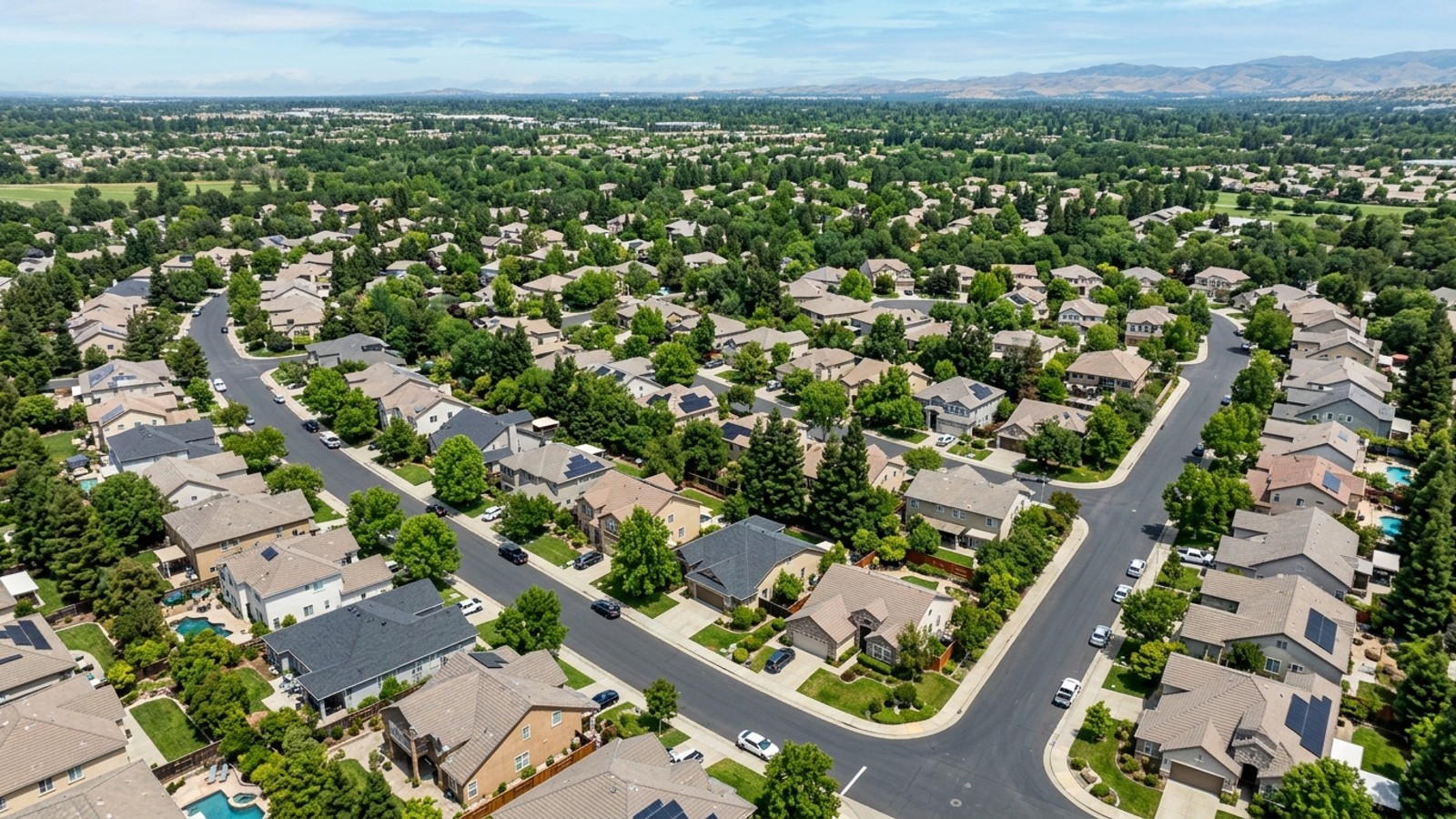
The median sale price in the Roseville, CA housing market is currently around $660,000, and available homes are selling in roughly 21 days. At that price point, property taxes stop being an abstraction and start being a real line item in your monthly budget. Placer County handles the assessment and collection of these taxes for the 2026-2027 tax year.
California's property tax system works differently than most states - it runs on a base rate plus local voter-approved bonds, not a straight percentage of current market value. If you're buying in a Roseville ZIP code like 95678, 95661, or 95747, your purchase price is what sets your tax burden, and the structure behind that number is worth understanding before you make an offer.
Property Tax Rates in Roseville, CA
The median effective property tax rate in Roseville is 1.07%. That puts it above the national median of 1.02%, but below the California state median of 1.21%. Your specific rate depends on where exactly the home sits and which voter-approved bonds are tied to that particular parcel.
California caps the base property tax rate at 1% of assessed value by law. Everything above that comes from local bonds and special assessments layered on top - which is why industry guidance puts the realistic total closer to 1.1% to 1.2%. Placer County finalizes these rates every year; the most recent roll covers July 2026 through June 2027.
Comparing Roseville to the State Average
Because the base rate is capped at 1%, the variation you see across California comes from local bond measures, not sweeping state tax increases. Roseville's 1.07% median effective rate keeps it reasonable within the state.
Buyers coming from out of state are often surprised by this. Most states reassess annually based on current open-market value. Proposition 13 doesn't allow that here - it limits annual assessed value increases to no more than 2% unless the property changes hands or undergoes new construction.
Calculating Your Roseville Property Tax Bill
When you buy a home in Roseville, your purchase price becomes the new assessed value. On a home bought at the current median of $660,000, the base 1% tax comes to $6,600 before local bonds are added.
Apply the expected 1.1% to 1.2% range, and the annual bill on that same $660,000 property lands between $7,260 and $7,920. That assessed value is then locked to your purchase price and can only grow by a maximum of 2% per year - regardless of how fast the local market moves.
Assessed Value vs. Market Value
Long-term owners in Roseville are often paying taxes on an assessed value well below what their home would fetch today. Buy a place ten years ago and you're taxed on that original price plus a decade of modest annual adjustments.
You, as a new buyer, step in at current market value. Once your sale closes, Placer County issues a supplemental tax bill to cover the gap between the seller's old assessed value and your new one for the remainder of the tax year. Don't let that bill catch you off guard.
Estimating Your Property Taxes by Address
The most reliable way to know the actual tax burden on a specific home is to pull its address in Placer County's public records. The county tax collector maintains a database with current and historical bills for every property in Roseville.
That search shows you the exact breakdown - the 1% base rate plus every local bond tied to that parcel. A home in 95747 often carries a different bond structure than something in an older 95678 neighborhood, so the address really does matter here.
Using the County Tax Portal
Ask your agent to pull the current tax record before you make an offer. It shows what the current owner pays, and from there you adjust the math for your own purchase price.
The portal also surfaces any active Mello-Roos or special assessments on the property. Those line items appear directly on the annual bill - there's no separate invoice.
Special Assessments and Mello-Roos Districts
Many Roseville neighborhoods, particularly newer ones, sit inside Community Facilities Districts - what most people call Mello-Roos. These districts were created to fund local infrastructure like schools, roads, and parks, and the charges follow the property.
Placer County's tax roll identifies multiple active Mello-Roos districts in the area, including CMFA CFD No. 2024-13 Roseville 10 MR and the Meadowlands CFD No. 2021-01. The charges show up directly on your general property tax bill.
Factoring Special Taxes into Your Budget
Mello-Roos taxes don't scale with your home's value - they're typically a flat rate based on square footage or lot size. They're collected in two installments, due December 10 and April 10, alongside your regular property taxes.
If you're looking at new construction or recently built communities in Roseville, run these numbers before you finalize your payment estimates. The City of Roseville directs residents to contact its District Administrator, Willdan Financial Services, for a full list of current districts and fees.
Property Tax Exemptions and Appeals
California gives you a couple of legitimate ways to reduce your property tax burden. The most straightforward is the California Homeowner's Exemption, which lowers the assessed value of a primary residence. You apply once, and it stays in place until you sell or move out.
To qualify, the home has to be your primary residence as of January 1 of the tax year. The Placer County Assessor's office handles the application and applies the reduction to your annual bill.
Proposition 19 and Senior Transfers
Homeowners over 55, along with severely disabled residents, have access to something the rest of us don't: Proposition 19. It lets eligible homeowners transfer their current property tax base to a new primary residence anywhere in California.
So if a senior sells a home with a low assessed value and buys a new place in Roseville for $660,000, they can bring their old tax base with them rather than being reassessed at the full purchase price. For retirees looking to downsize or relocate, that's a meaningful protection.
Looking Up and Paying Your Placer County Tax Bill
Placer County issues secured property tax bills in the fall, split into two installments. You can pay online, by mail, or in person at the county tax collector's office.
On the secured tax roll, the first installment is due November 1 and becomes delinquent after December 10. The second is due February 1 and becomes delinquent after April 10. You can also pay both installments in full when the first one is due if you'd rather be done with it.
Payment Methods
The county's online portal is the most direct option. Electronic checks go through without a fee; credit and debit cards carry a processing convenience charge.
If you have a mortgage, your lender will almost certainly collect a monthly escrow contribution and pay the county on your behalf. You'll still receive a copy of the bill, which is worth keeping.
Sales Tax Rates in Roseville
Property taxes aren't the only local tax worth knowing. The combined sales tax rate in Roseville is 7.75%, and it applies to most retail purchases made within the city limits.
That 7.75% breaks down as follows: a 6% California state sales tax, a 0.25% Placer County sales tax, a 0.5% Roseville tax, and a 1% special tax.
Impact on Large Purchases
If you're furnishing a new home or buying appliances, you're paying 7.75% on those items. Groceries and prescription medications are generally exempt from state and local sales taxes.
Retailers calculate and collect this automatically at the point of sale. One thing people miss: if you buy from an out-of-state online vendor that doesn't collect California sales tax, you're required to report and pay use tax at the same 7.75% rate.
Frequently Asked Questions
What is the average property tax rate for homebuyers in Roseville, CA?
The median effective property tax rate in Roseville is 1.07%. That includes the state's 1% base rate plus local voter-approved bonds. Expect your total rate to land between 1.1% and 1.2% of the home's assessed value.
Do all neighborhoods in Roseville have Mello-Roos special tax assessments?
No - Mello-Roos charges don't apply to every neighborhood. They're primarily found in newer developments and specific Community Facilities Districts, like the Meadowlands CFD No. 2021-01.
When are the annual Placer County property tax installments due for Roseville homeowners?
The first installment is due November 1 and is considered delinquent if not paid by December 10. The second installment is due February 1 and becomes delinquent after April 10.
Will I get a surprise supplemental property tax bill after closing on a Roseville home?
Yes, you likely will. It covers the difference between the seller's old assessed value and your new assessed value based on the purchase price, for the remainder of the tax year.
How do I apply for the homeowner's property tax exemption on my primary residence in Roseville?
You submit a single application to the Placer County Assessor's office. Once approved, the exemption reduces your home's assessed value for as long as it remains your primary residence.
What is the process for appealing my property tax assessment with Placer County if my home's value drops?
File an assessment appeal with the Placer County Clerk of the Board. You'll need to bring evidence - recent comparable sales showing that your home's market value is lower than its assessed value.
Can older adults use Proposition 19 to transfer a low property tax base to a new house in Roseville, CA?
Yes. Proposition 19 allows homeowners aged 55 and older to transfer their existing property tax base to a new primary residence in California, which helps avoid a large tax increase when moving.
Check out this article next