


🏡 Looking for Your Next Home?
Don’t let bad data or hidden fees cost you your dream home! Download the Made 4 More app for the most accurate listings—without your info being sold. Find the best deals with confidence. Get started today!
If you’re thinking about buying your next home, you’ve probably heard the same advice for years: “Save 20% for the down payment.”
But here’s the thing—you don’t have to put 20% down to buy a home.
There are plenty of loan programs that allow qualified buyers to purchase with significantly less. So why are so many repeat buyers choosing to put down 20% or even more?
Because when you’ve owned a home for several years, you may have something a first-time buyer doesn’t: equity.
And that equity could become one of your biggest advantages when it’s time to move.
Your Current Home Could Be Your Down Payment Strategy
Think of home equity as a financial springboard.
Over the years, you’ve likely been doing two things at the same time: paying down your mortgage and watching your home’s value change. The difference between what your home is worth and what you still owe is your equity.
When you sell, that equity can potentially turn into cash you can use toward your next home.
That’s one reason repeat buyers often have more purchasing power than they realize.
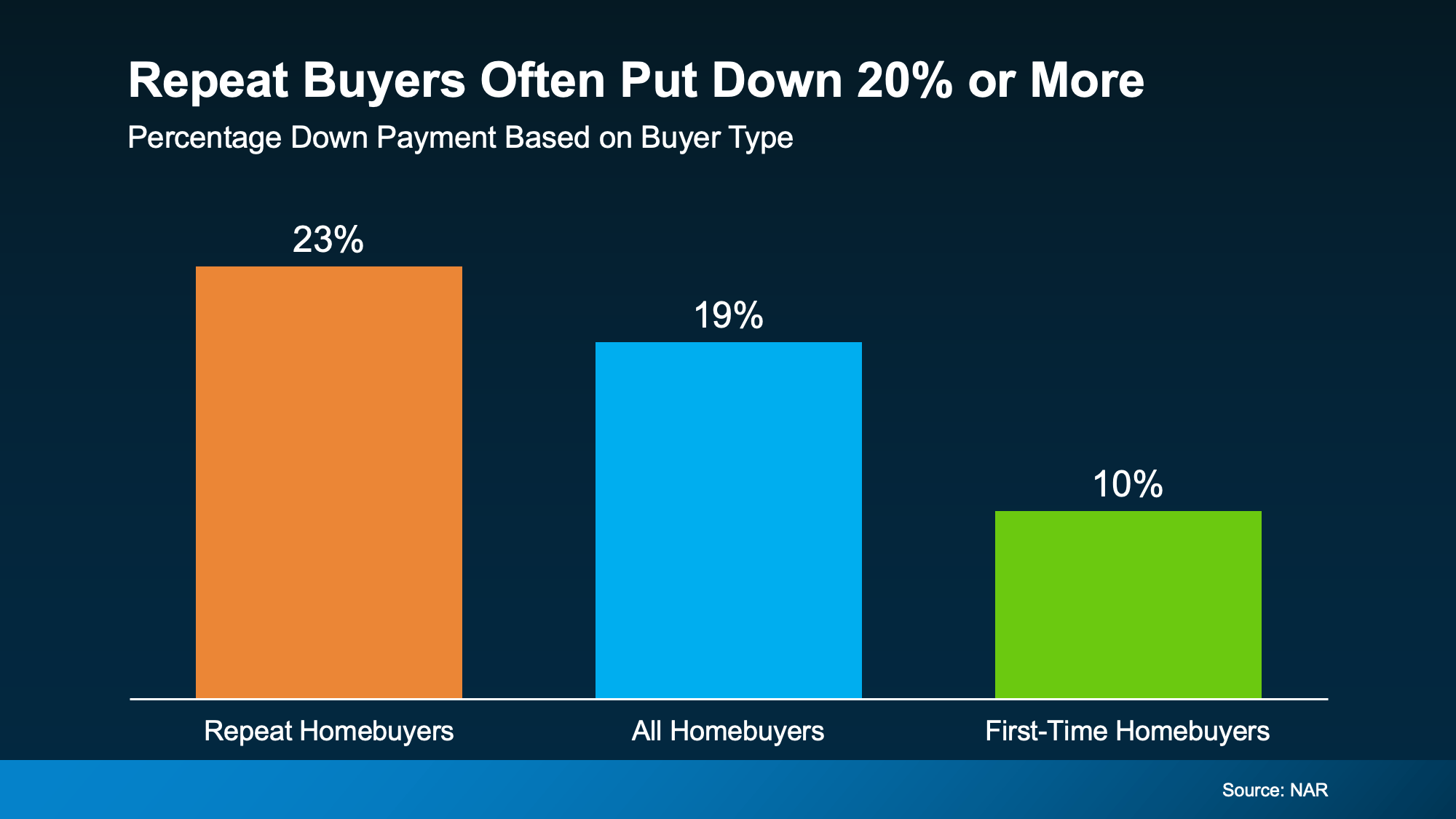
According to the National Association of Realtors®, repeat buyers typically put significantly more money down than first-time buyers. They may be able to do that because years of ownership have helped build a larger financial cushion.
So if you’ve been in your home for a while, it’s worth asking:
“How much equity do I actually have—and what could it do for my next purchase?”
The answer might surprise you.

Four Reasons a Larger Down Payment Can Make Sense
Putting 20% down isn’t automatically the right move for everyone. Your financial situation, goals, interest rate, cash reserves, and loan program all matter.
But if you have the funds available, a larger down payment can offer some meaningful advantages.
1. You Could Lower Your Monthly Payment
The simple math is this: borrow less, pay less each month.
Putting more money down means you’re financing a smaller portion of the home. That can reduce your monthly principal and interest payment, which may make your new home more comfortable for your budget.
And in a market where mortgage rates can have a major impact on affordability, every little bit can matter.
2. You Could Pay Less Interest Over Time
Your mortgage isn’t just about the amount you borrow. It’s also about the interest you pay on that loan over the years.
A larger down payment means a smaller loan balance.
For example, putting 20% down means you’re financing roughly 80% of the purchase price. Putting 5% down means you’re financing closer to 95%.
That difference can add up.
Think of it like carrying a backpack. The less you put in it at the beginning, the lighter it is to carry all the way home.
3. You May Avoid PMI
For conventional loans, putting less than 20% down often means paying private mortgage insurance, commonly known as PMI.
PMI protects the lender—not you—and it can add another monthly expense to your housing payment.
With 20% down on a conventional loan, PMI generally isn’t required.
That doesn’t mean 20% down is always the best financial decision, but eliminating an extra monthly cost can be a nice benefit.
4. Your Offer Could Look Stronger
Buying a home is about more than finding the right property. You also need to make an offer that gives the seller confidence.
A larger down payment can sometimes make your offer look stronger because it may signal that you have more financial resources behind the purchase.
Does that guarantee your offer will win?
No.
But when a seller is comparing multiple offers, having solid financing can help you stand out.
But Don’t Drain Your Savings Just to Hit 20%
Here’s the part buyers sometimes overlook.
Putting 20% down is not worth it if it leaves you with almost nothing in the bank.
Buying a home comes with more than the down payment. You may need money for closing costs, moving expenses, repairs, maintenance, furnishings, emergencies, and the unexpected “Why is the water heater doing that?” moment.
Your down payment should fit into your overall financial plan, not consume it.
Sometimes putting 10%, 15%, or even less down while keeping healthy cash reserves may make more sense.
The goal isn’t simply to hit a magic 20% number.
The goal is to buy strategically.
Repeat Buyers May Have an Advantage
If you already own a home, don’t automatically assume your next purchase has to start from scratch.
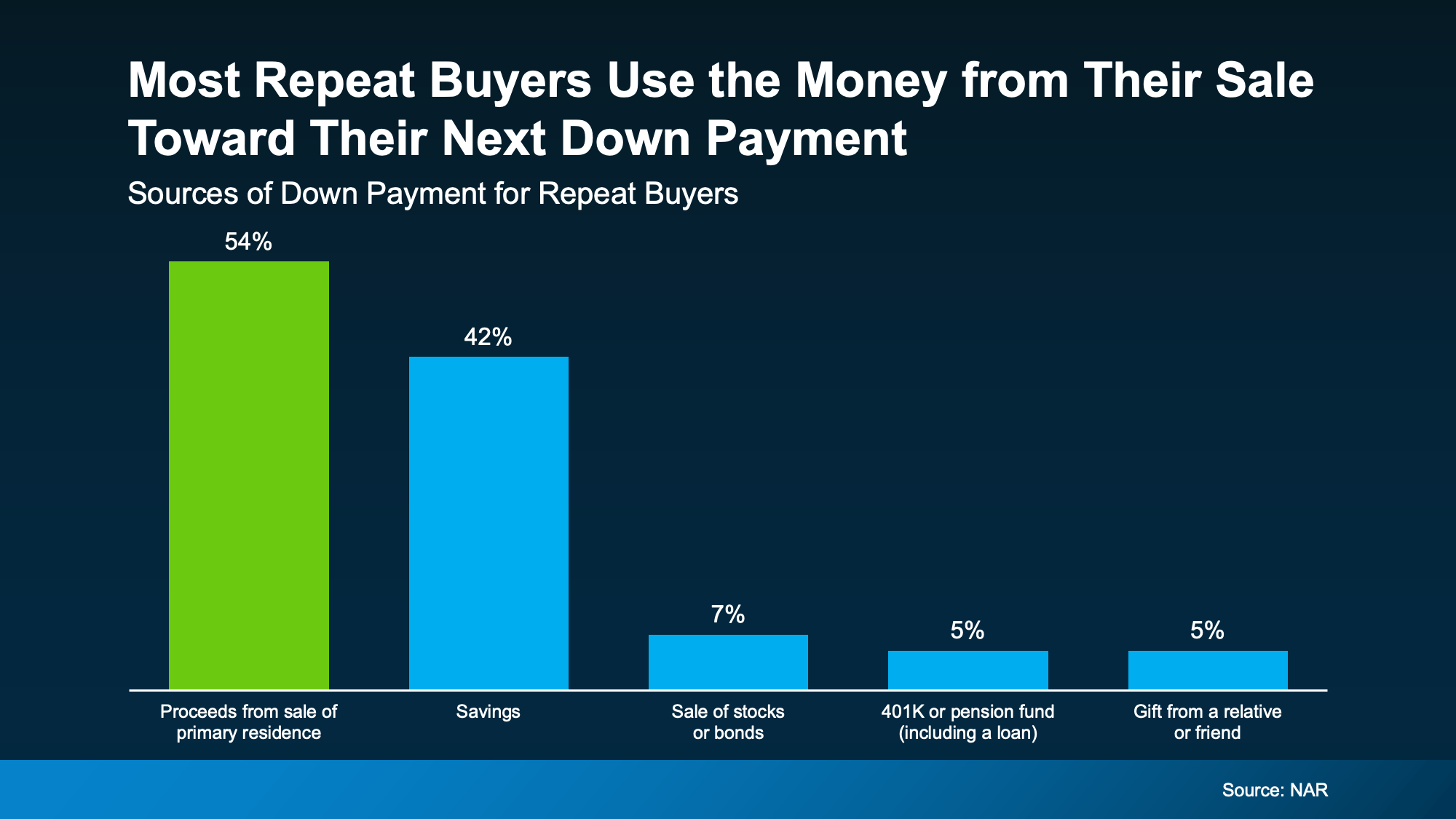
Your current home may have built equity over the years through mortgage payments and changes in market value. That equity could potentially help fund your next down payment.
And that’s where the move-up buyer conversation gets interesting.
You might be thinking, “There’s no way I can afford the house I want with today’s rates.”
Maybe.
But before ruling it out, find out what your current home is worth, what you owe, and how much equity you could potentially walk away with after selling costs.
Then have a lender run the numbers.
Sometimes the gap between “I can’t afford to move” and “I might be able to make this work” is smaller than you think.
Should You Put 20% Down? Start With the Numbers
There’s no universal answer.
For one buyer, putting 20% down could reduce the monthly payment, eliminate PMI, and lower long-term interest costs.
For another buyer, putting less down and keeping more cash available could be the smarter move.
That’s why you shouldn’t make the decision based on an old rule or what your neighbor did.
Run the numbers.
Look at your equity. Consider your cash reserves. Compare loan options. Think about how long you plan to stay in the home. Then decide what makes sense for your goals.
The Bottom Line
You don’t need 20% down to buy your next home—but if you’ve owned your current home for several years, you may have built enough equity to make a larger down payment possible.
And if putting 20% or more down fits comfortably within your financial plan, it could mean a smaller loan, lower monthly costs, less interest, no PMI on many conventional loans, and potentially a stronger offer.
Your equity could be more powerful than you realize.
Call or text us at 855-935-MORE. Let’s look at your options and see what your next move could look like.
Check out this article next