


Don't let a down payment hold you back! Download the Made 4 More app to explore accurate home listings, discover affordable opportunities, and take your first step toward homeownership with confidence. 🔑
Down payment assistance programs could help you get closer to owning a home without carrying the entire upfront cost alone.
Many buyers don't even realize these programs exist. Some are designed for first-time buyers, while others may help repeat buyers, military families, and households with different income levels.
Let's break down how down payment assistance works, who may qualify, and how it could help you get into a home sooner.
What Is Down Payment Assistance, and How Can It Help?
Think of down payment assistance (DPA) as a financial boost toward your home purchase.
These programs are designed to help eligible buyers cover some of the upfront costs of buying a property. Depending on the program, assistance may go toward your down payment, closing costs, or both.
Where does the money come from?
DPA programs are offered through different organizations, including:
- State and local housing agencies
- City and county governments
- Nonprofit organizations
- Community development programs
- Other approved housing organizations
And the potential benefits are worth exploring.
According to Down Payment Resource, qualified buyers could receive an average assistance benefit of approximately $18,000.
That's a significant amount of help when you're trying to make your homeownership goals a reality.
Imagine getting assistance with part of your down payment instead of having to save the entire amount from scratch.
For some buyers, that could mean moving closer to purchasing a home sooner than expected.
Why it matters: Your savings might not need to cover every upfront expense. The right assistance program could help bridge the gap between renting and owning.
Is Down Payment Assistance Only for First-Time Homebuyers?
Here's a common misconception: You must be a first-time homebuyer with a limited income to qualify for down payment assistance.
That's not always true.
Many programs are designed specifically for first-time buyers, but others are available to repeat buyers and households with different financial circumstances.
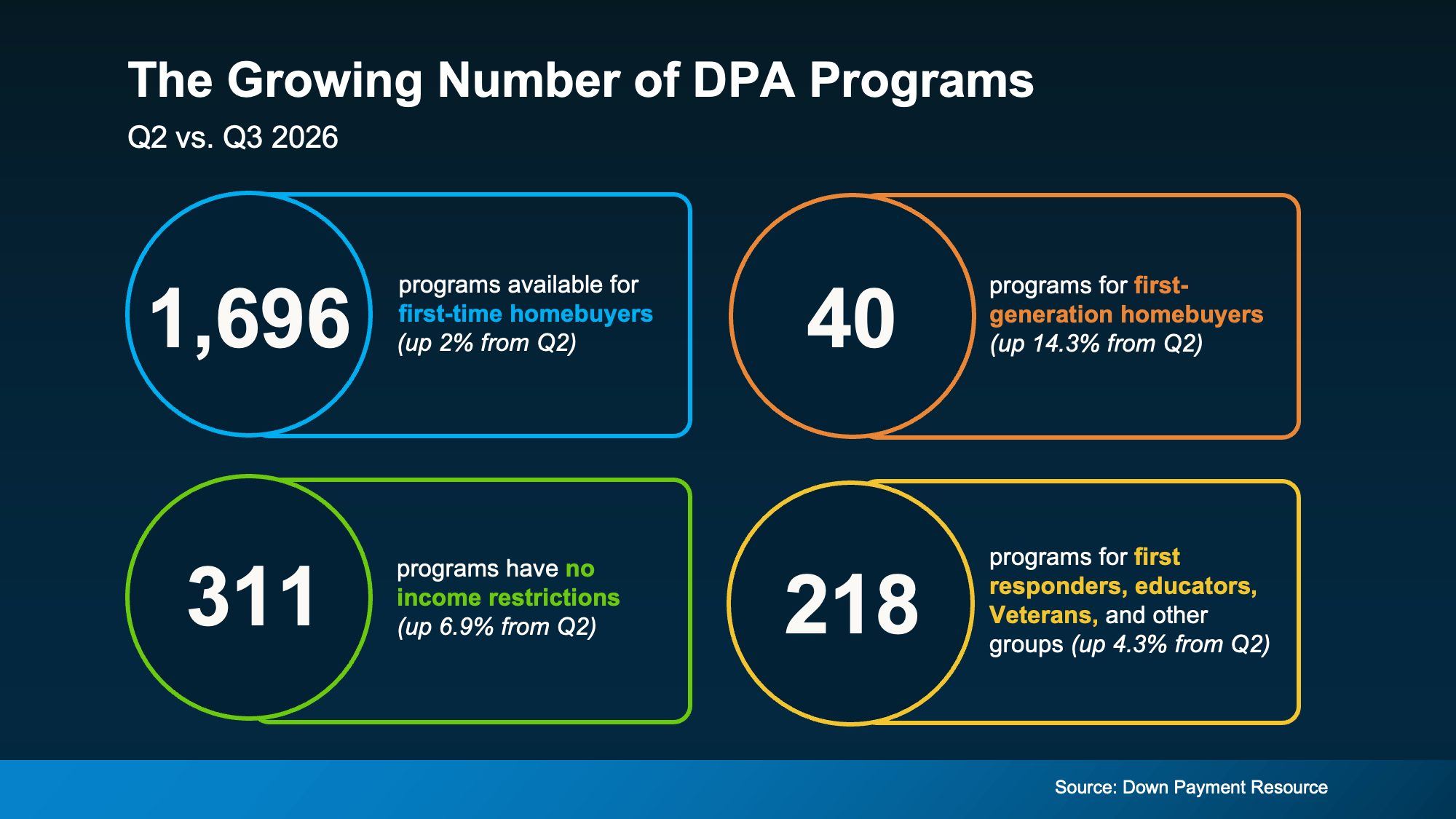
Down Payment Resource tracks more than 2,800 assistance programs, and its data highlights just how varied these opportunities can be.
Here's a closer look:
- 74% offer down payment or closing-cost assistance.
- 62% are available to first-time homebuyers.
- 11% have no income restrictions.
- 40% support manufactured housing.
- 35% allow multi-unit property purchases.
Notice something interesting?
Not every program has the same requirements, and not every opportunity is limited to someone purchasing their first home.
In fact, some repeat buyers may qualify under the definition of a first-time homebuyer.
Many housing and loan programs use a three-year ownership lookback period. This means someone who hasn't owned and occupied a home during the previous three years may qualify as a first-time buyer under certain program rules.
Of course, eligibility requirements vary, so you'll need to check the specific program.
And there's more good news.
According to the supplied Down Payment Resource data, available programs reached an all-time high in Q3 2026, increasing by 8% compared with the previous year.
Why it matters: Don't automatically assume you won't qualify. Your income, location, home type, and ownership history could open doors to assistance programs you didn't know existed.

How Do Down Payment Assistance Programs Actually Work?
Now for the big question: If you qualify, how do you actually receive the assistance?
There isn't just one type of program. The amount, repayment requirements, and eligibility rules depend on the organization offering the assistance.
Here are some common options:
Forgivable Loans
Some programs provide assistance as a loan that may be forgiven if you meet certain requirements.
For example, you may need to live in the home for a specified period. If you satisfy all the program conditions, you may not have to repay the assistance.
Deferred-Payment Loans
These are sometimes called silent second mortgages.
The assistance is provided as a second loan, but payments may be postponed until a specific event occurs, such as selling the property, refinancing, or paying off the primary mortgage.
Always review the repayment conditions before accepting the assistance.
Repayable Second Mortgages
Some programs provide additional financing that must eventually be repaid. These loans may have different payment schedules, interest rates, and terms.
Grants
Grants are another option worth exploring.
Unlike traditional loans, qualifying grants generally don't require repayment when all program conditions are met.
According to the supplied Down Payment Resource figures, grants currently account for approximately 8% of available DPA programs.
The important thing is understanding what you're receiving before signing anything.
A program offering $15,000 in assistance may sound fantastic, but you need to know whether it's a grant, a forgivable loan, or money you'll eventually have to repay.
Why it matters: The best program isn't necessarily the one offering the biggest amount. It's the one whose requirements, repayment terms, and benefits fit your financial situation.
How Do You Find the Right Down Payment Assistance Program?
This is where having the right people in your corner makes a difference.
With thousands of assistance programs available, finding the right one can feel overwhelming.
You don't have to figure everything out alone.
Start by speaking with a trusted mortgage loan officer who understands down payment assistance.
They can help you explore available programs and determine which ones may fit your situation.
Here are a few questions worth asking:
- Are there down payment assistance programs available in my area?
- What income and credit requirements should I meet?
- Do I need to complete a homebuyer education course?
- Can the assistance cover both my down payment and closing costs?
- Is the assistance a grant, forgivable loan, or repayable loan?
- Can I qualify if I've owned a home before?
- Are there restrictions on the type or price of property I can purchase?
You should also ask whether the assistance can be combined with your preferred mortgage program.
Remember, getting approved for assistance doesn't automatically mean you're approved for a mortgage. You'll still need to meet your lender's qualification requirements.
The goal is to understand your options before you start making offers.
Why it matters: A quick conversation with a knowledgeable loan officer could uncover opportunities that might otherwise go unnoticed.
The Bottom Line: Don't Let Your Down Payment Stop You From Exploring Homeownership
Saving for a home can take time, but that doesn't mean you have to put your dreams on hold without exploring every available option.
Down payment assistance programs may help eligible buyers reduce their upfront expenses, cover certain closing costs, and move closer to owning a home.
And remember, these opportunities aren't necessarily limited to first-time buyers or households with lower incomes.
The key is knowing where to look, understanding the requirements, and finding a program that works with your financial goals.
Before you spend another year thinking homeownership is out of reach, find out what assistance may already be available to you.
Call or text us today at 855-935-MORE.
Check out this article next