



Mortgage rates can be confusing. Get accurate listings and make confident decisions with the Made 4 More app—without your information being sold.
Download the app and start your home search today! 🏡📲
If you’ve been watching mortgage rates lately, you’ve probably heard the same thing over and over:
“The Fed raised rates, so mortgage rates are going up.”
Sounds simple, right?
Except it’s not exactly true.
The Federal Reserve plays a major role in the economy, but it doesn’t directly set the mortgage rate you get when you buy a home. Mortgage rates are influenced by a much bigger mix of inflation, investor expectations, the economy, and the bond market.
So what does the Fed actually control? And more importantly, what does all of this mean if you’re trying to buy or sell a home right now?
Let’s make it simple.
The Big Mortgage Rate Myth
MYTH: The Federal Reserve sets mortgage rates.
REALITY: The Fed influences the environment that mortgage rates operate in—but it doesn’t simply pick a number and tell lenders what to charge.
Think of the Fed as someone steering the ship, not someone setting the speedometer.
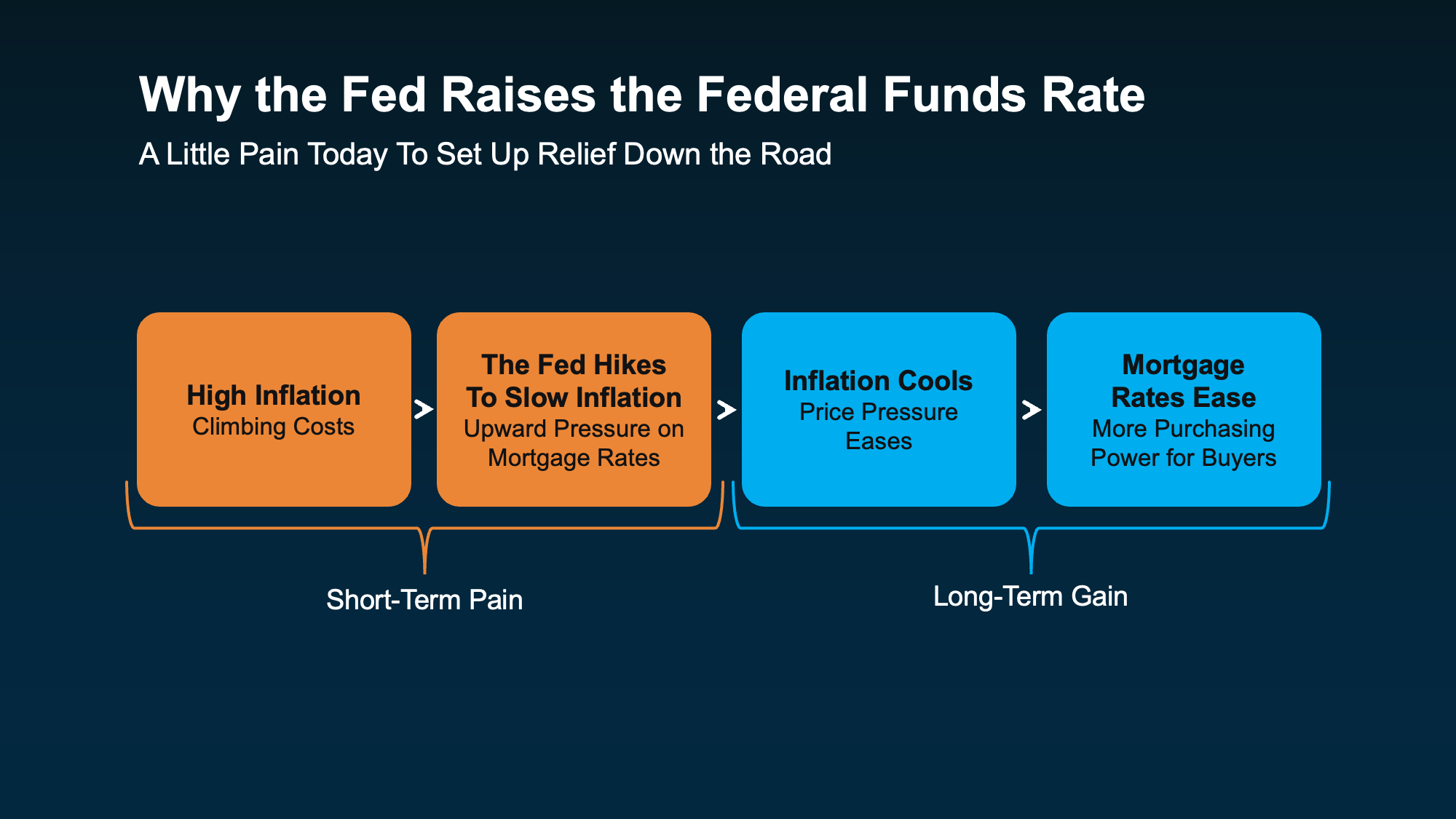
The Fed controls the Federal Funds Rate, which is a short-term interest rate banks use when lending to one another. Mortgage rates, however, are generally influenced more directly by longer-term bond markets and investor expectations.
That distinction matters.
Because the Fed can make decisions that push mortgage rates higher or lower, but there isn't a one-for-one relationship between a Fed rate change and the rate on your 30-year mortgage.
So What Actually Moves Mortgage Rates?
Several factors can move mortgage rates, including:
- Inflation
- Economic growth
- Employment and job creation
- Investor expectations
- The bond market
- Government debt and Treasury yields
- Federal Reserve policy
One of the most important benchmarks to watch is the 10-year Treasury yield.
Why?
Investors use Treasury bonds as a major reference point when pricing longer-term investments, including mortgage-backed securities. When investors expect inflation or stronger economic growth, yields can rise—and mortgage rates often feel the pressure.
When inflation expectations cool and investors become more comfortable with the economic outlook, yields can move lower, potentially creating more breathing room for mortgage rates.
That's why mortgage rates can move even when the Fed hasn't made a new announcement.

Why Waiting for “The Perfect Rate” Can Backfire
This is where buyers can get stuck.
They wait for rates to fall.
Then rates fall a little—but home prices increase.
Or competition picks up.
Or sellers become less willing to negotiate.
Suddenly, the lower rate doesn't necessarily mean you got the better deal.
Here's the bigger question:
Would you rather wait for a rate you can't predict—or build a strategy around the market that's actually in front of you?
A mortgage rate isn't permanent.
The home you buy, however, is.
If you buy a home that fits your budget today and rates improve later, you may have an opportunity to refinance.
Of course, refinancing isn't guaranteed and comes with its own costs and qualifications. But it’s one reason today's rate shouldn't automatically eliminate a good opportunity.
Could the Fed Hike Rates Again in 2026?
There’s still a possibility of another Federal Reserve rate hike before the end of 2026. According to CME FedWatch, market expectations show a strong chance of at least one more hike.
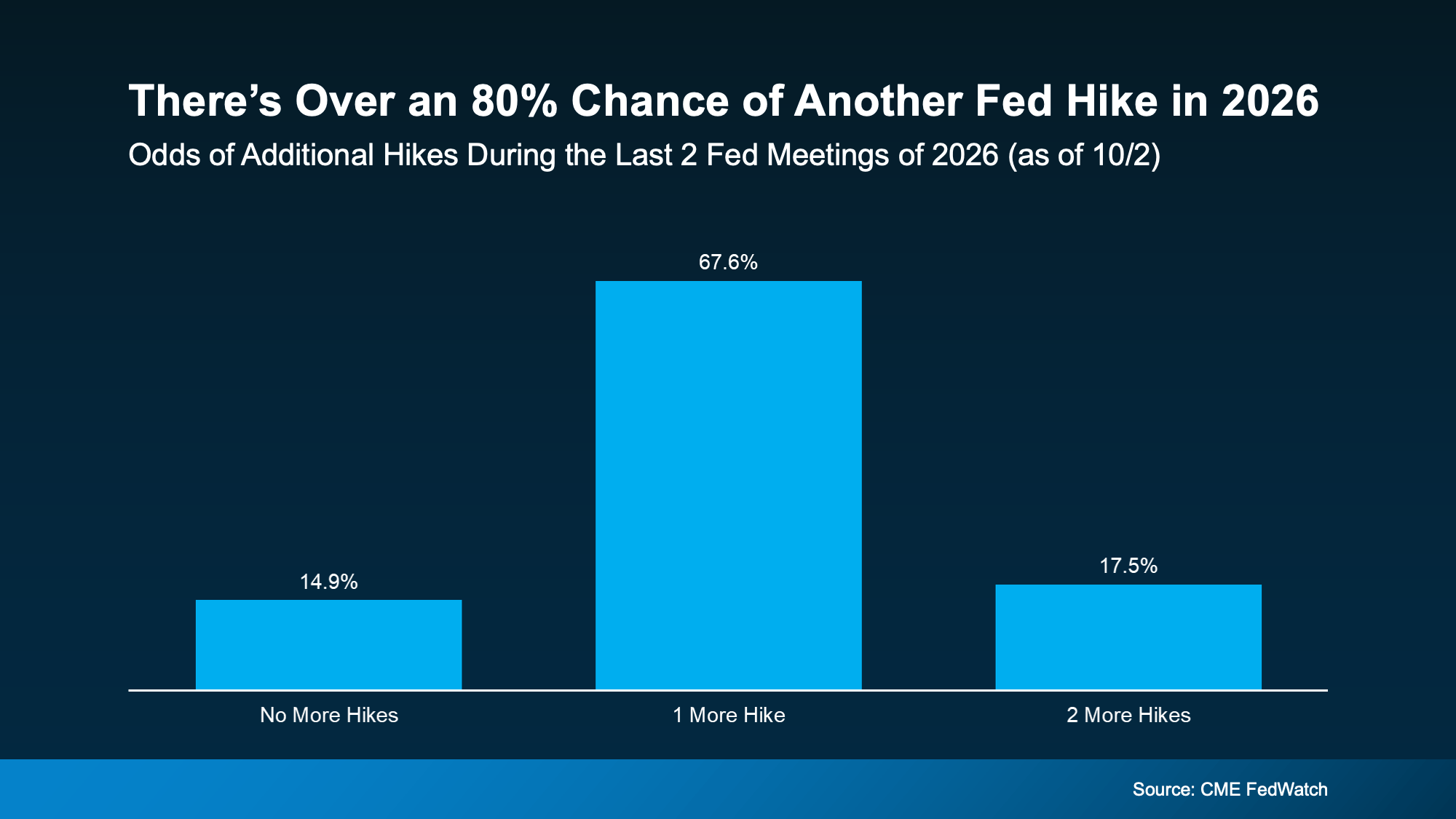
Source: CME FedWatch
The Fed doesn’t directly set mortgage rates, but another hike could keep upward pressure on borrowing costs in the short term. That’s why buyers shouldn’t make their plans based solely on guessing what the Fed will do next.
If You're Buying, Focus on the Payment—Not Just the Rate
Instead of asking only:
“What's the mortgage rate?”
Ask:
“What will my total monthly payment be?”
That includes things like:
- Principal and interest
- Property taxes
- Homeowners insurance
- HOA fees, if applicable
- Mortgage insurance, if applicable
- Maintenance and other ownership costs
A slightly different rate may not change your decision nearly as much as the home's price, property taxes, insurance, or seller concessions.
And don't forget about negotiation.
In the right situation, a seller concession or rate buydown could potentially make a meaningful difference to your upfront costs or monthly payment.
That's why having a knowledgeable real estate agent and lender working together can be so valuable.
If You're Selling, Today's Buyers Are Doing the Math
Higher borrowing costs can make buyers more payment-sensitive.
That means sellers can't always rely on the same strategy that worked when rates were dramatically lower.
Today's buyer may be asking:
“What can I actually afford every month?”
not simply:
“How much house do I want?”
That can make pricing especially important.
Depending on the property and market, sellers may want to consider strategies such as:
- Pricing competitively
- Offering seller concessions
- Exploring a rate buydown
- Making the home show-ready
- Highlighting features that reduce buyer concerns
- Creating a marketing strategy designed around today's buyer
Sometimes a strategic concession can be more attractive to a buyer than simply dropping the sales price.
The Real Opportunity May Be Flexibility
Here's the part many people miss.
A changing rate environment doesn't automatically mean:
BUY NOW.
It also doesn't automatically mean:
WAIT.
It means you need a plan.
If you're buying, understand your budget, get properly pre-approved, compare loan options, and know what payment you're comfortable carrying.
If you're selling, understand your competition, price strategically, and make your home stand out to today's buyers.
The market doesn't have to be perfect for you to make a smart move.
It just needs to make sense for your situation.
The Bottom Line
The Fed matters. But the Fed doesn't directly set your mortgage rate.
Mortgage rates are influenced by a complicated combination of inflation, economic conditions, bond-market movements, and investor expectations.
Call or text us at 855-935-MORE.
Check out this article next