


Find Your First Home Sooner
Get accurate listings, discover better opportunities, and shop with confidence. Download the Made 4 More app today—without your information being sold.
If buying your first home feels like a goal that keeps moving further away, you’re not alone.
Between rising home prices, rent, closing costs, and the pressure to save a massive down payment, it’s easy to think, “Maybe I’ll be ready in a few more years.”
But what if you don’t actually need to wait that long?
You may be able to shorten your path to homeownership by making two simple changes: buying a more affordable starter home and reconsidering the idea that you need 20% down.
Think of it like taking a shortcut instead of walking the entire way around the block. You’re still getting to the same destination—just faster.
How Long Does It Really Take to Get Ahead by Owning?
Before we talk shortcuts, let’s define one important milestone: breaking even.
Breaking even is the point when the overall cost of owning a home becomes roughly comparable to what you would have spent renting over the same period. After that point, homeownership can start putting you in a stronger financial position than continuing to rent.
As Kara Ng, Senior Economist at Zillow, explains, buyers should consider not only when they can afford to purchase, but also how long they need to stay before owning makes more financial sense than renting.
So, how long does that typically take?
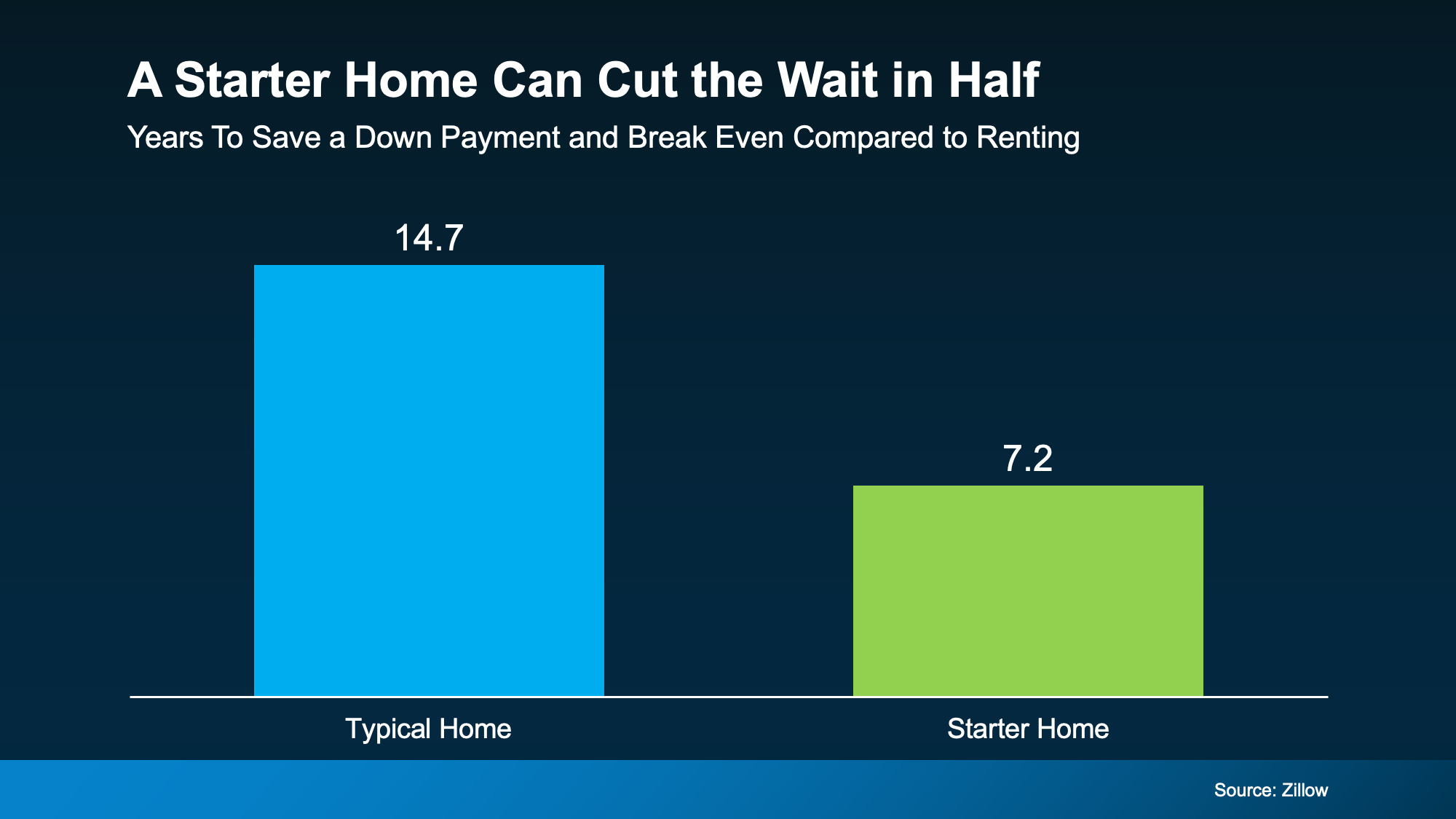
Using the figures in the Zillow analysis, it can take approximately 8.5 years to save for a 20% down payment on a typical mid-priced home, followed by another 6.2 years to reach the break-even point.
That’s nearly 15 years.
Fifteen years is a long time.
But here’s the good news: that timeline isn’t carved in stone.
It depends heavily on the price of the home you choose and how much you put down.
Change those two variables, and your timeline can change dramatically.
Move #1: Start With a Starter Home Instead of Your “Forever” Home
Let’s be honest. Your first home doesn’t have to be your dream home.
It just needs to be a smart first step.
A starter home is generally a property toward the lower end of prices in a particular market. It might be a condo, townhome, smaller single-family home, or a property that needs a little updating.
And that can work in your favor.
Why?
Because you don’t have to save as much money to buy a less expensive home.
According to the Zillow figures referenced above, buying a starter home can cut the timeline to saving for the purchase and reaching the break-even point to about 7.2 years, compared with nearly 15 years for a typical mid-priced home with a 20% down payment.
That’s years of your life you could potentially get back.
And here’s another way to look at it: your first home doesn’t have to be the last home you ever own.
It can be your launchpad.
You build equity. You gain experience as a homeowner. Your property may appreciate over time. Then, when your circumstances and finances change, you can explore your next move.
The goal isn’t necessarily to buy bigger right away.
The goal is to get into the market when it makes sense for you.

Move #2: Stop Assuming You Need 20% Down
This is one of the biggest misconceptions first-time buyers have.
You hear “20% down” so often that it can start to sound like a rule.
It isn’t.
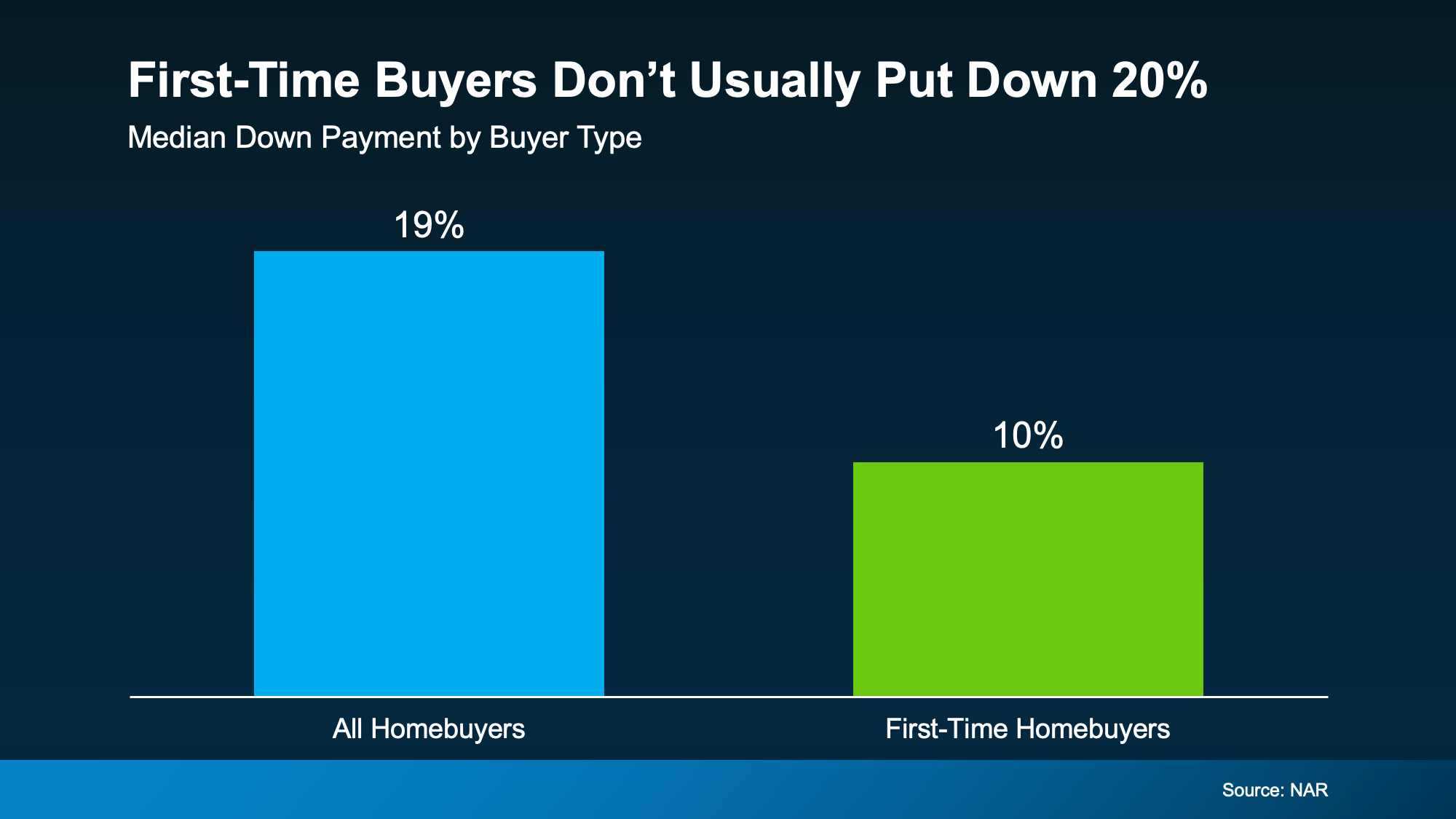
Many first-time buyers put down significantly less. According to the National Association of REALTORS®, the median down payment for first-time buyers has been around 10%.
Depending on the loan program and your qualifications, some conventional loans may allow down payments as low as 3%, while FHA loans can require as little as 3.5%. Certain eligible buyers may even qualify for programs requiring no down payment.
Of course, a smaller down payment can come with trade-offs, such as mortgage insurance or potentially higher monthly costs. That’s why you shouldn’t choose a loan simply because it has the smallest upfront requirement.
But the bigger point is this:
You may not need to spend years saving for 20% before you can even start looking.
There are also thousands of down payment assistance programs available across the country. Some qualified buyers may even be able to combine multiple sources of assistance to help reduce their upfront costs.
So instead of asking, “How can I save 20%?”
Ask:
“What programs, loan options, and homes could make buying possible for me sooner?”
That’s a much better question.
The Real Shortcut? Combine Both Moves
Now imagine combining the two strategies.
Instead of waiting years to save 20% for a mid-priced home, you explore a more affordable starter home and determine whether a smaller down payment could work for your situation.
Suddenly, the mountain doesn’t look quite so tall.
You may still need to save. You may still need to improve your credit, manage debt, budget for closing costs, and make sure the monthly payment fits comfortably within your finances.
But you’re no longer automatically playing by the rules you assumed you had to follow.
And that can make a huge difference.
What Could You Afford If You Started Looking Differently?
This is where having the right information matters.
Instead of scrolling through homes based only on the highest price a lender says you could afford, look at what actually fits your lifestyle and long-term goals.
Consider:
- What monthly payment feels comfortable?
- How much cash do you want left after closing?
- Would a condo or townhome make sense as a first step?
- Are there down payment assistance programs you may qualify for?
- How long do you realistically plan to stay?
- What neighborhoods have homes within your target price range?
- Are there opportunities that other buyers may be overlooking?
The right home isn’t necessarily the biggest one you can buy.
Sometimes, it’s the one that gets you moving forward without stretching you too thin.
Don’t Overpay Just Because You’re Excited
There’s another piece of the first-time buyer puzzle that often gets overlooked: finding the right deal.
When you finally see a home you love, it’s easy to get emotionally attached. Suddenly, paying a little more—or waiving something you shouldn’t—can feel tempting.
Don’t let excitement make the decision for you.
Knowing how to identify motivated sellers, off-market opportunities, pricing opportunities, and potential red flags can help you shop smarter.
That’s why we created resources specifically for buyers who want to make informed decisions instead of simply jumping on the first house they like.
Ready to Get Into Your First Home Sooner?
You don’t necessarily need to wait 10, 15, or 20 years to become a homeowner.
A more affordable starter home could shorten your timeline. A smaller down payment could get you moving sooner. The right assistance program could reduce your upfront costs. And the right strategy could help you avoid overpaying.
Your first home doesn’t have to be perfect.
It just needs to be the right next move.
If you’re ready to find out what that move could look like, call or text us at 855-935-MORE.
Check out this article next