


📲 Find a Home That Fits Your Budget.Exploring an ARM? Download the Made 4 More app to find accurate listings and discover your dream home—with confidence and without your info being sold!
When mortgage rates climb, buying a home can feel like chasing a moving target. Just when you think you’ve found a home you can afford, the numbers change. Suddenly, your dream home feels a little farther away.
But here’s the thing: a higher mortgage rate doesn’t automatically mean homeownership is out of reach.
Some buyers are exploring another financing option: the adjustable-rate mortgage (ARM). It can offer a lower starting interest rate than a comparable fixed-rate mortgage, potentially making monthly payments more manageable at first. But there’s a catch—you need to understand what happens when that rate changes.
Let’s break it down so you can make a smarter move.
What Is an Adjustable-Rate Mortgage, Anyway?
Think of an ARM like an introductory offer. You get a set interest rate for a specific period, then the rate can adjust based on market conditions.
With a traditional fixed-rate mortgage, your interest rate stays the same for the life of the loan. That makes your principal-and-interest payment predictable.
An ARM works differently:
- Lower starting rate: You may qualify for a lower initial rate than with a comparable fixed-rate loan.
- An introductory period: Your rate stays fixed for a specified number of years.
- Future adjustments: After that period, your rate can rise or fall according to the loan’s terms.
- Potential payment changes: Your monthly principal-and-interest payment may increase or decrease when the rate adjusts.
Why are buyers paying attention? Because even a modest difference in interest rates can affect how much home you can comfortably afford.
A lower initial payment might help you qualify for a home that otherwise feels just out of reach. However, that starting payment is only part of the story.
Why Are More Buyers Considering ARMs?
Let’s face it: affordability is a major hurdle for many homebuyers. Between home prices, insurance, property taxes, and closing costs, every dollar matters.
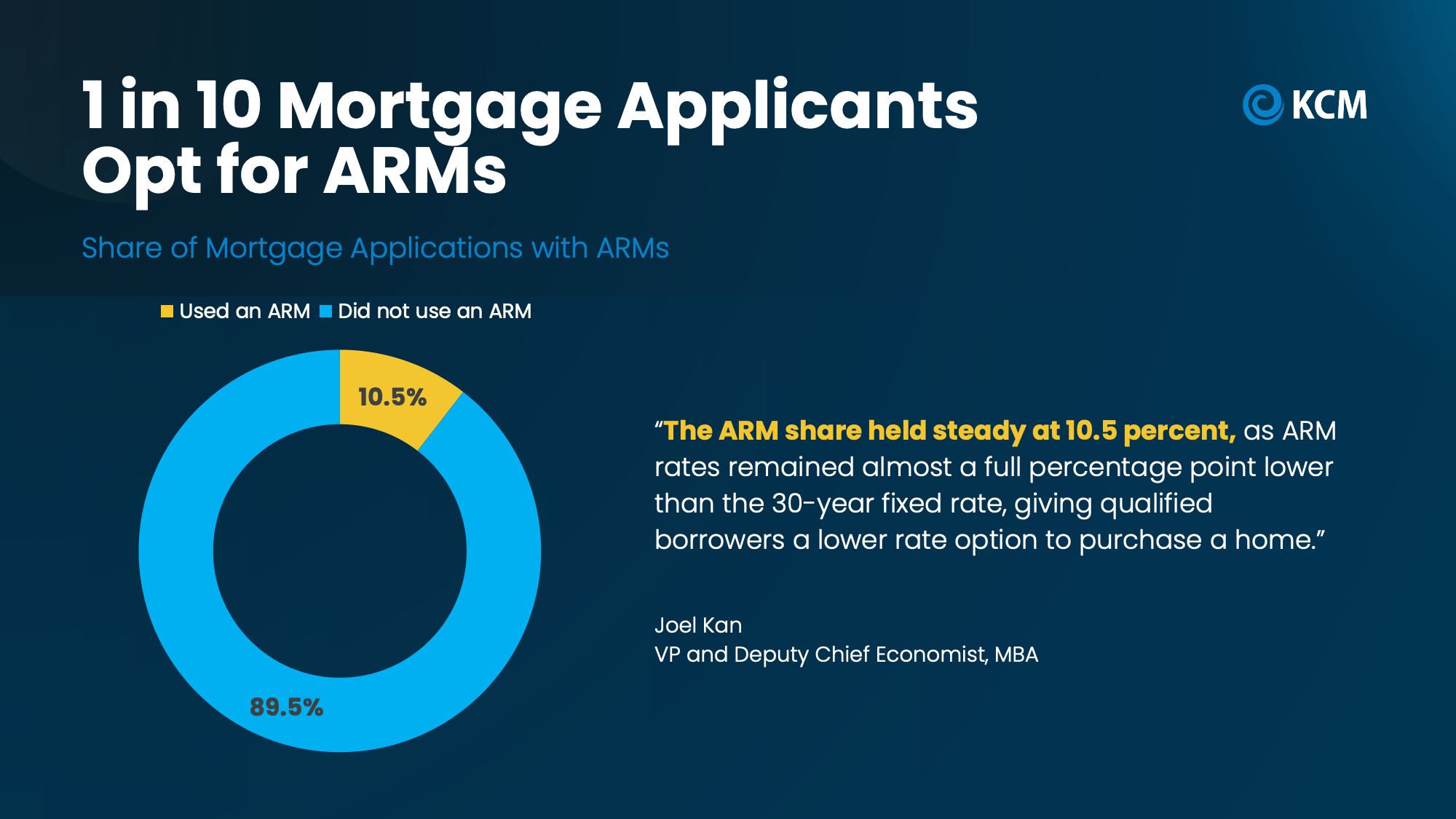
An ARM may help ease some of that pressure by offering a lower initial interest rate. Depending on the loan terms and market conditions, the savings could make a meaningful difference in your monthly budget.
For some buyers, that extra breathing room could help cover moving expenses, build an emergency fund, or handle the other costs that come with owning a home.
But don’t confuse a lower starting payment with a cheaper home. An ARM changes how your loan is priced over time; it doesn’t eliminate the cost of homeownership.
The real question isn’t just, “Can I afford the payment today?” It’s, “Can I still afford this home if my payment increases later?”
That’s where the details matter.

The 5/1 ARM: How Does It Work?
One ARM structure you may encounter is the 5/1 adjustable-rate mortgage.
Here’s what the numbers mean:
- 5: Your initial interest rate is fixed for the first five years.
- 1: After the initial period, the rate can adjust once each year.
Imagine buying a home with a 5/1 ARM. For the first five years, your interest rate stays the same. When that period ends, your rate may change according to the loan’s index, margin, and adjustment rules.
If interest rates have fallen, your rate and payment could decrease. If rates have risen, your payment could go up.
Most ARMs have adjustment caps that limit how much the rate can change at each adjustment and over the life of the loan. Still, those limits don’t guarantee that the payment will remain affordable.
And remember, not every ARM follows a 5/1 schedule. You may also see options such as 5/6, 7/6, or 10/6 ARMs, which have different adjustment periods. Always review the specific loan terms.
The Pros and Cons of an ARM
Before choosing an adjustable-rate mortgage, weigh the potential benefits against the risks.
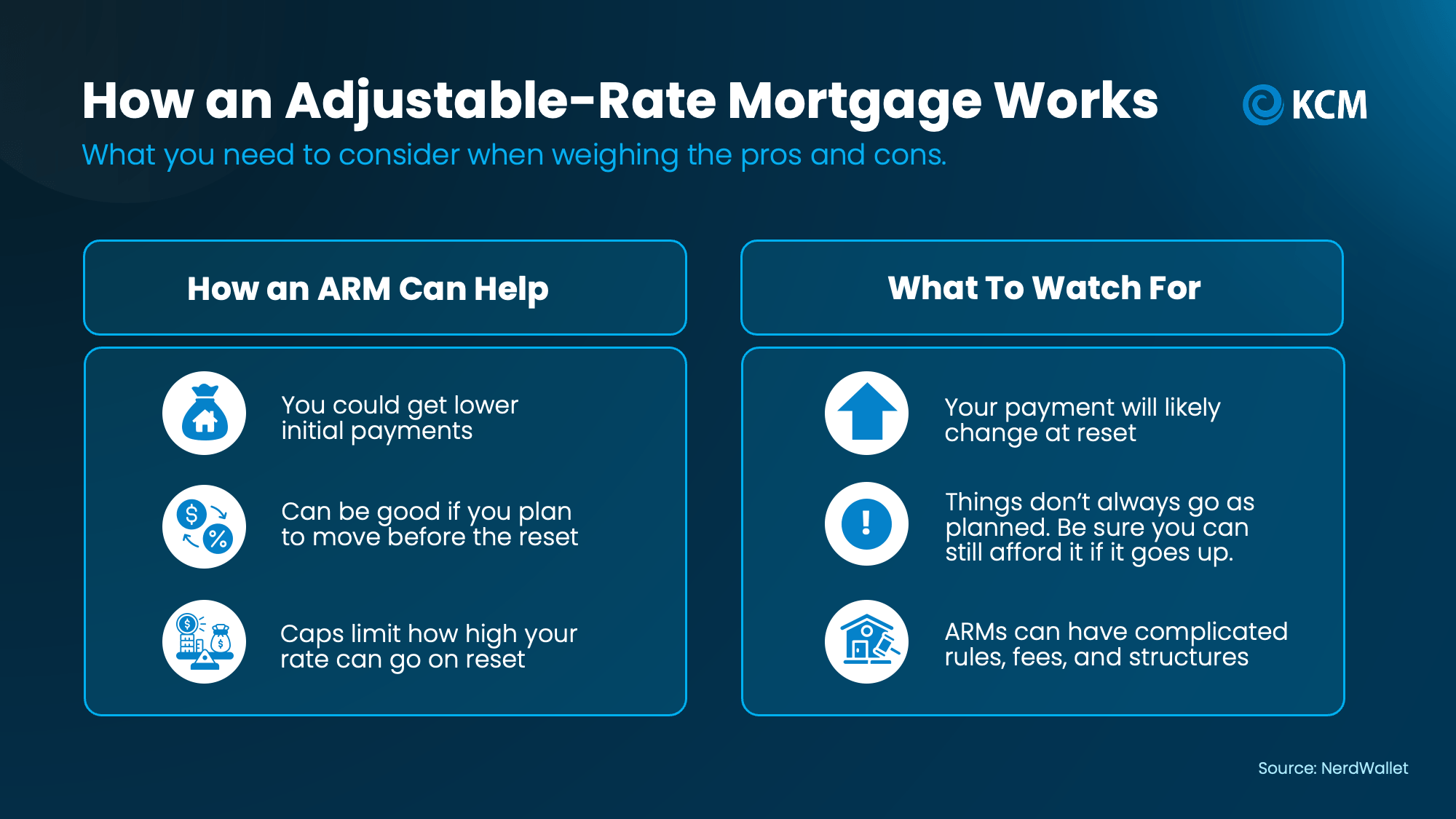
The Upsides
- A potentially lower initial payment
A lower starting rate may reduce your initial monthly principal-and-interest payment compared with a similar fixed-rate mortgage.
- More flexibility in your budget
If the initial payment is lower, you may have more room for savings, home maintenance, and other expenses—provided you manage that extra cash wisely.
- An option for buyers with a shorter time horizon
If you expect to move before the first rate adjustment, an ARM might be worth discussing with a lender. But plans can change, and selling a home can take time and money.
- The possibility of benefiting from falling rates
Depending on your loan terms, a future adjustment could lower your interest rate. Just don’t build your budget around that possibility.
The Potential Downsides
- Your payment could increase
This is the biggest risk. If rates rise when your introductory period ends, your monthly payment may become significantly more expensive.
- Budgeting becomes less predictable
A fixed-rate mortgage offers more certainty about your principal-and-interest payment. With an ARM, you need to prepare for possible increases.
- Refinancing isn’t guaranteed
You might plan to refinance into a fixed-rate mortgage before your ARM adjusts. However, you’ll need to qualify for the new loan, and interest rates, home values, credit requirements, or your financial situation may not cooperate.
- Selling early can be costly
If you need to sell sooner than expected, you could face transaction costs or unfavorable market conditions. An ARM isn’t a guarantee that you’ll save money over the time you own the home.
How Are Today’s ARMs Different From the Loans Behind the 2008 Housing Crisis?
You may remember how adjustable-rate mortgages became associated with the housing crisis of 2008. Some borrowers took out risky loans with payment structures they couldn’t sustain, while lending practices sometimes failed to adequately assess whether borrowers could repay.
Today, mortgage lending includes important consumer protections. For many covered mortgages, the federal Ability-to-Repay rule requires lenders to make a reasonable, good-faith determination that a borrower can repay the loan. Certain qualified mortgage rules also restrict specific risky loan features.
However, that doesn’t mean every ARM is safe for every buyer. Loan terms vary, and borrowers still need to understand how their payments could change.
The lesson is simple: don’t choose a mortgage based on the introductory rate alone. Understand the entire loan, including the worst-case payment scenarios permitted by its terms.
What Happens When Your ARM Resets?
Your introductory period will eventually end. Before that happens, make a plan rather than waiting for a surprise in the mail.
Depending on your financial situation and available options, you could:
- Keep your current loan: Continue making payments if the adjusted amount fits your budget.
- Refinance into a fixed-rate mortgage: Potentially gain more payment predictability, provided you qualify and the new loan makes financial sense.
- Refinance into another ARM: Consider a different introductory period and loan terms if suitable options are available.
- Sell the property: Explore selling if moving fits your plans and the financial outcome works for you.
- Contact your loan servicer: Ask about available assistance if your payment becomes difficult to manage.
Here’s an important reminder: refinancing means applying for a new loan. Approval isn’t automatic, and closing costs may apply.
Keep your credit healthy, manage your debt, and maintain savings whenever possible. Those habits can help preserve your options if your circumstances change.
Questions to Ask Your Lender Before Choosing an ARM
Don't sign on the dotted line until you understand the numbers. Ask your lender:
- What is the initial interest rate, and how long will it last?
- How is the rate calculated after the introductory period?
- What are the first adjustment cap, subsequent adjustment caps, and lifetime cap?
- What would my payment look like if interest rates increased?
- What is the maximum payment I could face under the loan’s terms?
- Are there prepayment penalties or other important fees?
- How much would a comparable fixed-rate mortgage cost?
- Would I still be comfortable with this payment if I couldn’t refinance or sell when I expected?
Ask for written payment examples under different interest-rate scenarios. Then compare the ARM with a fixed-rate mortgage over the period you realistically expect to own the home.
Most importantly, build your budget around a payment you can handle—not a payment you hope will last.
Is an Adjustable-Rate Mortgage Right for You?
An ARM may be worth exploring if you have a strong financial cushion, understand the risks, and can manage a potential increase in payments.
A fixed-rate mortgage may be a better fit if predictable payments are your priority or a significant increase would put pressure on your finances.
Neither option is automatically better. The right choice depends on your income, savings, plans, risk tolerance, and the actual terms available to you.
And don't forget the property itself. A mortgage you can technically qualify for isn't necessarily a mortgage that leaves you financially comfortable.
The Bottom Line: Make Your Next Move With Confidence
Rising mortgage rates can make buying a home feel intimidating, but you may have more financing options than you realize. An adjustable-rate mortgage could offer an opportunity to lower your initial payment—but only if you understand the potential changes ahead and prepare for them.
Before making a decision, compare loan options, review the numbers with a qualified mortgage professional, and make sure the payment fits your budget today and tomorrow.
Call or text 855-935-MORE to connect with Made 4 More Realty.
Check out this article next