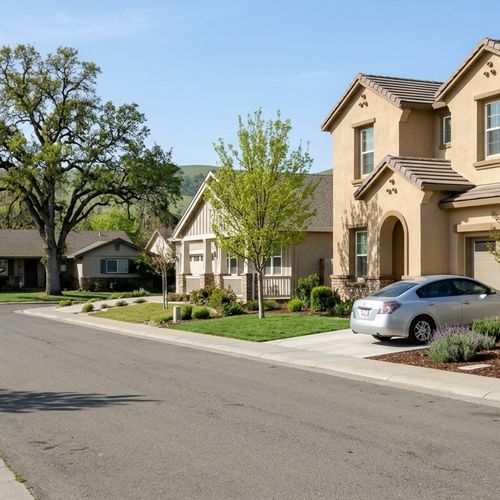



Most Lincoln addresses get water, sewer, and trash from the City and power and gas over PG&E lines.
Key Takeaway
In Lincoln, you can't shop for most utilities since the City bills water, sewer, and trash while PG&E delivers power and gas. Start with a home that has owned solar and a modest irrigated yard inside city limits, or treat a rural 95648 parcel on a well and septic as a completely separate budget. Lincoln homes recently sold in a median of 37 days (all homes, 90 days ending September 30, 2026), giving you enough time during the process to request the seller's past bills before you commit.
Who This Guide Is For
You're buying or moving into a home in Lincoln, CA, and need to know who to call for each service and what the monthly bills will depend on before you commit to a specific house.
Who Provides Utilities in Lincoln, CA?
Almost every buyer here gets their own roof and yard to power and water. Of the 279 homes sold in the 90 days ending September 30, 2026, 272 were single-family houses. The provider list is largely fixed across the city, so the property itself sets the bill. These local service details can help you weigh the pros and cons of living in Lincoln.
Water, Sewer and Trash from the City of Lincoln
The City of Lincoln manages water, wastewater, and solid waste and bills them together on a single monthly statement. The total includes fixed base charges plus your actual water usage. Residential solid waste for a one-can service is billed at $38.58 per month as of the current schedule, and adding a second can costs an extra $17.12 per month.
Lincoln's tap water comes mainly from regional surface water suppliers. The system delivers treated water purchased from the Placer County Water Agency, some of it originating from the Nevada Irrigation District, plus a small amount of groundwater pumped from local City-owned wells. New rates take effect July 1, 2026, as part of a City-conducted rate study supporting a new five-year rate structure.
This service applies only to addresses inside city limits, and a Lincoln mailing address doesn't guarantee that. The first setup step below explains how to confirm.
Electricity
Pacific Gas and Electric (PG&E) owns the local power lines and handles all outages. You can choose who generates your power, but you can't change who delivers it to your house.
Lincoln has no city-owned electric utility the way neighboring Roseville does, so Lincoln homeowners pay PG&E delivery rates.
PG&E's current E-TOU-C residential Time-of-Use plan has an on-peak window of 4:00 p.m. to 9:00 p.m. every day. Effective March 1, 2026, total bundled summer rates are about $0.52 per kWh on-peak and $0.40 off-peak, while winter rates sit around $0.40 on-peak and $0.37 off-peak. Delivery charges apply regardless of your generation choice and usually make up a large share of the bill.
Natural Gas
PG&E also supplies natural gas, and there's no separate gas choice in this market. Many newer builds lean on electric appliances and heat pumps, while older houses often run gas furnaces, water heaters, and ranges. Ask the seller which appliances run on gas.
Gas and electric come on one combined PG&E bill. A seller's average electric bill might leave out high winter gas costs, so always ask for full statements rather than a summary number.
Internet and TV
Broadband availability varies street by street in this fast-growing city, and new streets on the edge of town often have fewer wired options at first.
Check the exact address on the FCC National Broadband Map rather than trusting a citywide provider list. You enter any Lincoln address to see the fiber, cable, DSL, satellite, or fixed wireless services reported as available at that location. If you work from home, check before you write an offer.
What Drives Your Utility Bill in a Lincoln Home
These features are listed roughly by how much they can move the bill.
Solar: Owned, Leased or None
Under the 2019 Title 24 energy code, which took effect January 1, 2020, new single-family homes and multi-family buildings up to three stories must include a rooftop solar system. For a resale home, ask whether the system is owned, leased, or on a power purchase agreement, and when it was interconnected to the grid.
The California Public Utilities Commission approved the Net Billing Tariff (NEM 3.0) on December 15, 2022. It took effect April 15, 2023, replacing NEM 2.0 for new interconnection applications and paying less for exported power. Customers who submitted a qualifying NEM 2.0 application by April 14, 2023, keep their legacy terms for 20 years from their original interconnection date.
The seller disclosures should show whether a leased system or power purchase agreement transfers to you. If one does, it comes with its monthly payment and escalator. The lender and the leasing company both have to approve the transfer, which can slow down your closing.
Yard and Irrigation
The irrigated yard is the biggest variable in your water bill, especially during hot inland summers, because usage-based charges make a large green lawn expensive.
Ask the seller for their summer-month water bills specifically to see the peak costs. Replacing a lawn with low-water landscaping cuts the bill, but it's a project you pay for up front, and an HOA may have landscaping rules that limit what you can change.
Your PG&E Rate Plan
Most residential accounts are on time-of-use plans, so running the air conditioning, laundry, or an electric vehicle charger during the evening peak costs more. The rate plan doesn't transfer with the house.
A new owner either picks a plan or falls onto the default schedule. Ask PG&E to confirm your baseline territory allowance, which sets how much usage is billed at the lower tier. A seller's bills reflect their plan and habits, so your bill can come in higher in the same house if your schedule falls into peak hours.
Older Homes Near Old Town
Older housing near downtown Lincoln often has older insulation, single-pane windows, and aging HVAC and plumbing. These show up directly in heating and cooling costs.
Lean on your home inspection along with the seller's bills. Upgrades like new insulation, windows, or a heat pump can lower your bills, but you usually get quotes only after closing unless you gather them during your inspection period.
Rural Parcels with a Well and Septic
Unincorporated land outside city service boundaries typically gets water from a private well and sends wastewater to a septic system.
The Placer County Division of Environmental Health handles permits for these systems. Anyone installing, repairing, or modifying a septic system needs a permit and an approved site evaluation report, and the system must be inspected during construction and at completion. Only a licensed well driller can apply for a well permit, with a site plan showing required setbacks from groundwater hazards like septic lines.
You avoid a monthly City water bill, but you own the pump, the tank, and the testing. A failed septic system or a dry well is your repair to fund, not the City's.
How to Set Up Utilities When You Buy in Lincoln
Start as soon as your offer is accepted, so service stays on and nothing remains in the seller's name.
Confirm the Address Is Inside City Limits
Before you write an offer, check the address against the City's service-area map. The map tells you whether the home has City water, sewer, and trash or a private well and septic system.
The USPS designates 95648 as the ZIP code serving Lincoln, but it reaches far beyond city limits, so the mailing address alone won't tell you who provides your water. If the boundary near the city edge is unclear, ask the City utility office directly using the parcel number.
Ask the Seller for 12 Months of Bills
During your inspection contingency, request 12 months of City utility statements and PG&E statements. Also ask for the solar contract and interconnection paperwork. Together they give you a realistic view of the property's carrying costs over a full year.
In a market where the sale-to-list ratio for all homes recently hit 99.2% and there's only a 2.9-month supply of inventory (90 days ending September 30, 2026), sellers expect offers near the asking price. Asking for past bills and solar paperwork is a low-cost request that doesn't weaken your offer price. If you need help, Johnny Jennings at Made 4 More Realty can request these documents as part of the offer.
A seller can decline to provide them. Their usage won't match yours anyway, so treat the bills as a range rather than a promise.
Start City Water, Sewer and Trash Service
To open your account, complete the City's Request for Utility Services Form. A $34 processing fee to set up the account appears on the first bill. Give a start date tied to your closing day so service doesn't lapse.
The City's official page doesn't state a guaranteed lead time for activation. If you request service too close to closing, the account might still be in the seller's name on move-in day.
Transfer PG&E Service and Choose Your Power Option
Open a PG&E account effective on closing day, choose your rate plan, and decide whether to stay with the default generation provider or opt out. If the home has solar, confirm that the interconnection and net metering status carries over to your account.
Solar billing can take a cycle or two to move into your name, so your first true-up statement may be confusing.
Order Internet Before Closing
Book installation with a provider the FCC map lists for the address as soon as the seller accepts your offer. Install dates are set by the provider, not by your closing date, so build in a gap if you need service on day one.
Utility Costs That Show Up Somewhere Else
Some utility-related costs never arrive on a City or PG&E bill.
Assessments on the Property Tax Bill
Some Lincoln homes carry special assessments on the property tax bill that fund local infrastructure or landscaping. They never appear on a utility statement, so check the current tax bill before budgeting.
HOA Dues That Cover Shared Water
In many planned communities, including active-adult neighborhoods like Sun City Lincoln Hills, HOA fees pay for common-area landscaping water and lighting, so ask the association exactly what they cover. Rising common-area water costs can show up later as dues increases you don't control.
How to Narrow Your Choice of Home by Utility Costs
Ask these four questions when evaluating a listing:
- Is the address inside Lincoln city limits? If yes, read the City water, sewer, and trash profile and the setup steps. If no, go to the rural parcels section and the FAQ on well costs first.
- Does the home have solar, and does the seller own it outright? If there's a lease or power purchase agreement, read the solar section before writing an offer, because the contract transfers to you.
- How much of the lot is irrigated lawn rather than low-water landscaping? A large irrigated yard points you to the yard and irrigation section and the watering rules FAQ.
- Is there an HOA or special assessment that already pays for shared landscaping water or lighting? If so, read the section on utility costs that show up somewhere else, so you don't count the same cost twice.
If you want the most predictable electric bill, start with a home that has owned solar on the legacy NEM 2.0 terms described above. There's no lease payment to take over. If you want the lowest water bill on a single-family lot, start with a home inside city limits with mostly low-water landscaping, because City water charges rise with usage.
If you want water, sewer, and trash on one bill with no equipment of your own, start with addresses confirmed inside city limits on the City's map. If you want acreage and are fine owning your water system, start with rural 95648 parcels and budget for well and septic inspections. There's no monthly water or sewer bill, but permits and repairs are the owner's responsibility.
Lincoln Housing Market at a Glance
For longer-term trends, see the Lincoln housing market page.
- Median sale price, all homes: $620,704 (90 days ending 2026-09-30), up 3.5% year over year
- Median sale price, single family: $624,751 (90 days ending 2026-09-30), up 4.1% year over year
- Homes sold: 279 all homes, of which 272 single family (90 days ending 2026-09-30)
- Median days on market, all homes: 37 (90 days ending 2026-09-30)
- Sale-to-list ratio, all homes: 99.2%, with 19.6% sold above list (90 days ending 2026-09-30)
- Months of supply, all homes: 2.9, with 266 homes in inventory (90 days ending 2026-09-30)
- Median price per square foot, single family: $341 (90 days ending 2026-09-30)
Lincoln, CA Utilities FAQs
How Much Are Utilities in Lincoln, CA per Month?
It depends on the house. Both the City bill and the PG&E bill rise with usage, so the seller's 12 months of past bills are the best estimate for a specific address.
Is Lincoln, CA in Placer County, and Does That Affect Utilities?
Yes. Placer County Environmental Health permits wells and septic systems in unincorporated areas. Any well planned inside the City of Lincoln must first be approved by the City before the county issues its permit.
What ZIP Code Is Lincoln, CA, and Does It Decide Who Provides My Water?
Lincoln's ZIP code is 95648, but it covers land outside city limits, so it doesn't decide your water service. Confirm the parcel's status with the City utility office.
What Does a Private Well Cost Compared with City Water in Lincoln?
A well has no monthly water bill, but you pay for pump maintenance, water testing, permits, and any repairs. City water is a usage-based monthly bill with no equipment of your own.
Does Lincoln, CA Have Watering Restrictions?
Yes. Under the municipal code, watering lawns and gardens from an open hose is prohibited, a spray or nozzle must be used, and the City reserves the right to limit irrigation hours during shortages. Confirm the current stage with the City, since rules change with drought conditions.
Do I Need a Deposit to Start Utilities in Lincoln, CA?
PG&E is prohibited from requiring establishment-of-credit deposits for new residential service. The City adds the account processing fee described in the setup steps to your first bill.
Sources
- Redfin: Data Center
- City of Lincoln: Utility Rate Information
- City of Lincoln: Water
- City of Lincoln: Request for Utility Services
- City of Lincoln: Water Shortage Contingency Plan
- PG&E: Electric Schedule E-TOU-C
- PG&E: Gas Rule 6
- City of Roseville: About Roseville Electric
- Enphase: Understanding NEM 3.0
- California Energy Commission: 2019 Building Energy Efficiency Standards
- Placer County: Drilling a Water Well
- Postcodebase: Lincoln ZIP Code
- FCC: National Broadband Map Help
Check out this article next