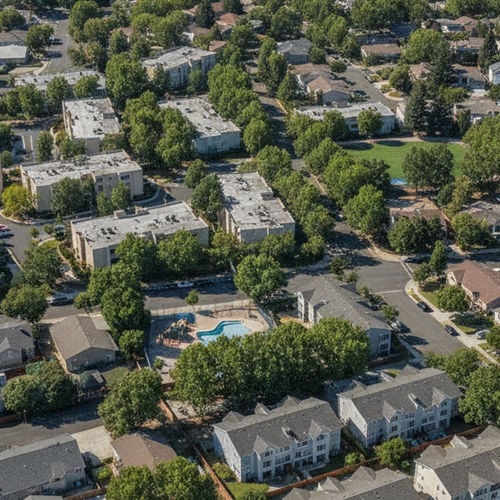


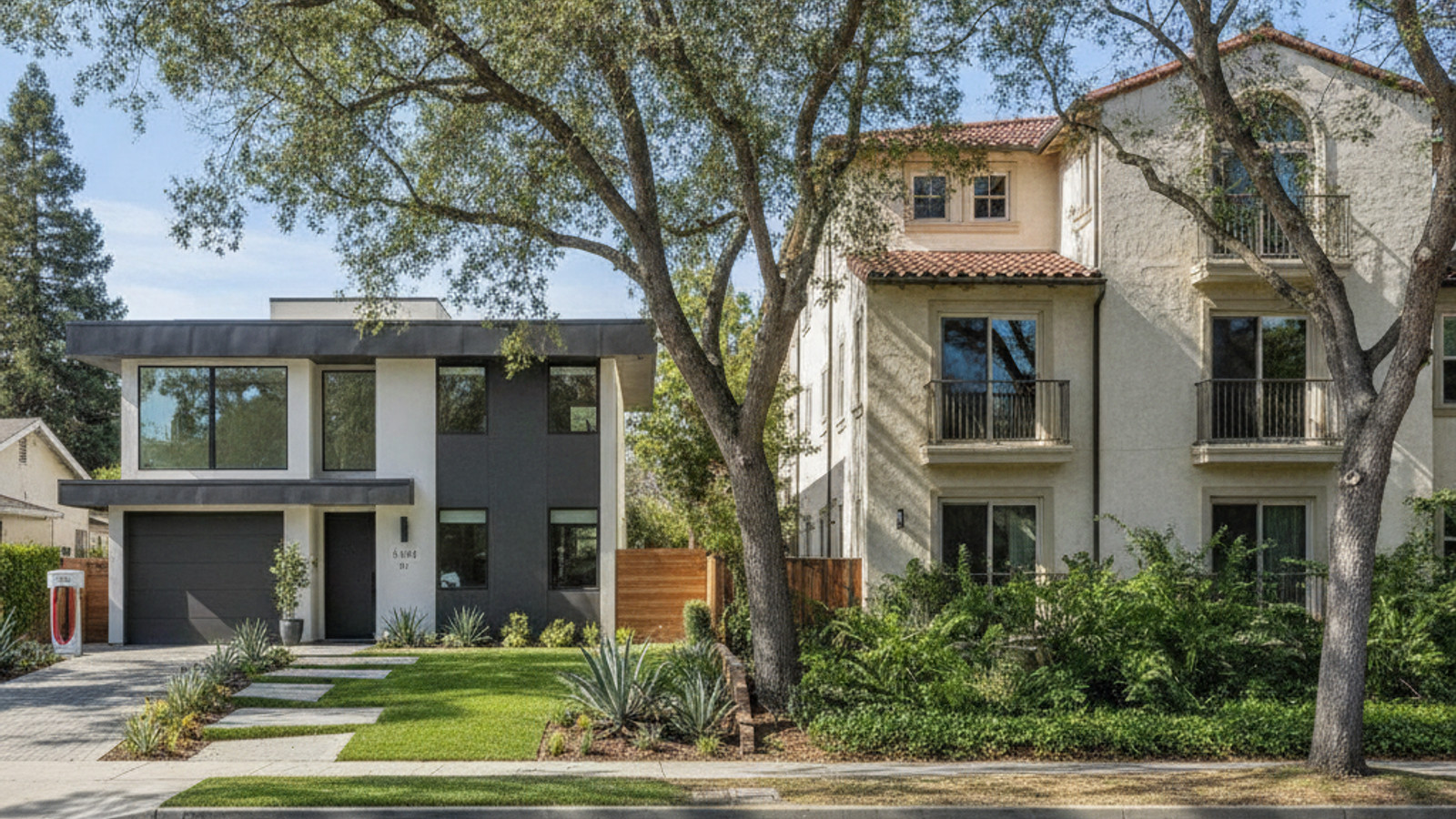
The median home sale price in the Citrus Heights, CA, housing market sits around $481,000 as of mid-2026. Homes are moving fast - roughly 15 days on market before going under contract - and over 56% of properties are selling above list price.
If you're looking at anything in a planned community or condo complex, association dues are part of the math. They fund shared upkeep and amenities, yes, but they also hit your debt-to-income ratio and your monthly budget just as directly as your mortgage payment does.
Typical Association Costs in the Sacramento Region
California's median HOA fee runs about $278 per month according to U.S. Census Bureau data, though industry analyses tend to cite a statewide range of $300 to $400. Zoom in to Sacramento County and condo sales data shows dues clustering more tightly in the $400 to $450 per month range.
Fees above $600 are rare in the immediate area, though one homeowner-report database puts the average closer to $734 per month across the broader Sacramento metro based on user submissions - worth knowing, but also worth taking with a grain of salt since those are self-reported figures. Among the roughly 146 available listings in Citrus Heights right now, you'll find a wide spread of monthly charges depending on what type of property you're buying.
Factors Influencing Your Monthly Bill
Property type is the biggest driver. Single-family neighborhoods with minimal shared spaces generally carry lower dues than condo complexes, where the association handles exterior maintenance. Age-restricted 55+ communities tend to land at the higher end because they maintain more extensive recreational facilities.
The amenity package matters just as much. A neighborhood with a community pool, private security, and managed landscaping will cost more than one that maintains a small entrance sign and not much else. That's not a criticism of either - it just depends on what you actually want.
Billing Frequency for Homeowners Associations
Most associations in the Citrus Heights area collect dues monthly, which lines up neatly with mortgage payments and makes budgeting straightforward.
Some single-family neighborhoods with very few shared amenities go quarterly or annual instead. Check the payment schedule during the disclosure period so there are no surprises about when money is due.
Services Covered by Association Dues
Monthly fees typically cover common area upkeep - parks, community pools, shared private roads, that kind of thing. In condo developments, dues often go further, covering exterior building maintenance, roof repairs, and a master insurance policy on the structure itself.
A portion of what you pay each month also goes into a reserve fund. Think of it as a savings account the association maintains for large, eventual expenses - repaving a parking lot, replacing a clubhouse roof - so the board isn't coming to homeowners with an emergency bill when those projects finally land.
What Your Dues Do Not Include
Association fees don't cover your property taxes or your personal insurance policy. You're still responsible for your own coverage on belongings and the interior of your unit.
Most single-family associations also don't touch individual yard work or exterior repairs on your specific home. If your roof leaks or your driveway cracks, that's yours to handle.
Identifying Overpriced Association Dues
Whether a fee makes sense comes down to what you're actually getting. Paying $450 a month is reasonable if the community provides a maintained pool, a clubhouse, and exterior building insurance. That same $450 for a few patches of grass and a front gate is a different story.
Compare the monthly cost against the services you'll actually use, and use that $400 to $450 Sacramento County condo baseline as your reference point.
Warning Signs to Watch For
A depleted reserve fund is the one I'd watch most closely. If the association doesn't have adequate savings for upcoming repairs, a dues increase or a special assessment is probably coming - and it could land shortly after you close.
Deferred maintenance is the visible version of the same problem. A closed community pool, overgrown landscaping, and fees that are still high anyway - that combination tells you something about how the board manages money. It's worth asking hard questions before you proceed.
Additional Association Expenses for Buyers
Beyond monthly dues, you'll run into one-time charges at closing. HOA transfer fees in California typically range from $200 to $500 statewide, though larger developments sometimes charge up to $800. These cover the administrative work of updating the association's records with your name.
Some communities also require a capital contribution or initiation fee - a lump sum paid at closing that goes directly into the reserve fund. It's not universal, but it's common enough that you should ask about it early.
Preparing for Special Assessments
A special assessment is a one-time charge the association levies when the reserve fund can't cover a major repair - emergency structural damage, sudden legal costs, that sort of thing.
Before you close, read through the last few years of board meeting minutes. Associations are often actively discussing upcoming assessments well before they're formally approved, and those conversations show up in the minutes. If something is in the pipeline, you want to know before you're the one writing the check.
Common Questions About Citrus Heights HOA Fees
What is the average monthly HOA fee for a house or condo in Citrus Heights, CA?
It depends on the property type. Sacramento County condo fees frequently sit in the $400 to $450 per month range, while California's median fee is around $278 per month. Single-family homes with fewer amenities generally run lower than condos.
Are there neighborhoods in Citrus Heights where I can buy a home without paying HOA dues?
Yes. Many older single-family neighborhoods in the area don't have an active homeowners association. You can filter your property search to exclude homes with monthly dues.
What do typical HOA fees cover in Citrus Heights communities?
Generally, common area landscaping, shared amenities like pools, and contributions to the reserve fund. In condo complexes, dues often extend to exterior building maintenance and master insurance policies.
How can I find out about upcoming HOA special assessments before buying a home in Citrus Heights?
Review the association's recent meeting minutes and reserve study during your contingency period. Those documents will show whether the board is planning major repairs that don't yet have funding behind them.
How much can a homeowner's association legally raise my dues each year in California?
It depends on state regulations and the community's specific governing documents. California law does place caps on annual assessment increases without a homeowner vote. Review the bylaws to understand how fees have moved historically in the neighborhood you're considering.
Can a local HOA foreclose on my property if I fall behind on my monthly assessments?
Yes. Homeowners associations in California have the legal authority to place a lien on your property for unpaid dues, and if the debt reaches a certain threshold, the association can initiate foreclosure proceedings.
Check out this article next