



Don’t let big investors get the best deals before you do! Download the Made 4 More app for accurate listings and discover more homes, better opportunities, and potential deals in your local market—without your info being sold. Get started today!
For years, homebuyers have felt like they were playing a game they couldn’t win.
You find a home you love. You make an offer. Then—bam—a cash offer from a big investor comes in and suddenly you’re competing with a buyer who doesn’t need an appraisal, financing, or much patience.
Sound familiar?
Here’s the good news: that competition may be cooling off.
Big institutional investors are pulling back from the single-family housing market, and that shift could create a much better opening for everyday buyers—especially first-time homebuyers.
Investors Aren’t Buying Like They Used To
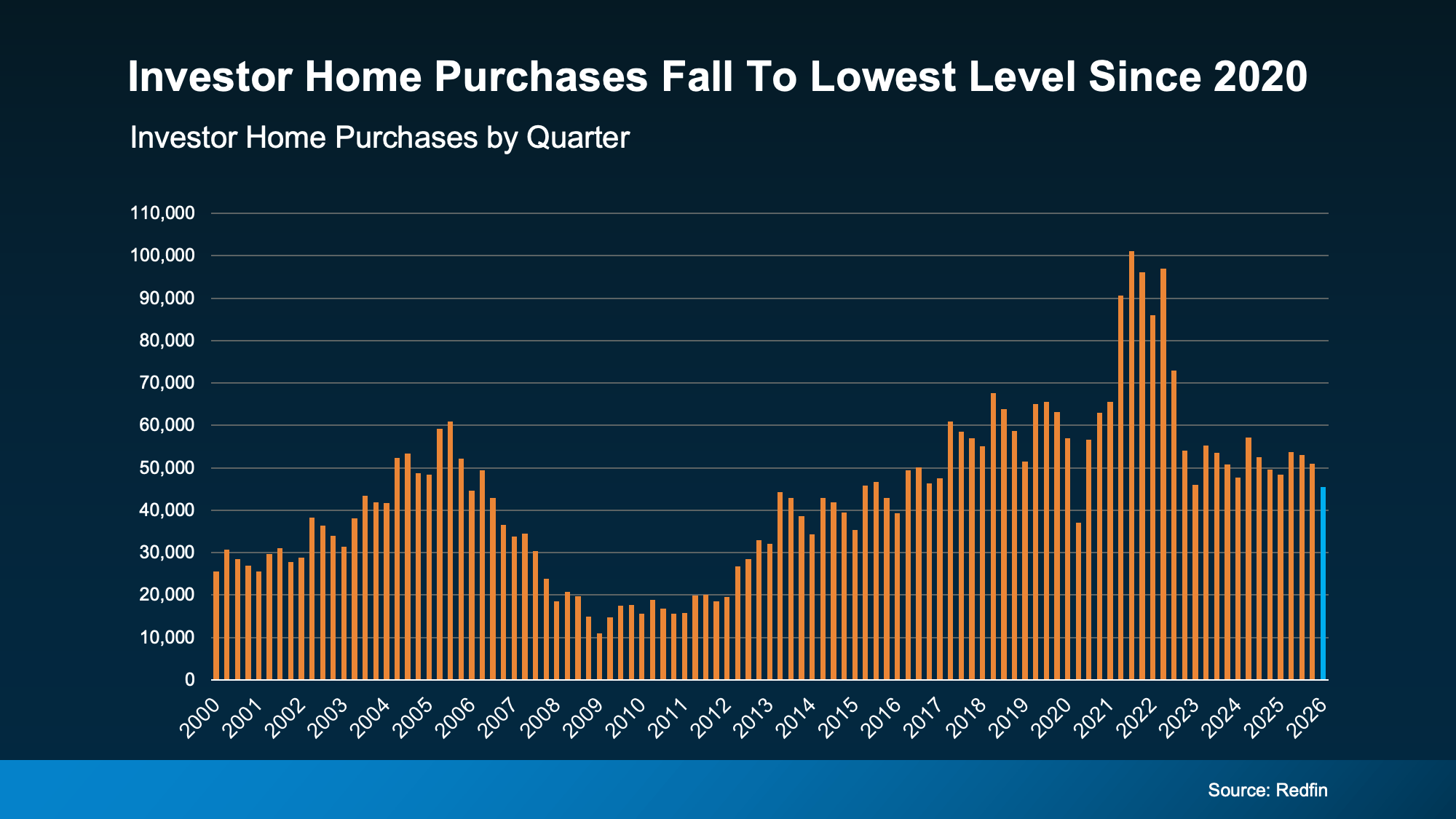
Investor activity in the housing market has dropped significantly, reaching one of its lowest levels in years.
Why does that matter?
Because every time a large investor decides not to buy a home, an ordinary buyer has one less deep-pocketed competitor to worry about.
And this isn’t just about investors buying fewer properties. The economics of owning rental homes have changed, too.
Higher mortgage rates, rising insurance and property tax costs, slower home-price growth, and expensive renovations have made the numbers harder to justify for investors looking for strong returns.
In other words, the investment math isn’t as attractive as it was during the pandemic-era housing boom.

Big Investors Are Feeling the Squeeze
The housing market has changed dramatically since 2020 and 2021.
Back then, home prices were climbing quickly, rents were surging, and investors could often make a compelling case for buying homes—even at higher prices.
Today?
The equation is different.
Investors have to consider higher borrowing costs, increasing expenses, maintenance, insurance, property management, and the possibility that home values won’t appreciate as quickly.
Think of it like buying a rental property with a calculator in one hand and a crystal ball in the other. If the numbers don’t add up, investors are far less likely to make the purchase.
That creates an opening for buyers who are purchasing a home to live in, not simply to generate an investment return.
They’re Selling Homes, Too
Here’s the part buyers really need to pay attention to.
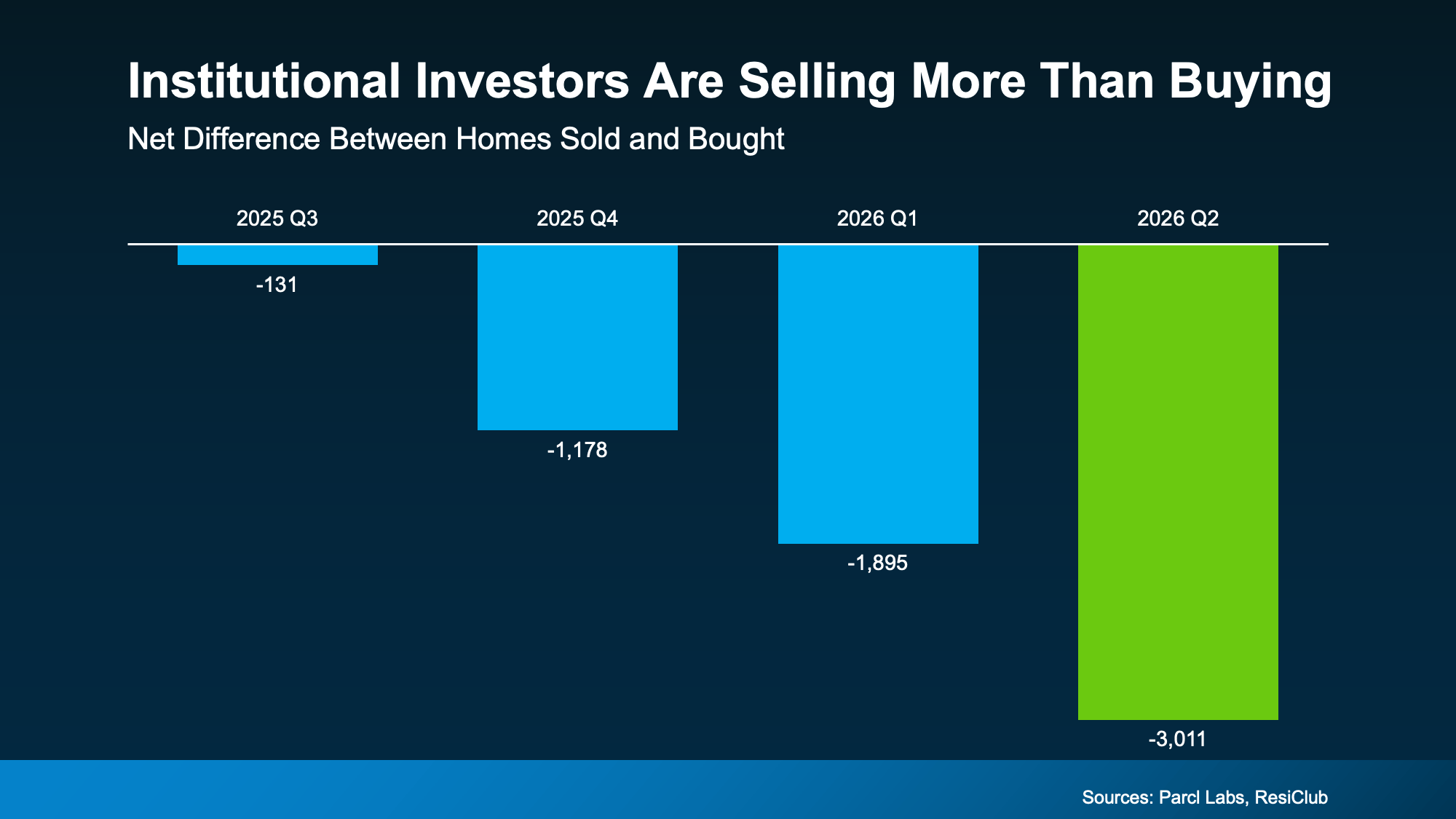
Some large institutional investors aren’t just slowing their purchases. They’re also selling properties.
And when investors sell, those homes go back into the available housing supply.
That can mean more choices for buyers and potentially less competition for homes that fit their budgets.
It’s especially important for first-time buyers because institutional investors have historically focused heavily on more affordable single-family homes and rental properties.
So the house an investor is no longer interested in buying could be the house that finally fits your budget.
Less Investor Competition Could Change the Buying Game
Does this mean every buyer suddenly has the upper hand?
Not necessarily.
Real estate is local. Inventory, pricing, interest rates, and buyer demand can vary dramatically from one neighborhood to the next.
But it does mean buyers shouldn’t assume they’re automatically going to get beaten by a cash investor.
That’s an important mindset shift.
Instead of thinking, “There’s no way I can compete,” it may be time to ask, “What opportunities are available now that weren’t available a year or two ago?”
That’s where having the right strategy matters.
A great buyer’s agent can help you identify homes that may have less competition, understand what sellers are really looking for, and structure an offer that makes sense for your situation.
Your Biggest Advantage? Knowing Where to Look
The best opportunity isn’t always the house everyone is fighting over.
Sometimes it’s the property that’s been sitting on the market a little longer.
Sometimes it’s a seller who has already made a price reduction.
Sometimes it’s an off-market property.
And sometimes it’s a home that an investor passed on because the numbers didn’t work—but that could be perfect for you.
The key is knowing how to find those opportunities before everyone else does.
You don’t need to outspend an investor. You need to outmaneuver them.
What This Means for First-Time Buyers
If you’ve been sitting on the sidelines because you thought investors were making homeownership impossible, it may be time to take another look.
More inventory can give buyers breathing room. Less investor demand can reduce certain types of competition. And sellers may be more willing to negotiate when the market isn’t moving at lightning speed.
That doesn’t mean you should rush into a purchase.
It means you should be prepared.
Get your financing lined up. Know your budget. Understand the neighborhoods you’re targeting. And most importantly, know how to recognize a good opportunity when it appears.
Because the window doesn’t always stay open.
The Bottom Line
Big investors aren’t disappearing from real estate, but their pullback could create opportunities for everyday buyers. With some institutional investors purchasing fewer homes and selling more, buyers may have a better chance to compete for properties that once felt out of reach.
Call or text us at 855-935-MORE and let’s talk about what’s happening in your local market and where the opportunities may be hiding.
Check out this article next