



Selling before buying? Download the Made 4 More app for accurate listings and real-time opportunities, so you can find your next home without the stress of guessing, hidden fees, or wasted time. Know your options, shop smarter, and make your next move count!
If you’re thinking about moving, there’s a big question that can make the whole process feel like a game of chicken: Do you buy your next home first, or sell your current home first?
There’s no universal answer. Your finances, timeline, local market, and comfort level all matter. But for many homeowners today, selling first can put you in a stronger financial and negotiating position.
Why? Because once your current home is sold, you know exactly where you stand—and that can make buying your next home a whole lot easier.
Why Selling First Can Be the Smarter Move
Selling a home is often the more complicated side of the transaction. You have to prepare the property, determine the right price, market it, negotiate with buyers, and get through closing.
So why not tackle that hurdle first?
Once your home is sold, you can shop for your next property without wondering whether your current house will sell in time. Think of it like clearing the biggest obstacle off the track before you start running the next lap.
Here are a few reasons selling first may work in your favor.
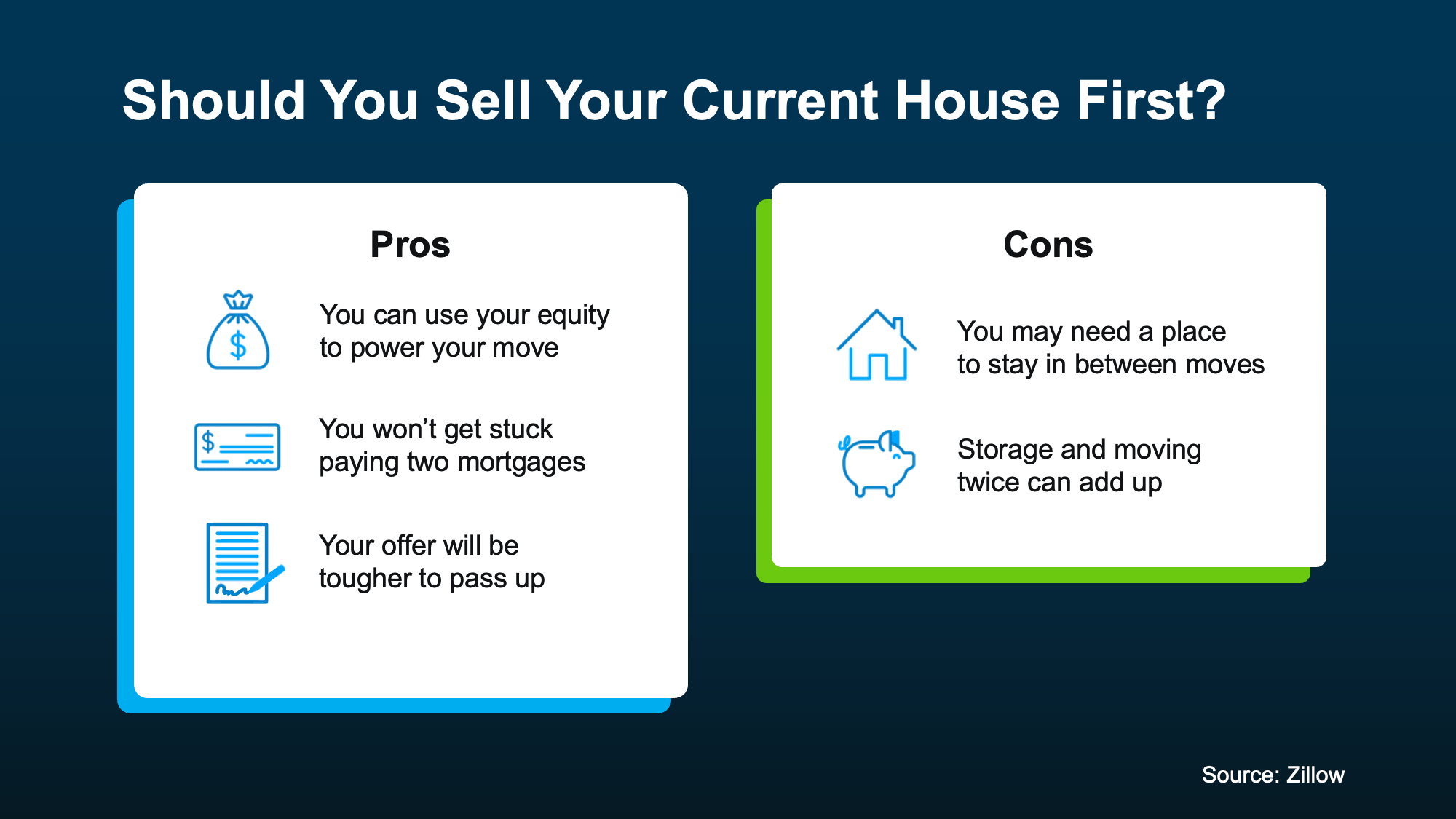
1. You Could Avoid the Two-Mortgage Problem
Buying before selling sounds exciting. You find your dream home, make an offer, and start planning where the furniture goes.
But what happens if your old house doesn’t sell as quickly as expected?
Suddenly, you could be responsible for two mortgage payments, two sets of utility bills, two insurance policies, and potentially two homes that need maintenance.
And when homes take longer to sell, that overlap can become expensive.
Selling first gives you a much clearer financial picture. Instead of hoping everything lines up perfectly, you know what you’ve sold for and what funds you have available for your next purchase.
That can mean less financial pressure and fewer sleepless nights.
2. Your Home Equity Can Help Fund Your Next Purchase
One of the biggest advantages of selling first is knowing exactly how much equity you can put toward your next move.
Your equity is essentially the difference between what your home is worth and what you still owe on your mortgage.
For many long-time homeowners, that number can be substantial.
And once your home sells, that equity could potentially help with your next home’s down payment, closing costs, moving expenses, renovations, or other costs associated with the purchase.
Instead of guessing how much money you’ll have available, you can make your next move based on real numbers.
That’s powerful.
3. A Non-Contingent Offer Can Make You a Stronger Buyer
Here’s where selling first can really change the conversation.
If you need to sell your current home before you can purchase another one, your offer may need to include a home-sale contingency. That tells the seller, “I can buy your house—but I need my house to sell first.”
Compare that with an offer from someone whose home is already sold.
Which buyer would you rather work with?
In a competitive situation, having your sale behind you can make your offer look cleaner and less complicated. You may have more negotiating power because the seller doesn’t have to worry about waiting for another property to sell.
And sometimes, that leverage can help you negotiate other terms, too.
4. You’ll Know Your Budget Before You Start Shopping
Have you ever gone shopping without knowing how much you can spend?
It’s a recipe for falling in love with something you can’t—or shouldn’t—buy.
The same thing can happen with real estate.
When you buy before selling, you may be estimating how much your current home will sell for. But estimates aren’t the same as having money in the bank.
Selling first gives you a much clearer picture of your proceeds. From there, you and your lender can determine what price range makes sense for your next home.
That can help you shop with confidence instead of crossing your fingers and hoping the numbers work later.
But What If You Sell and Can’t Find Your Next Home?
That’s the biggest concern many homeowners have.
And it’s a valid one.
What if your home sells and you haven’t found the right replacement property yet?
You could temporarily need somewhere to live, store your belongings, or figure out a short-term housing solution.
The good news? Selling first doesn’t have to mean rushing into your next purchase.
A good agent can help you explore strategies such as a rent-back agreement, where you remain in the home for an agreed-upon period after closing. You may also be able to negotiate flexible closing dates or build additional time into your moving plan.
The key is planning ahead.
The Right Strategy Depends on Your Situation
Selling first isn’t automatically the right answer for every homeowner.
Maybe you have enough savings to comfortably carry two homes. Maybe you’re relocating for work and need to secure your next property quickly. Or maybe the inventory in the area where you’re moving is so limited that buying first makes more sense.
That’s why this decision shouldn’t be made based on a one-size-fits-all rule.
Your finances, your timeline, your current home’s equity, and the market you’re buying in all need to be considered together.
That’s where an experienced real estate professional can help.
Before You Make a Move, Know Your Numbers
Buying and selling at the same time can feel like trying to move two chess pieces at once.
But it doesn’t have to be chaotic.
When you understand your home’s potential value, your equity, your expected selling costs, your purchasing power, and your timing options, you can make a strategy instead of simply reacting to the market.
For many homeowners, selling first can provide more financial clarity, less risk, and a stronger position when it’s time to make an offer on the next home.
The goal isn’t simply to sell one house and buy another.
The goal is to make your entire move work in your favor.

Ready to Sell Smarter?
Before you put your home on the market, find out what you could do to maximize your sale and put yourself in a stronger position for your next move.
Call or text us at 855-935-MORE to talk through your selling and buying strategy and find out what approach makes the most sense for you.
Check out this article next