

Roseville stands out as a highly sought-after destination in Placer County for real estate buyers looking to settle in Northern California. Located just 18 miles from downtown Sacramento, this vibrant city balances robust infrastructure with an expanding local economy. Buyers are consistently drawn to the area for its diverse housing options, extensive park systems, and major retail centers.
Finding the right property depends heavily on commute preferences, desired amenities, and preferred architectural styles. The current 2026 citywide median home price sits between $630,000 and $670,000, reflecting a stable and active local market. Navigating these options requires a clear understanding of how different sections of the city function on a daily basis.
Discovering the Best Neighborhoods in Roseville, CA
The city is strategically positioned near major employers and the Interstate 80 corridor, making it a pivotal hub in the Sacramento region. Roseville offers distinct residential zones that cater to different buyer priorities, ranging from immediate highway access to expansive trail networks. Buyers entering the market this year will find that neighborhood selection directly impacts daily travel times and property tax rates.
Real estate investors and primary homebuyers alike look to Roseville for its proven long-term property value retention. The city has invested heavily in maintaining its public spaces, arterial roads, and commercial districts over the past decade. Choosing a specific neighborhood means deciding whether you prefer the mature canopy of older subdivisions or the master-planned efficiency of new construction.
West Roseville vs. East Roseville: Understanding the Landscape
The primary geographic divide in the city comes down to the established infrastructure of East Roseville versus the continuous new development of West Roseville. East Roseville is characterized by mature trees, larger lot sizes, and immediate access to both Interstate 80 and Highway 65. This eastern sector typically appeals to buyers who prioritize a rapid commute to downtown Sacramento or nearby Folsom for work.
West Roseville presents a starkly different environment dominated by expansive master-planned communities and modern civic amenities. The western edge features extensive paved trail systems that connect subdivisions directly to local parks and commercial plazas. Commuting from West Roseville often involves navigating surface streets to reach the highways, which generally adds around 10 to 15 minutes to a typical morning drive.
Top Neighborhoods in Roseville CA Real Estate
Pinpointing the best neighborhoods in Roseville CA requires looking at specific local data, housing styles, and proximity to daily conveniences. The city features a wide spectrum of housing choices, ranging from dense suburban tracts near retail hubs to gated communities with sprawling lots. Each distinct area carries its own pricing trends and architectural characteristics that shape the local real estate market.
Buyers must weigh the benefits of older, established subdivisions against the modern energy efficiency found in newer developments. Areas closer to the city center often feature homes built in the late 1990s without additional assessment taxes. Conversely, the outer edges of the city offer brand-new builds that come with higher monthly carrying costs but require less immediate exterior maintenance.
Highland Reserve: Ultimate Convenience and Accessibility
Highland Reserve stands out for its central location and immediate proximity to the Highway 65 corridor. The neighborhood consists primarily of medium to large single-family homes built during the late 1990s and early 2000s. The 2026 median home price in this area ranges from approximately $673,000 to $734,000 based on recent sales data.
Residents benefit from being just a short distance away from premier shopping destinations like the Westfield Galleria and the Fountains at Roseville. This level of commercial access makes Highland Reserve an incredibly practical choice for buyers who want retail and dining options minutes from their driveway. The lack of heavy additional taxes also keeps monthly payments relatively predictable for homeowners here.
West Park: Master-Planned Modern Living
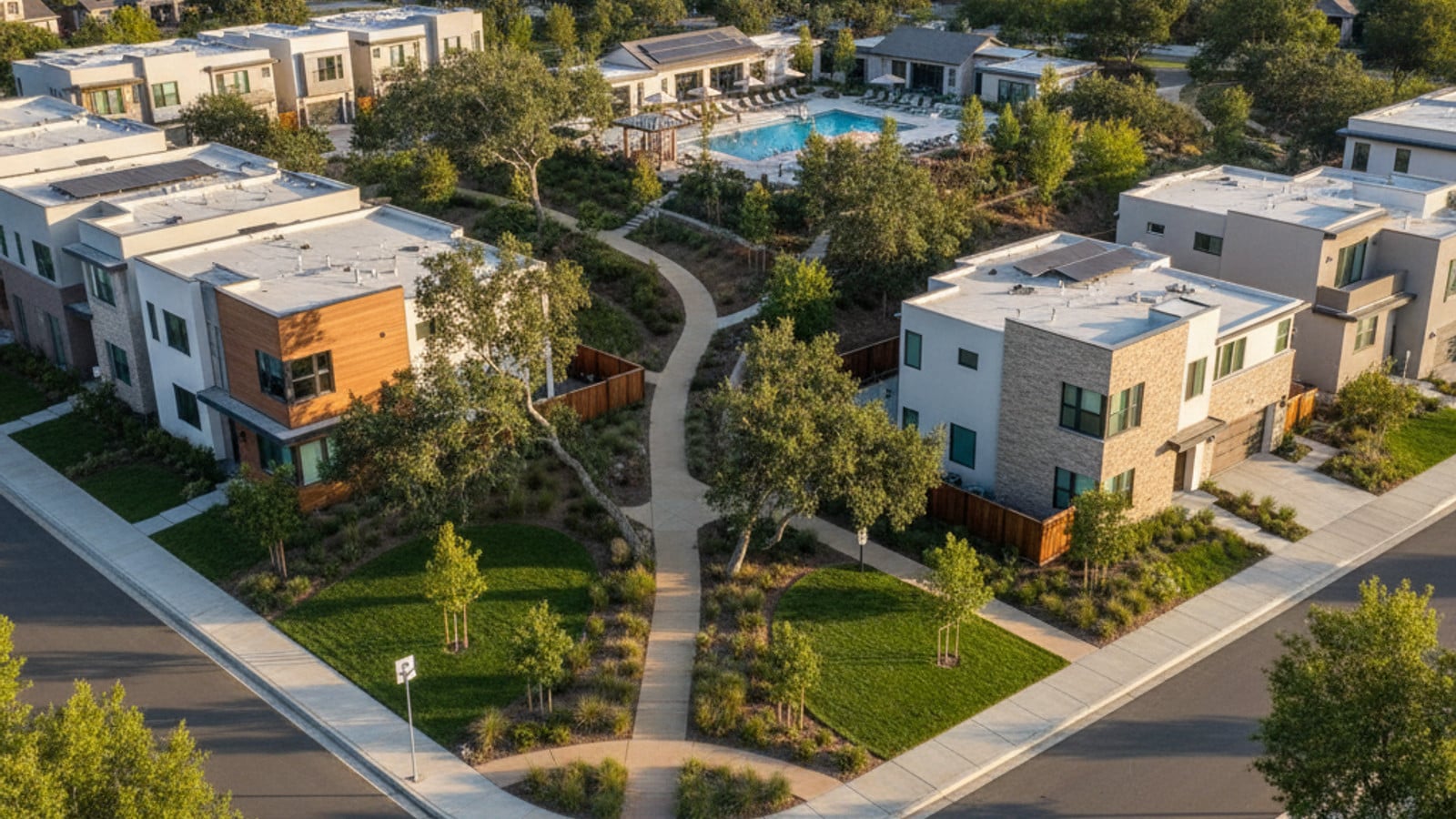
West Park highlights the ongoing expansion of the city with its contemporary single-family homes and modern townhouses. The median home price here currently sits between $600,000 and $800,000, reflecting the premium placed on newer construction and community design. The layout heavily integrates community pools, walking trails, and direct access to the expansive Mahany Park complex.
Properties in West Park fall within the boundaries of the Roseville Joint Union High School District. Buyers should carefully factor in local Mello-Roos assessments when calculating their total monthly payments in this master-planned community. These local taxes fund the pristine neighborhood amenities and newer infrastructure that define the area.
Crocker Ranch: Spacious Lots and Varied Architecture
Crocker Ranch occupies a unique position in the local market by offering larger homes on generous lots, with both gated and non-gated street options available. The current median sale price is approximately $792,000, with properties averaging between $298 and $348 per square foot. This neighborhood features extensive access to local recreation, including paved biking paths and well-maintained public parks.
The architectural variety here prevents the cookie-cutter feel sometimes found in large suburban tracts. Crocker Ranch is served by the Roseville City School District for elementary and middle school education. The combination of larger property footprints and gated privacy makes it a strong contender for buyers seeking substantial living space.
Other Notable Areas: Fiddyment Farm and Diamond Oaks
Fiddyment Farm continues to attract attention for its ongoing new construction phases and seamless trail access. The median price in Fiddyment Farm hovers between $690,000 and $730,000, offering a slightly different price point than neighboring West Park. The area provides a cohesive aesthetic with modern energy-efficient building standards applied to most new properties.
Diamond Oaks offers a completely different atmosphere characterized by classic charm and mature landscaping. This established neighborhood sits close to Maidu Regional Park and local golf courses, appealing to buyers who want larger trees and no Mello-Roos fees. Both areas demonstrate the sheer variety of housing stock available within the city limits.
Roseville CA Housing Market Trends by Neighborhood
The 2026 real estate market in Roseville remains balanced, characterized by steady home values and predictable inventory levels. Homes currently sell in an average of 18 to 50 days, depending largely on the condition of the property and its specific location. Buyers who are prepared with pre-approvals have a distinct advantage when bidding on turnkey homes in prime subdivisions.
Understanding the total cost of ownership is critical when comparing older subdivision homes to newer developments. Newer areas like West Park and Fiddyment Farm frequently carry Mello-Roos assessments that can add $150 to $300 to a monthly mortgage payment. Older neighborhoods typically lack these extra taxes, making their higher initial purchase prices sometimes more manageable on a monthly basis.
Frequently Asked Questions About Roseville Neighborhoods
What are the differences between East and West Roseville neighborhoods?
East Roseville features older, established infrastructure with mature trees and immediate access to Interstate 80. West Roseville is dominated by newer master-planned communities with modern amenities and extensive trail systems. Commute times are generally shorter from the east side, while the west side offers more brand-new construction options.
Do all neighborhoods in Roseville have an HOA or Mello-Roos?
Not all neighborhoods require these additional monthly or annual fees. Older areas like Diamond Oaks and parts of Highland Reserve typically do not have Mello-Roos assessments or strict homeowner associations. Newer master-planned communities in West Roseville almost always include Mello-Roos taxes to fund local infrastructure and parks.
Which school districts serve the Roseville area?
The city is primarily served by the Roseville City School District for elementary and middle school education. High school students generally fall within the boundaries of the Roseville Joint Union High School District. Specific school assignments depend entirely on the physical address and local zoning boundaries of the property.
Check out this article next