


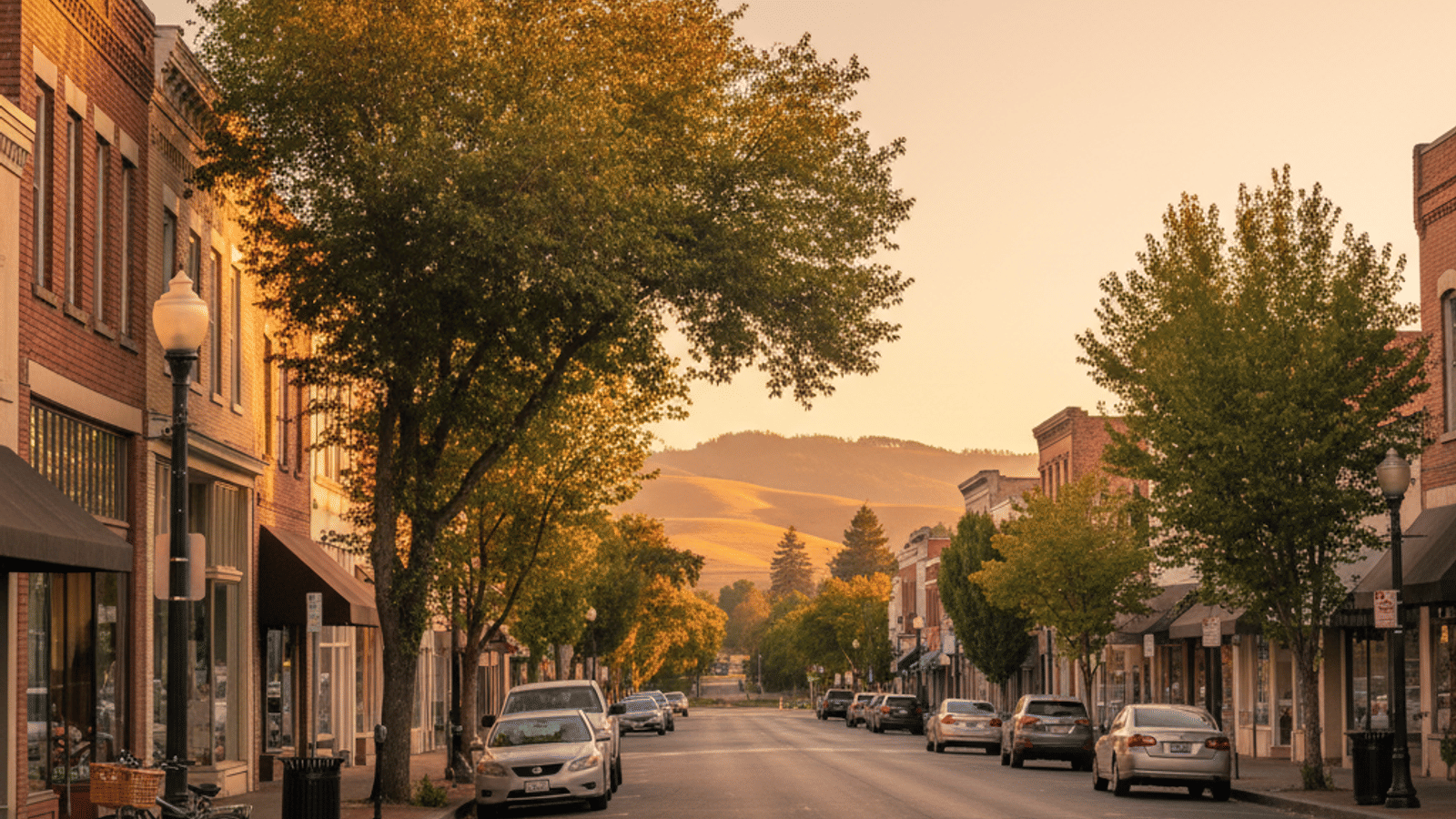
If you are looking at real estate in Placer County, you have almost certainly narrowed your search down to two heavy hitters: Lincoln and Roseville.
On a map, they sit right next to each other. They share similar weather, beautiful views of the Sierras, and that distinct Northern California suburban appeal. But ask any local, and they will tell you these two cities could not be more different in terms of lifestyle, budget, and daily rhythm.
Roseville is the commercial powerhouse—it’s busy, it’s convenient, and it has absolutely everything you need within a ten-minute drive. Lincoln, just a few miles north, feels like the quieter, agrarian sibling that grew up fast. It offers a little more breathing room and a charming historic downtown, but it comes with its own unique set of trade-offs.
When I sit down with buyers who are stuck between the two, the conversation usually comes down to three potential dealbreakers: the commute, the utility bills, and the neighborhood vibe. Let’s break those down so you can decide which city actually fits your life.
Community Vibe: Suburban Sprawl vs. Small-Town Feel
The biggest difference you will feel immediately is the pace. Roseville is dense and active. It has a "hustle and bustle" energy that feels like a small city rather than a sleepy suburb. If you love having five different grocery store options and a dozen coffee shops on your way to work, Roseville delivers. It attracts a diverse mix of young professionals and established residents who want high-energy convenience.
Lincoln operates at a lower gear. While it has grown massively over the last two decades—now boasting a population around 50,000 compared to Roseville’s 150,000+—it still retains a semi-rural charm. You can drive five minutes from the center of town and be surrounded by rolling hills and ranch land. The demographic here skews slightly older, largely influenced by the massive Sun City Lincoln Hills community, giving the town a relaxed, neighborly atmosphere.
Cost of Living: The Hidden Difference in Utilities
Here is where the math gets interesting. On the surface, purchase prices for homes often look comparable, though you can sometimes get a bit more square footage for your money in Lincoln. However, the sticker price of the house is not the whole story.
The single biggest financial differentiator between these two cities is electricity.
Roseville owns its own utility, Roseville Electric. It is a municipal provider, and the rates are significantly lower than the state average—sometimes 30% to 50% less than investor-owned utilities.
Lincoln, on the other hand, is served by PG&E. If you are moving from another part of California, you likely know that PG&E rates can be quite high. For a standard 2,500-square-foot home running air conditioning during a hot Placer County summer, a Roseville resident might pay $1,500 to $2,000 less per year in energy costs compared to their neighbor in Lincoln. That is a monthly budget difference that can impact how much house you can actually afford.
You also need to watch out for taxes. Both cities utilize Mello-Roos taxes in their newer master-planned communities to pay for infrastructure. However, Lincoln Crossing in Lincoln is notorious locally for having higher Mello-Roos bonds compared to many other areas. If you are looking at homes there, always check the total tax bill, as that extra $300 or $400 a month changes the affordability equation fast.
One last cost factor is insurance. Because Lincoln borders open grasslands and semi-rural areas, some homes on the outskirts may face higher fire insurance premiums or stricter underwriting than homes in the concrete center of Roseville.
Commuting: The Highway 65 Bottleneck
If you work in downtown Sacramento or mostly from home, this section might make your decision for you.
Roseville has direct access to Interstate 80. If you live in central or east Roseville, you can hop on the freeway and be in Sacramento in about 25 to 35 minutes during off-peak times. It is a straightforward commute.
Lincoln relies heavily on Highway 65 to get anywhere south. To get to Sacramento, you have to drive south on Highway 65 to merge onto I-80 in Roseville. That interchange—and the stretch of highway leading up to it—is a major regional bottleneck.
Living in Lincoln creates a "time tax." During rush hour, that stretch of highway can easily add 15 to 20 minutes each way to your drive. A commute that takes a Roseville resident 35 minutes might take a Lincoln resident nearly an hour.
However, once you are off the highway, the local traffic story flips. Roseville’s surface streets, particularly around the Galleria and Pleasant Grove Boulevard, are often congested with shoppers and school traffic. Lincoln’s local roads are generally wide open and much calmer.
Housing Market and Neighborhood Options
Both cities offer a wide range of housing, but the "flavor" of the neighborhoods differs.
Roseville is a patchwork of distinct areas. You have the historic charm of Cherry Glen with its bungalows and mature trees, and then you have massive, polished master-planned communities like West Park, Fiddyment Farm, and Stoneridge. These newer areas feature parks, trails, and modern layouts that appeal to buyers looking for a turnkey lifestyle.
Lincoln’s housing market is dominated by a few key players. Lincoln Crossing offers family-sized starter and move-up homes, often at competitive prices. Twelve Bridges is more upscale, woven into the rolling hills with larger lots and views. And then there is Sun City Lincoln Hills, a colossal active-adult community with over 6,000 homes, golf courses, and legal golf cart zones that allow residents to zip around town.
If you are looking at new construction, both cities are building aggressively. However, if you are willing to shoulder the PG&E utility costs, you can often find more house for the money in Lincoln’s newer developments compared to similar square footage in Roseville.
Schools and Education Quality
For households focused on education, both cities fall under reputable umbrellas, but the structure is different.
Roseville is served by the Roseville Joint Union High School District. The schools here generally post high ratings and offer a huge volume of Advanced Placement (AP) courses, specialty programs, and extracurriculars simply because the district is larger.
Lincoln falls under the Western Placer Unified School District. The schools here are solid, and the newer campuses, like Twelve Bridges High School, boast incredible modern facilities. While Lincoln may have fewer charter or niche specialty options compared to the vast menu in Roseville, the community support for local schools is very strong.
If higher education is a factor, Roseville has the physical advantage of being home to extension campuses and sitting right next to Sierra College and William Jessup University.
Shopping, Dining, and Recreation
This is where lifestyle preferences really diverge.
Roseville is the retail capital of the region. It is home to the Westfield Galleria, one of the largest malls in Northern California, and The Fountains at Roseville, an upscale outdoor shopping center. If you want access to an Apple Store, high-end steakhouses, Whole Foods, and luxury fashion without getting on a freeway, Roseville is the winner hands down. In fact, many Lincoln residents drive to Roseville on weekends just to shop.
Lincoln offers a different kind of recreation. It is home to Thunder Valley Casino Resort, which brings in big-name concerts and offers four-diamond dining. But the real gem of Lincoln is its access to the outdoors. It is the gateway to the Placer Wine Trail, and the historic downtown area has seen a resurgence with local breweries, steakhouses, and boutiques that feel authentic and less "corporate" than Roseville’s chains.
For parks, Roseville is famous for its paved trail system (like Miners Ravine) that connects neighborhoods. Lincoln leans more toward open spaces, sporting facilities like McBean Park, and proximity to rural backroads perfect for cycling.
Safety and Crime Statistics
When looking at safety, it is important to look at the context of the numbers. Both Lincoln and Roseville are generally very safe places to live compared to the California average.
Statistically, Lincoln often edges out Roseville with lower overall property crime rates. This is largely because Roseville is a retail hub. Large shopping centers like the Galleria naturally attract shoplifting and theft, which skews the city’s crime stats upward.
In residential areas away from the big malls, both cities are quiet and safe. If you are looking for a place where neighbors look out for one another, you will find it in the subdivisions of both towns.
Final Verdict: Who Should Live Where?
Choosing between these two really comes down to what you value most in your daily routine.
You should choose Roseville if:
- You commute to Sacramento and want to minimize your time in the car.
- You want the lowest possible utility bills thanks to Roseville Electric.
- You love the energy of a busy suburban city and want to be five minutes away from top-tier shopping and dining.
You should choose Lincoln if:
- You work from home or locally and don't have to fight the Highway 65 traffic daily.
- You prefer a slower, semi-rural pace where you can see the stars a bit better at night.
- You are looking for a specific lifestyle community like Sun City or want a larger lot in the hills of Twelve Bridges.
Ultimately, the best move is to drive the commute yourself, check the specific tax bill for the house you love, and walk the neighborhood to see which vibe feels like home.
Frequently Asked Questions
Is it cheaper to live in Lincoln or Roseville, CA?
It depends on how you calculate it. Home purchase prices are often slightly lower in Lincoln, but the monthly cost of living can be higher due to PG&E electricity rates and potentially higher Mello-Roos taxes in neighborhoods like Lincoln Crossing. Roseville homes might cost more upfront, but the utility savings help balance the monthly budget.
Does Lincoln, CA have high Mello-Roos taxes?
Yes, but it varies significantly by neighborhood. Lincoln Crossing is known for having high Mello-Roos fees that can add several hundred dollars to your monthly mortgage payment. However, older parts of Lincoln and some other developments may have lower or no Mello-Roos taxes, so you must check the specific property tax bill.
How far is Lincoln CA from Roseville CA?
They are direct neighbors. The distance from downtown Roseville to downtown Lincoln is only about 7 to 10 miles, which is roughly a 15-minute drive without traffic. However, traffic on Highway 65 can make that short drive take much longer during rush hour.
Is Roseville Electric cheaper than PG&E in Lincoln?
Yes, Roseville Electric is significantly cheaper. Because it is a community-owned utility, rates are typically 30% to 50% lower than PG&E rates. For a standard single-family home, this can result in annual savings of $1,500 or more for Roseville residents compared to Lincoln residents.
Which city has better schools, Lincoln or Roseville?
Roseville is generally considered to have "better" schools based on ratings and the volume of advanced programs offered by the Roseville Joint Union High School District. However, Lincoln’s Western Placer Unified School District has excellent newer facilities and strong community support, making it a great option for students as well.
Check out this article next