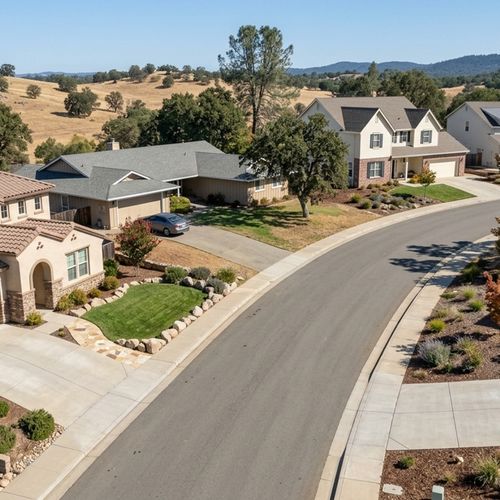


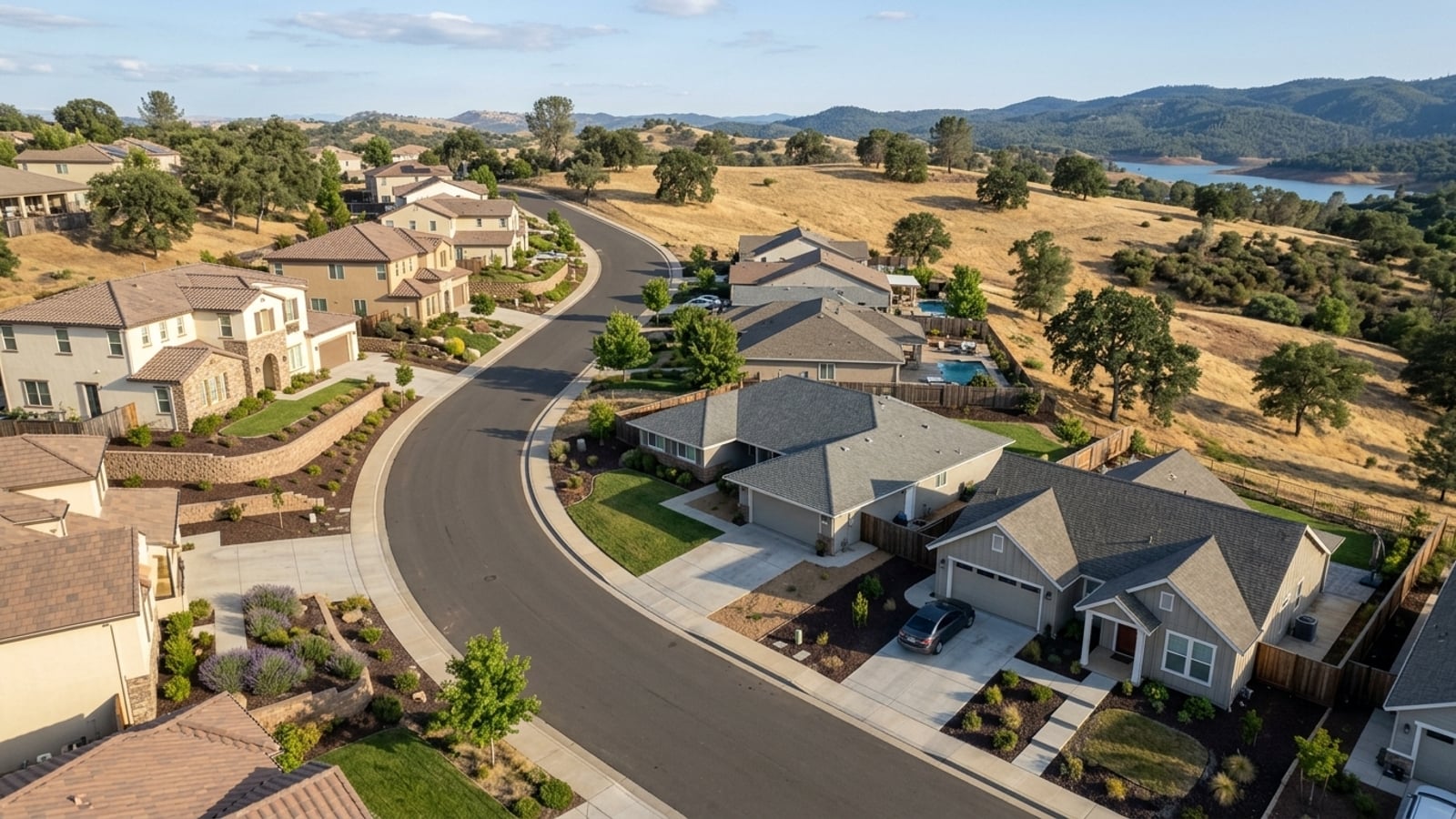
El Dorado Hills sits about 30 miles east of downtown Sacramento, CA. For those buying a home in El Dorado Hills, the median owner-occupied home value is approximately $909,500 - well above the broader Sacramento metro median of around $595,652.
Buyers weighing the pros and cons of living in El Dorado Hills compared to Sacramento usually end up looking at the same two things: lot size versus entry price. And the honest answer is that relocating here requires looking at concrete data, from commute times down Highway 50 to the local tax base. Let me walk you through what I tell every client who asks.
The Quick Verdict on El Dorado Hills
Whether this place fits your life comes down to your budget and your tolerance for a daily drive. It's a distinct suburban environment - the kind that feels deliberately removed from the density closer to the city center, because it is.
The housing inventory runs almost entirely to single-family detached homes, the majority built within the last three decades. You'll pay more to get in, but you'll get more square footage and a foothill setting that's genuinely different from anything inside the Sacramento city limits.
Top Advantages to Consider
The primary draw is space. Lots here tend to run larger than what you'll find in central Sacramento, which means more room for outdoor amenities and some actual distance between you and your neighbors.
The Highway 50 access is also real and direct - west into the capital, east toward Lake Tahoe. If your commute goes in either direction, you're on the right road.
Downsides to Factor Into Your Budget
Housing costs are the biggest hurdle, full stop. With average home values hovering near $919,861 as of mid-2026, you need substantial purchasing power just to get to the table.
And that commute? It's fine in light traffic and genuinely frustrating at peak hours. Highway 50 slows down, and 30 miles west into downtown Sacramento can turn into a real time sink.
Commute and Climate Realities
The climate mirrors the rest of the Sacramento Valley - hot, dry summers, mild and wet winters. Summers routinely push past 90 degrees, so factor in what that means for utility costs.
The foothill location also means you'll want to look carefully at hazard insurance. Certain neighborhoods carry different premiums depending on how close they sit to wildland areas, and it's worth reviewing those requirements before you make an offer.
Location and County Boundaries
El Dorado Hills is an unincorporated census-designated place in El Dorado County, sitting right at the transition from the flat Sacramento Valley to the rolling terrain of the Sierra Nevada foothills. The area covers 48.46 square miles of land and borders Sacramento County to the west - which is exactly why it draws so many people who work in the capital but want to live somewhere that doesn't feel like it.
Population Density and Size
As of the 2024 American Community Survey 5-year estimates, the population stands at 51,026, up from 42,108 residents in the 2010 count. Population density runs about 1,043 people per square mile. That number tells you something useful: this is a spread-out, suburban layout, not a walkable urban grid.
Crime Statistics for the Area
El Dorado Hills is patrolled by the El Dorado County Sheriff's Office. If you're evaluating the area seriously, you should look at the published municipal data yourself rather than rely on anyone's summary - mine included.
The most recent complete baseline comes from the FBI Uniform Crime Report data for the 2023 calendar year, released in October 2024. NeighborhoodScout's analysis of that data shows an overall crime rate of about 8 incidents per 1,000 residents.
Current Published Crime Rates
Breaking that figure down: the violent crime rate is roughly 1 per 1,000 residents, with property crimes making up the remainder. According to the published reports, residents have a 1 in 123 chance of becoming a victim of crime - a rate lower than approximately 79% of California communities.
Finding Official Local Records
You can track current incidents directly through the El Dorado County Sheriff's Office website, which provides a "Crime Mapping" quick link on its public safety page. That link connects to a CitizenRIMS-based portal where you can search recent activity and pull reports by specific streets or neighborhoods. If you've got a particular block you're watching, that's where you go.
Housing Costs and Everyday Expenses
The Sacramento metro area as a whole carries a median sale price of roughly $595,652, with homes spending about 33 days on the market. El Dorado Hills operates in a higher price bracket across the board.
Beyond the purchase price, you'll want to account for local property taxes, HOA dues, and utility costs when you're running your monthly numbers. A lot of the subdivisions here have active homeowners associations, and those dues are real line items - not afterthoughts.
Rent and Home Values
Recent Census data puts the median value of owner-occupied housing units at $909,500. Zillow's mid-2026 data tracks the average home value slightly higher at $919,861, reflecting a 0.4% year-over-year increase. Renters aren't insulated from the premium either - median gross rent sits at $2,552 per month, with some estimates placing typical rents around $2,468.
Median Incomes and Buying Power
The income profile here lines up with what housing costs demand. According to U.S. Census Bureau QuickFacts, the median household income is $165,349.
The median age of residents is 45.7 years - about 20% higher than the Sacramento-Roseville-Folsom metro median of 38.5. Census data also shows 24.3% of the population is under 18 and 20.8% are 65 and over. That age distribution shapes a lot of things about this community, from school enrollment to the demand for certain types of housing.
Comparing El Dorado Hills to Sacramento
Choosing between the foothills and the city center isn't just a real estate decision - it changes your daily routine in ways that are easy to underestimate until you're living them.
Sacramento gives you shorter commutes to downtown offices and state agencies, plus actual light rail transit. El Dorado Hills gives you a larger residential footprint and less urban density, and you will drive to get everywhere. That tradeoff is real, and it's worth being honest with yourself about before you commit.
Commute and Housing Type Differences
Sacramento has real variety in its housing stock - historic midtown bungalows, downtown condos, everything in between. El Dorado Hills runs almost entirely to newer single-family homes and planned subdivisions. If that's the product you want, you'll find it here. If you want an older craftsman or a condo with a walkable coffee shop downstairs, look elsewhere.
The commute piece is simple: if you live in the foothills, you drive. Sacramento residents can reasonably bike or take the bus to work. Foothills residents are on Highway 50, every day.
Market Pace and Inventory
The broader Sacramento metro market carries roughly 2.7 months of supply, and about 28% of homes in the wider region recently sold above their list price. The higher price point in El Dorado Hills draws a somewhat different buyer pool, but well-priced properties still attract strong offers. Come with your pre-approval in hand - this isn't the place to show up unprepared.
Specialized Housing Options
The local housing market includes properties structured for specific life stages and care needs, and given that 20.8% of residents are 65 and over, that supply exists for a reason. Availability varies, so you'll want to check current listings and call providers directly rather than assume something is open.
Senior and Assisted Living Facilities
Several facilities operate within the county, ranging from independent senior apartments to full-time assisted living centers. The care levels and monthly costs vary meaningfully between them, and waiting lists are common. If this is part of your planning, start the search earlier than you think you need to.
Sober Living Accommodations
The region also supports transitional housing and sober living environments - structured, substance-free settings for individuals in recovery. Availability and location for these homes shift frequently, so the best path is to contact county health services or local recovery networks directly for current placements.
Frequently Asked Questions
What are the cons of living in El Dorado Hills?
The primary drawbacks are the high cost of housing and the required commute. With median home values exceeding $909,000, purchasing a property requires a substantial budget. Residents also face daily traffic congestion when driving the 30 miles west into downtown Sacramento.
Is El Dorado Hills expensive to live in?
Yes, more expensive than the surrounding metro area. The median household income is $165,349, which aligns with median home values of $909,500 and median rents around $2,552 per month. Property taxes and HOA dues add to the baseline costs on top of that.
Is El Dorado Hills or Sacramento a better fit to live in?
It depends on what you're optimizing for. Sacramento offers shorter commutes, public transportation, and a wider range of home prices. El Dorado Hills provides larger lots and newer single-family subdivisions, but you'll rely on a personal vehicle for essentially every trip.
What do the crime statistics show for El Dorado Hills, CA?
The area has an overall crime rate of about 8 incidents per 1,000 residents, according to 2023 FBI Uniform Crime Report data. The violent crime rate is roughly 1 per 1,000 residents. That gives residents a 1 in 123 chance of becoming a victim of a crime, which is lower than approximately 79% of California communities.
How long is the typical commute from El Dorado Hills to downtown Sacramento, CA?
The drive covers about 30 miles via Highway 50. In light traffic, that's roughly 35 to 40 minutes. During morning and evening peak hours, congestion frequently extends the trip.
What housing options are available in El Dorado Hills for seniors or those needing assisted living?
The area offers various senior housing types, from independent living communities to full-time assisted care facilities. Since 20.8% of the local population is 65 and over, the market supports specialized care options. Contact specific facilities directly to verify current availability and pricing - that's the only way to get an accurate picture.
Check out this article next