



Don’t let surprises derail your home sale! Download the Made 4 More app for accurate real estate data and listings, without your information being sold. Whether you’re preparing to sell or evaluating your next move, get the information you need to make confident decisions. Get started today!
Selling a home can feel like running a marathon. You prepare the house, put it on the market, find a buyer, negotiate the offer, make it through inspections—and then you’re finally within sight of the finish line.
So, what happens if the deal falls apart right before closing?
Fortunately, it’s not as common as many sellers fear. Most pending home sales make it to the closing table. But that doesn’t mean sellers should leave everything to chance.
The good news? Some of the biggest risks can be identified and addressed before your home even hits the market.
Why Do Home Sales Fall Through?
Once you accept an offer, it’s tempting to think the hardest part is over. But there are still several hurdles between going under contract and handing over the keys.
Some are completely outside your control. Others can be reduced with a little preparation.
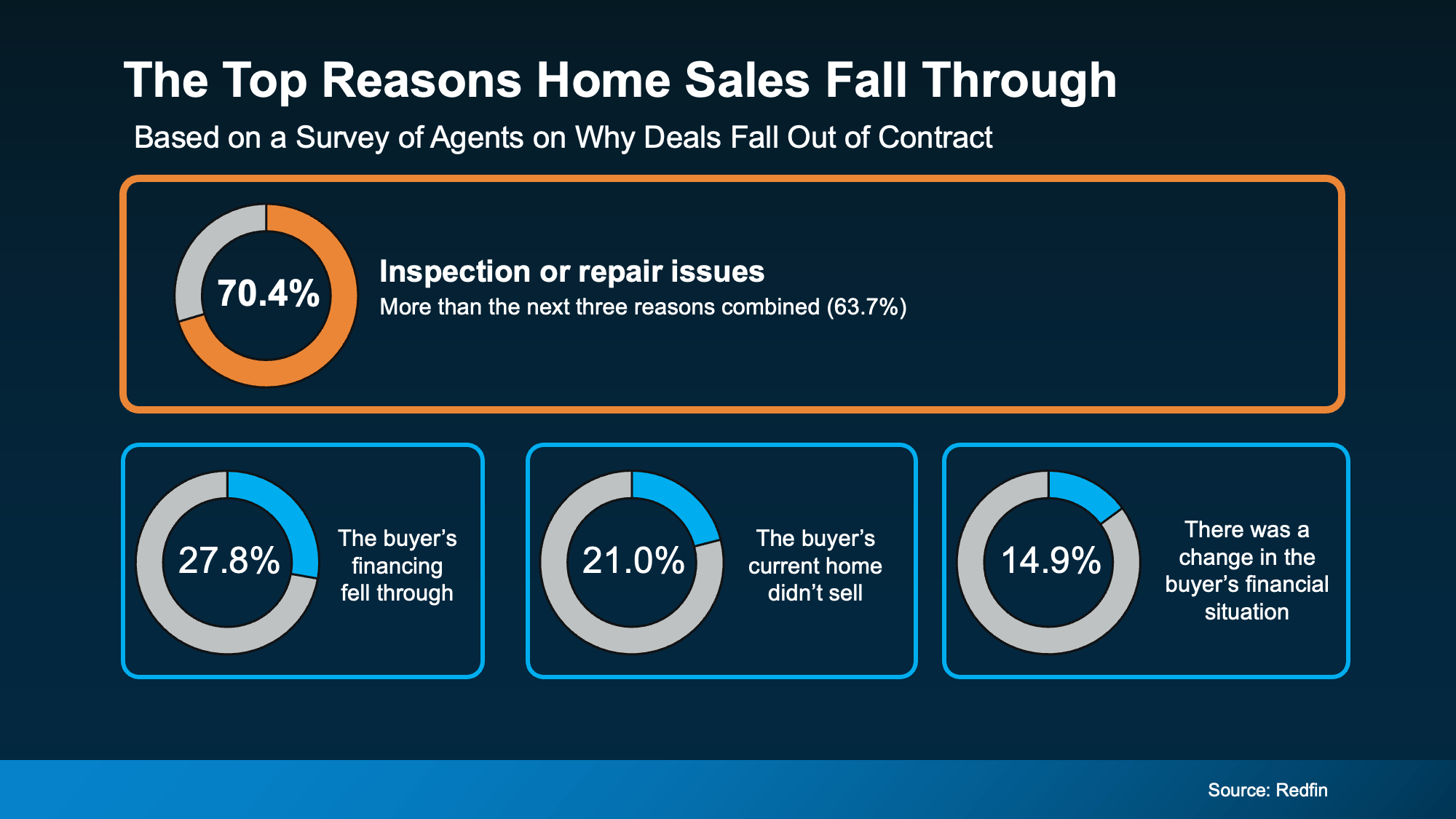
One of the biggest trouble spots is the home inspection.
A buyer’s inspector could uncover an aging roof, plumbing problem, electrical issue, foundation concern, water damage, or another unexpected repair. Suddenly, the buyer may ask for repairs, a credit, or a price reduction.
And if the issue is serious enough—or the buyer and seller can’t agree—the deal could be at risk.
Other common reasons a transaction can hit the brakes include:
- The buyer’s financing falls through. Pre-approval is important, but it isn’t the same as final loan approval. Changes in income, employment, debt, credit, or other financial circumstances can create problems.
- The buyer’s current home doesn’t sell. Some buyers need the proceeds from their existing home before they can purchase yours. If their sale gets delayed, yours could be delayed too.
- The buyer’s financial situation changes. A new loan, large purchase, job change, or additional debt could affect their ability to qualify for financing.
- Inspection and repair negotiations go sideways. Even when a buyer remains interested, disagreements over repairs or credits can create friction and potentially derail the transaction.
Think of the closing process like a bridge. Your offer gets you onto the bridge, but there are still several steps before you reach the other side.

The Smartest Sellers Prepare Before the Offer Arrives
Here’s where having an experienced real estate agent can make a real difference.
Instead of waiting for a buyer to uncover every potential problem, you can take a proactive approach.
One strategy worth discussing with your agent is a pre-listing home inspection.
That means having your home inspected before putting it on the market.
Why do this?
Because surprises are easier to handle when you’re not already under contract.
If the inspection reveals an issue, you have time to decide what makes sense. Maybe you fix it. Maybe you disclose it. Maybe you get an estimate so you understand the potential cost.
Either way, you’re making the decision on your timeline—not while a buyer is waiting for an answer and your closing date is approaching.
Don’t Just Look at the Highest Offer
Here’s another mistake sellers can make: assuming the highest offer is automatically the best offer.
It isn’t always.
Imagine you receive two offers. One is slightly higher but comes with several contingencies and a complicated timeline. The other is a little lower but has fewer conditions and a cleaner path to closing.
Which one would you choose?
That’s where your agent’s guidance becomes valuable.
A strong offer should be evaluated as a whole package, not just by the number at the top of the page.
Your agent can help you look at:
- Purchase price
- Financing
- Down payment
- Inspection contingencies
- Appraisal contingencies
- Sale-of-home contingencies
- Closing timeline
- Earnest money
- Other terms that could affect the transaction
Sometimes, certainty is worth more than an extra few thousand dollars on paper.
Preparation Can Put You Back in the Driver’s Seat
Selling a home will always come with some uncertainty. You can’t control the buyer’s job, their lender, their finances, or whether another transaction closes on time.
But you can control how prepared your home is before you list.
That’s the difference between reacting to problems and getting ahead of them.
A pre-listing inspection may not be the right move for every seller. Your local market, the age and condition of your home, and buyer expectations all matter.
That’s why it’s important to talk with your real estate agent before spending money on repairs or inspections.
The goal isn’t to make your house perfect.
The goal is to reduce surprises, understand your options, and create the smoothest possible path from listing to closing.
Your Agent Should Be More Than a Door Opener
A great real estate agent doesn’t disappear after the offer is accepted.
They help you navigate the entire transaction—from preparing your home and reviewing offers to managing negotiations, deadlines, inspections, and the many moving pieces between contract and closing.
Think of your agent as the air-traffic controller for your sale. There are a lot of planes in the sky, and the goal is to make sure everything lands safely and on schedule.
That experience matters.
Bottom Line: Don’t Leave Your Closing to Chance
Most home sales make it to the closing table. But the best way to protect your sale is to identify potential problems before they become expensive surprises.
Get prepared. Understand your home’s condition. Review offers beyond just the price. Pay attention to contingencies. And work with an agent who knows how to keep the transaction moving.
Ready to sell your home and want a plan before you list?
Call or text us at 855-935-MORE. Let’s talk about how to prepare your home, evaluate your options, and create a strategy designed to get you confidently from listing day to closing day.
Check out this article next