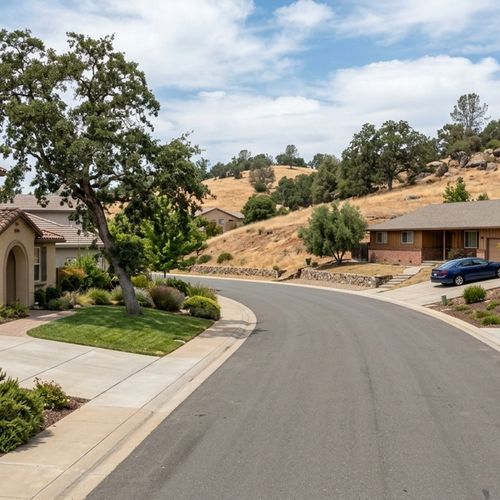


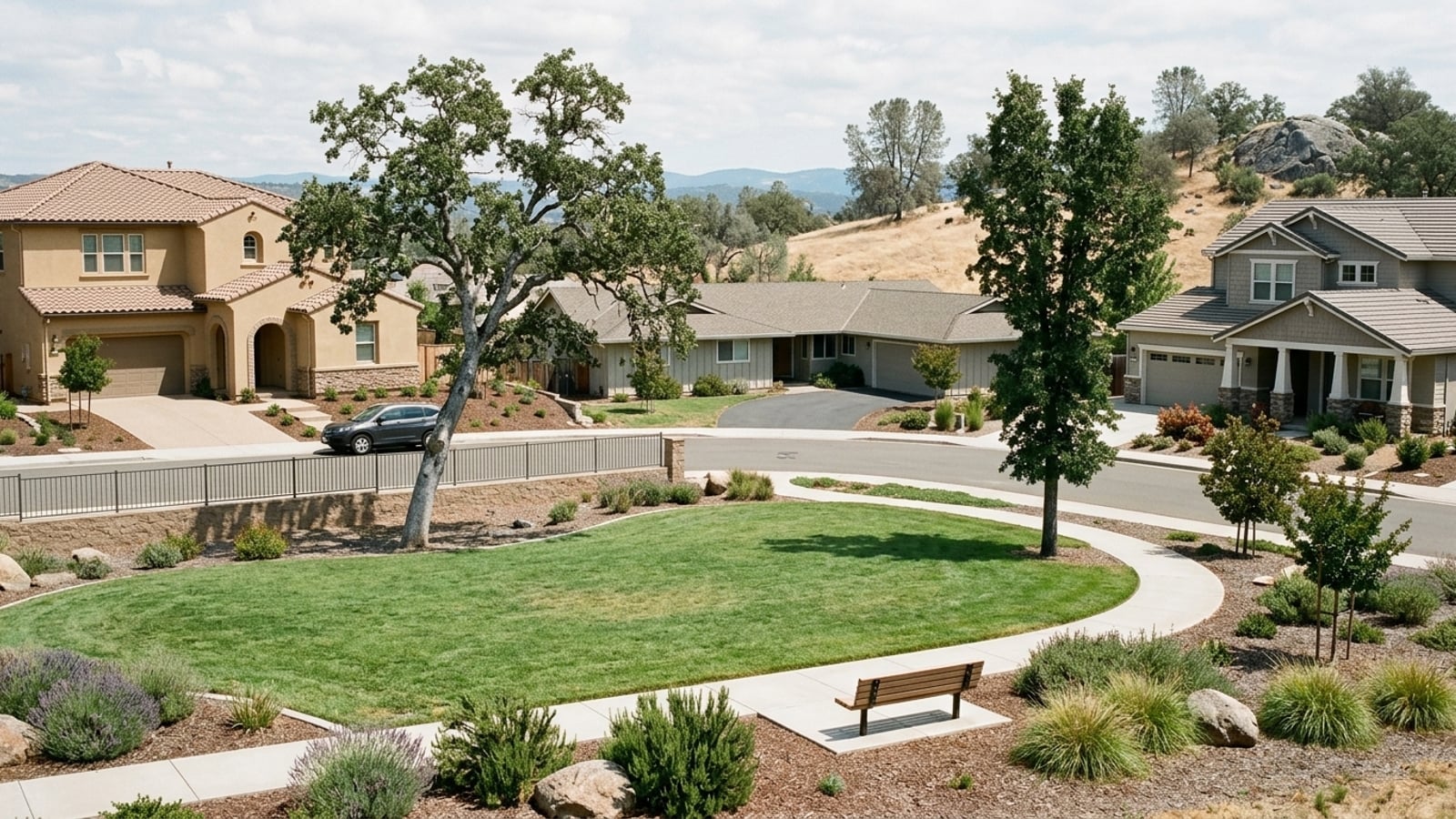
The market for buying a home in El Dorado Hills doesn't behave like the rest of the Sacramento metro. The regional median sale price runs around $595,652, but homes here typically move in the $875,000 to $965,000 range - a significant step up. This unincorporated community of about 48,070 residents sits at the western edge of El Dorado County, and its layout reflects a deliberate master-planned design that dates back to the early 1960s.
Instead of a standard street grid, the area is carved into named villages and subdivisions. That structure shapes everything about how you search here - what you find, what you pay, and how long your commute takes. Buyers who understand the village system before they start looking save themselves a lot of confusion later.
How El Dorado Hills is Organized
The master plan relies on named villages rather than conventional neighborhood blocks. Developers broke ground on the original villages in the 1960s, and the community has expanded outward in waves ever since. Real estate records now show as many as 53 distinct named villages and neighborhoods across the area.
That clustering matters. Housing styles and property ages tend to group together - older, smaller tract homes sit close to the main highway corridors, while gated communities with newer construction push up into the foothills. If you know what era of home you want, the village map points you toward it.
The Map and Layout of the Villages
El Dorado Hills sits roughly 30 miles east of downtown Sacramento along U.S. Route 50. Folsom Lake forms the northern boundary - a natural edge that shapes both lot orientations and property values in the villages closest to the water. Commuters rely on Route 50 to reach the broader Sacramento metro, so where your village falls relative to that highway matters more than it might seem.
The northern sections near the lake hold areas like Lake Forest Village, which absorbed older tracts including Lake Hills Estates. Newer, larger developments occupy the central and southern hillsides. Drive the northern villages at rush hour before you fall in love with one - getting from the northernmost points down to the highway adds real time to a daily commute.
Sacramento and El Dorado County Context
You're entering a market that outpaces the regional median by a wide margin. The broader Sacramento metro area recently saw homes selling in about 33 days, with 2.7 months of supply available. El Dorado Hills properties have historically taken longer - past data shows an average of 63 days on the market - but the price points are considerably higher.
Metro inventory sits around 5,150 available homes, with El Dorado Hills representing a smaller, higher-priced slice of that total. Sacramento area homes recently showed an average sale-to-list ratio of 99.26%, and nearly 29% of homes sold above list price. Get your financing in order before you start touring.
Home Types and Price Ranges by Area
The $875,000 to $965,000 median is a useful anchor, but it flattens a lot of variation. Luxury properties in specific subdivisions routinely reach $1.1 million to $2 million. The two biggest price drivers are the age of the home and the size of the lot.
Single-family detached homes dominate the inventory. Attached homes, condos, and townhouses exist but are concentrated near commercial centers - they're the exception, not the rule. The community's development timeline gives you a reliable guide to where different property types live.
Established and Historic Subdivisions
The original 1960s through 1980s villages - Stonegate, Ridgeview, Saint Andrews, Crown, Governors, Franciscan, and Marina - represent the foundational layer of the community. Stonegate sits close to the freeway and features the older, smaller tract homes that tend to anchor the lower end of the local price spectrum. Mature trees and established landscaping come with the territory in these areas.
Highland View also dates to the 1980s but occupies a different category. It contains some of the area's original luxury homes, built on larger lots, and it still holds its own against newer construction. If 1980s or mid-century architecture is what you're after, these foundational subdivisions are where to focus.
New Construction and Master-Planned Communities
The 1990s brought a different scale of development. Serrano, developed by Parker Development Company starting in 1995 across 3,500 acres, is the largest of these projects - a full master-planned community with tract homes, custom builds, and luxury estates that regularly exceed $2 million.
Blackstone, The Promontory, and Francisco Oaks followed in the same mold: modern floor plans, homeowner association rules, updated infrastructure. If you want recent construction or are holding out for something brand new, you'll spend most of your time in these eastern and southern villages.
Specific Neighborhood Profiles
Every village listing in the MLS will name the subdivision, so you need to know what those names mean before you start clicking through properties. Location, construction era, and proximity to major roads are the three variables that differentiate one village from the next.
The northern villages sit closer to the water and recreational access. The southern communities trade that for faster highway access. Both are worth a windshield tour at different times of day - traffic patterns and road layouts inside these subdivisions vary more than you'd expect.
Folsom Lake and Marina Areas
The lake-adjacent villages include Marina Village, Marina Hills, and Lake Forest Village. Lake Forest Village is itself an umbrella for older tracts - Waterford, The Summit, Green Valley Hills, Winterhaven, Marina Woods, and Windsor Point all fall within it. Homes in The Summit reach into the luxury tier, putting them in the same conversation as Serrano.
Access to Folsom Lake State Recreation Area is the obvious draw. The housing stock here runs from mid-century builds to expansive custom homes with water or foothill views, so the price range within these villages is wider than it looks from the outside.
Central and Southern Villages
Pull back from the lake and you'll find Fairchild, Sterlingshire, Highland Hills, and Bridlewood - a mix of 1990s construction and newer infill. Hills of El Dorado, Woodridge, and Laurel Oaks push further south, with relatively direct routes down to Route 50.
Bass Lake Village and Crown Valley add options on the eastern side. Across these central and southern zones, the housing stock is predominantly residential, with commercial amenities concentrated near the highway interchanges.
Local Market Data and Amenities
The Sacramento metro moves fast - nearly 29% of homes have recently sold above list price. If you're serious about a property in El Dorado Hills, you need financing ready before you walk through the door, not after.
Research goes beyond purchase prices. Because El Dorado Hills is unincorporated, services run through El Dorado County or specific local districts rather than a city government. School boundaries and service district lines are set by street address, and they matter.
School Districts Serving the Area
Three K-8 districts serve the community: Buckeye Union Elementary School District, Rescue Union Elementary School District, and Latrobe School District. Latrobe covers only a small portion of the census-designated place. Don't assume your address falls where you think it does - check the official attendance-zone maps, because boundaries are tied to exact street addresses and can shift.
High school students fall under the El Dorado Union High School District, which operates four comprehensive high schools. Oak Ridge High School is located directly within El Dorado Hills.
Reviewing Local Crime Data
If you want to look at incident data before making an offer, go directly to the El Dorado County Sheriff's Office. Under Sheriff Jeff Leikauf, the department provides an online Crime Mapping tool on its official website.
The county also uses the CitizenRIMS portal for public activity logs and CrimeGraphics, a GIS-based platform that integrates with the Sheriff's dispatch system. You can pull real-time incident and arrest data for specific streets and villages - which is a more useful exercise than reading generalized summaries.
Frequently Asked Questions
What neighborhoods and communities are in El Dorado Hills, CA?
The community contains up to 53 named villages. Original 1960s areas include Ridgeview, Park, Saint Andrews, Crown, and Governors. Newer master-planned communities include Serrano, Blackstone, and The Promontory.
What do homes cost across El Dorado Hills's neighborhoods?
Recent data shows the median home sale price ranges from roughly $875,000 to $965,000. Older tract homes in areas like Stonegate represent the lower end, while luxury properties in Serrano or The Summit can exceed $1.1 million to $2 million. The broader Sacramento metro median sits lower, around $595,652.
What school districts serve El Dorado Hills's neighborhoods?
The area is served by the Buckeye Union Elementary, Rescue Union Elementary, and Latrobe K-8 school districts. High school students attend the El Dorado Union High School District, which includes Oak Ridge High School located in town.
How do I find homes for sale in a specific El Dorado Hills neighborhood?
Work with a local agent who has access to the regional Multiple Listing Service. Properties are listed by their specific village names, so an agent can set up targeted alerts for subdivisions like Highland View or Lake Forest Village.
What should I know about Mello-Roos taxes and HOA fees when buying a home in El Dorado Hills?
It depends entirely on the village. Newer developments like Serrano and Blackstone typically carry strict homeowner association rules and monthly fees. Ask your agent to pull the specific tax and HOA documents for any property before you write an offer - not after.
How do El Dorado Hills neighborhoods compare to other Greater Sacramento suburbs like Folsom or Granite Bay?
El Dorado Hills shares a border with Folsom Lake but runs on a village-based master plan rather than a city grid. Median prices sit well above the overall Sacramento regional median of $595,652. The area is also unincorporated, which means municipal services are handled by El Dorado County rather than a city government.
Check out this article next