


Looking for a home with potential? Download the Made 4 More app for accurate listings, better deals, and no hidden fees or sold personal information. Start your search today!
Before you give up on homeownership, here’s something worth considering: What if the home you’ve been overlooking is actually your best opportunity?
Fixer-uppers aren’t everyone’s first choice. After all, who wouldn’t love a beautiful kitchen, updated bathrooms, and everything ready for move-in day? But if you’re willing to roll up your sleeves and see the potential behind outdated cabinets or worn-out flooring, a home that needs a little TLC could open the door to homeownership for less.
And the best part? You get the opportunity to turn someone else’s outdated property into a home that reflects your style.
Let’s look at why buying a fixer-upper could be a smart move.
1. Pay Less Upfront and Get More Home for Your Money
Let’s talk about the biggest advantage: the price.
Homes that need repairs or cosmetic updates typically attract fewer buyers. That can mean less competition and a lower asking price compared to similar move-in-ready properties.
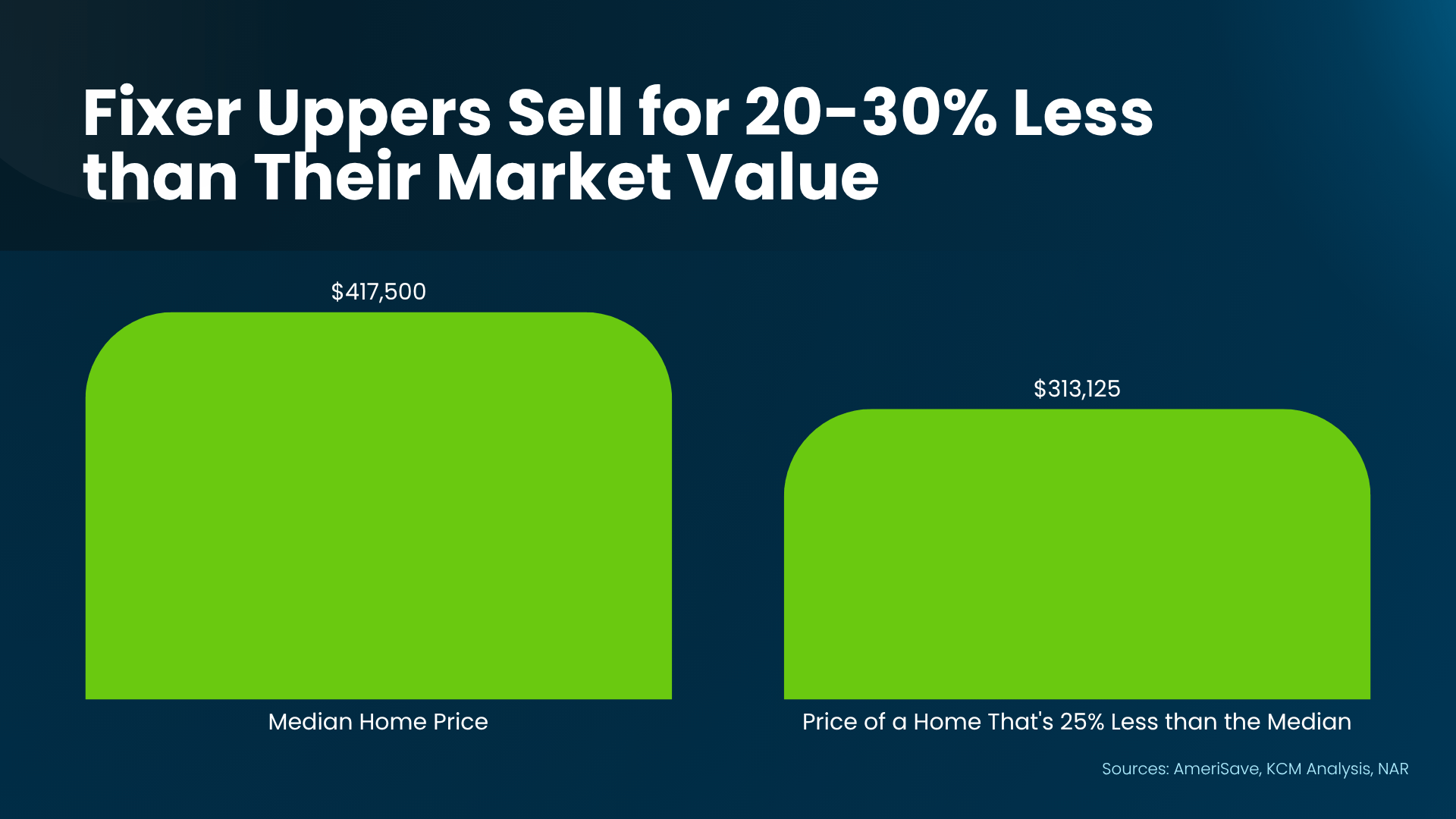
According to AmeriSave, fixer-uppers can sell for 20% to 30% below their estimated market value. That’s potentially a huge difference!
Think about what you could do with those savings. Instead of stretching your budget to purchase a fully renovated home, you could buy a property at a lower price and gradually invest in the improvements that matter most.
Outdated kitchen? Update it later. Old flooring? Replace it when the budget allows. You’re not necessarily required to complete every project before moving in.
The key is knowing what you’re getting into. Repair costs can add up quickly, so schedule a professional inspection, get contractor estimates, and establish a realistic renovation budget before making an offer.
A lower purchase price is only a win if the numbers still make sense after repairs.

2. Finance the Home and Renovations Together
Worried about buying a home and then having to pay thousands of dollars in renovation costs?
Here’s some good news: You may not have to pay for everything out of pocket.
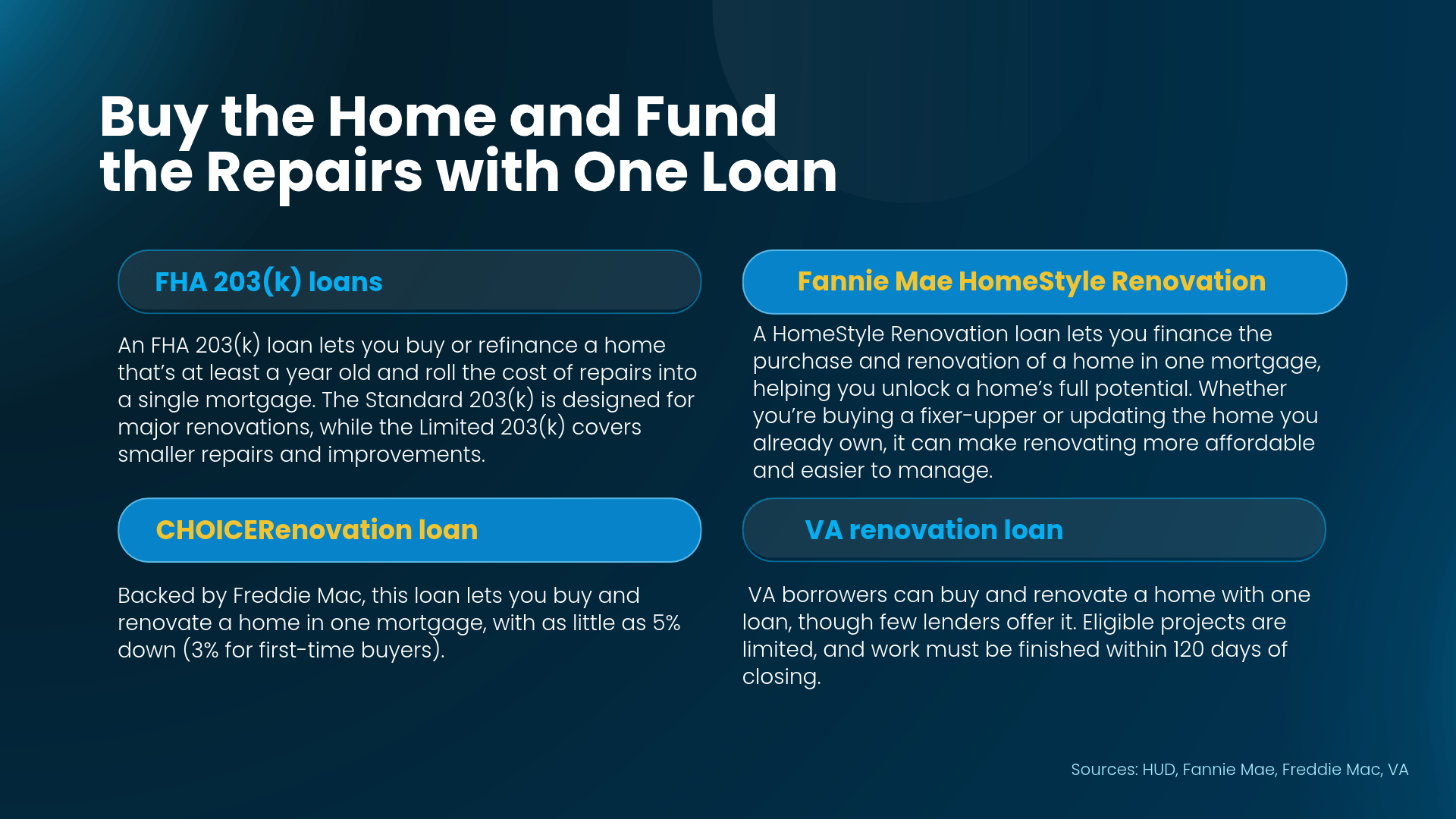
Certain renovation mortgage programs allow qualified buyers to finance both the home purchase and eligible improvement costs through one loan.
Some options worth exploring include:
- FHA 203(k) Loan: Allows eligible buyers to finance a home purchase or refinance along with qualifying renovations.
- Fannie Mae HomeStyle Renovation: Provides financing for eligible home improvements through a conventional mortgage.
- Freddie Mac CHOICERenovation: Offers financing options for eligible renovations and repairs.
- VA Renovation Loans: May be available to eligible veterans and service members through participating lenders.
Each program comes with different requirements, loan limits, and qualifying conditions. Not every lender offers every option, either.
Your best move? Talk with a trusted mortgage professional before you start house hunting. They can help you understand your financing options and determine how much you can comfortably spend on both the property and its improvements.
3. Look Into Local Renovation Incentives
Here’s an opportunity many buyers overlook: Local government programs.
Depending on where you’re buying, certain cities and counties may offer financial assistance, rehabilitation grants, or property tax incentives for qualifying home improvement projects.
These programs can vary significantly by location, income requirements, property type, and renovation scope.
If you’re researching opportunities in the Sacramento region, start by checking your local city or county government’s official website.
Search for terms like:
- Home rehabilitation programs
- Property tax incentives
- Housing repair assistance
- Home improvement grants
You might discover programs that could help make your renovation plans more affordable.
Just remember to verify eligibility requirements and deadlines before counting on any assistance.
4. Know What to Fix First
Once you’ve found the right property, don’t rush into every renovation project at once.
Start with the improvements that protect the home and make it safe and functional.
Here’s a practical order to consider:
- First: Essential repairs. Address roofing, plumbing, electrical, foundation, and safety concerns.
- Second: Functional improvements. Focus on heating, cooling, insulation, windows, and other essential systems.
- Third: Cosmetic upgrades. Move on to flooring, paint, kitchen updates, bathroom improvements, and curb appeal.
You don’t need a picture-perfect home overnight.
Create a renovation timeline, prioritize your projects, and work within a budget that doesn’t put your finances under pressure.
Remember, the goal isn’t to create the most expensive house on the block. It’s to create a home that works for you while making smart financial decisions.
The Bottom Line: Your Dream Home Doesn’t Have to Be Perfect on Day One
If move-in-ready homes keep stretching beyond your budget, don’t overlook the possibilities of a fixer-upper.
A property that needs some attention could offer a lower purchase price, less competition, renovation financing opportunities, and the chance to build a home around your lifestyle.
Your dream home might not be the one with the perfect countertops. It might be the one where you can see what’s possible.
Call or text Made 4 More at 855-935-MORE. Let’s get you one step closer to homeownership!
Check out this article next