


Ready to turn your homeownership goals into reality? Download the Made 4 More app to explore accurate listings, discover potential deals, and make smarter homebuying decisions—without your information being sold. Start your home search today and take the next step toward owning a home! 🏡
Buying a home can feel like a big risk right now. Groceries cost more, mortgage rates aren’t where you’d like them to be, and economic uncertainty can make committing to a monthly payment feel overwhelming.
So, is buying a home still worth it?
For many homeowners, the answer is yes.
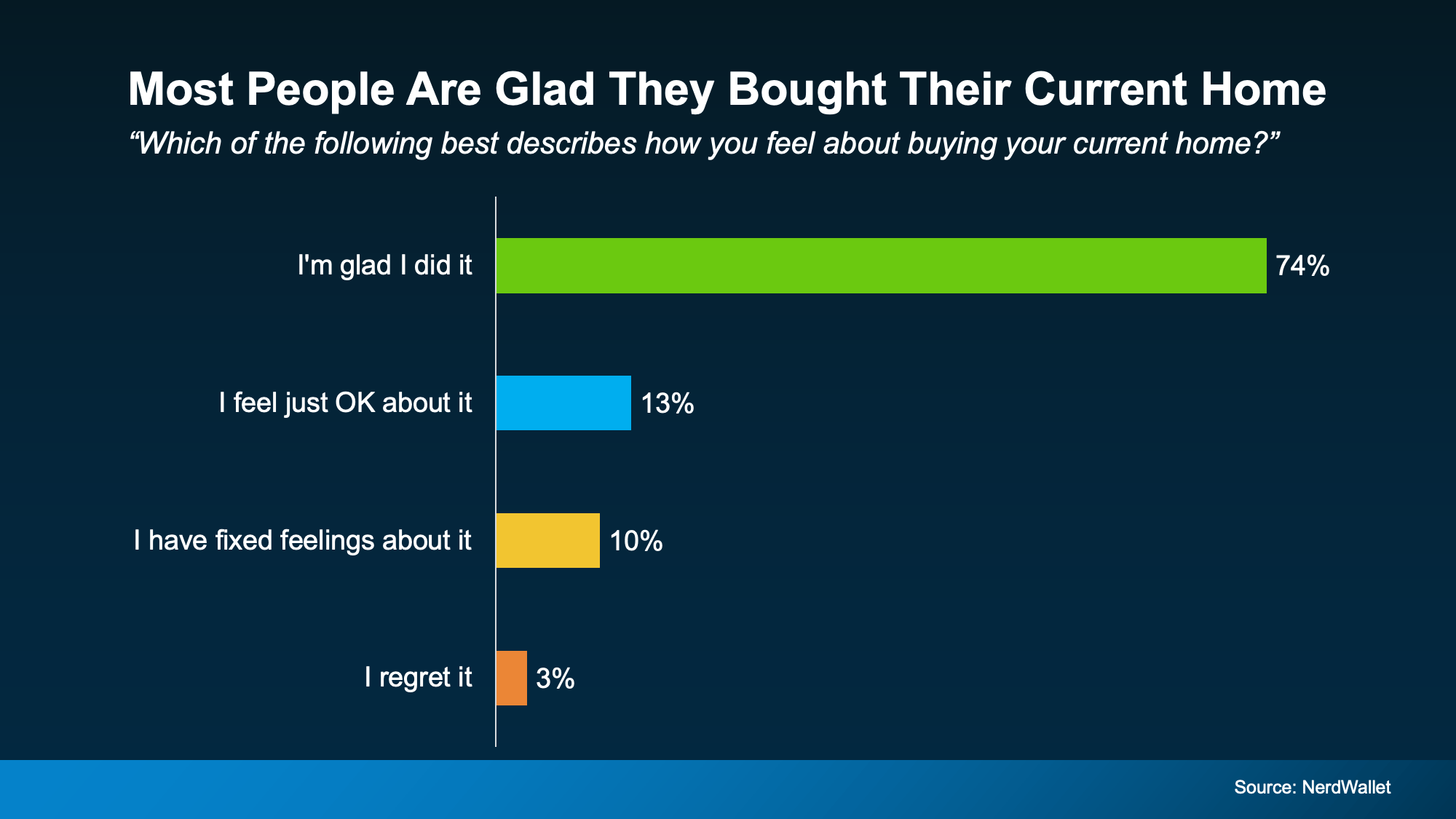
According to a survey by NerdWallet cited in the original report, 74% of recent homebuyers said they were glad they purchased their current home, while only 3% regretted their decision.
That’s a powerful reminder that even when the market feels uncertain, homeownership can still offer something renters often miss: the opportunity to build equity, create stability, and invest in your future.
Of course, buying a home isn’t the right move for everyone. But before you decide to wait indefinitely for lower rates or cheaper prices, let’s look at the bigger picture.

1. Stop Waiting for the Perfect Market
If you’re waiting for mortgage rates to hit the perfect number or home prices to drop at exactly the right time, you might be waiting longer than you think.
Why? Because nobody can predict the housing market with perfect accuracy.
Mortgage rates change. Home prices fluctuate. Competition comes and goes. And while you’re waiting for the stars to align, you could be missing opportunities that fit your budget today.
Think of buying a home like planting a tree. You don’t plant it expecting a full-grown tree tomorrow. You give it time to grow.
Homeownership is often a long-term decision, not a short-term bet on the market.
Instead of trying to predict the perfect moment, focus on what you can control: your budget, your savings, your credit, your monthly payment, and how long you plan to stay in the home.
When the numbers make sense for your situation, you may be in a better position to move forward with confidence.
2. Your Home Could Help You Build Wealth Over Time
One of the biggest financial benefits of homeownership is equity.
Equity is the difference between what your home is worth and what you still owe on your mortgage. As you pay down your loan, your ownership stake can grow. If your property increases in value, your equity may grow even faster.
And history offers some perspective.
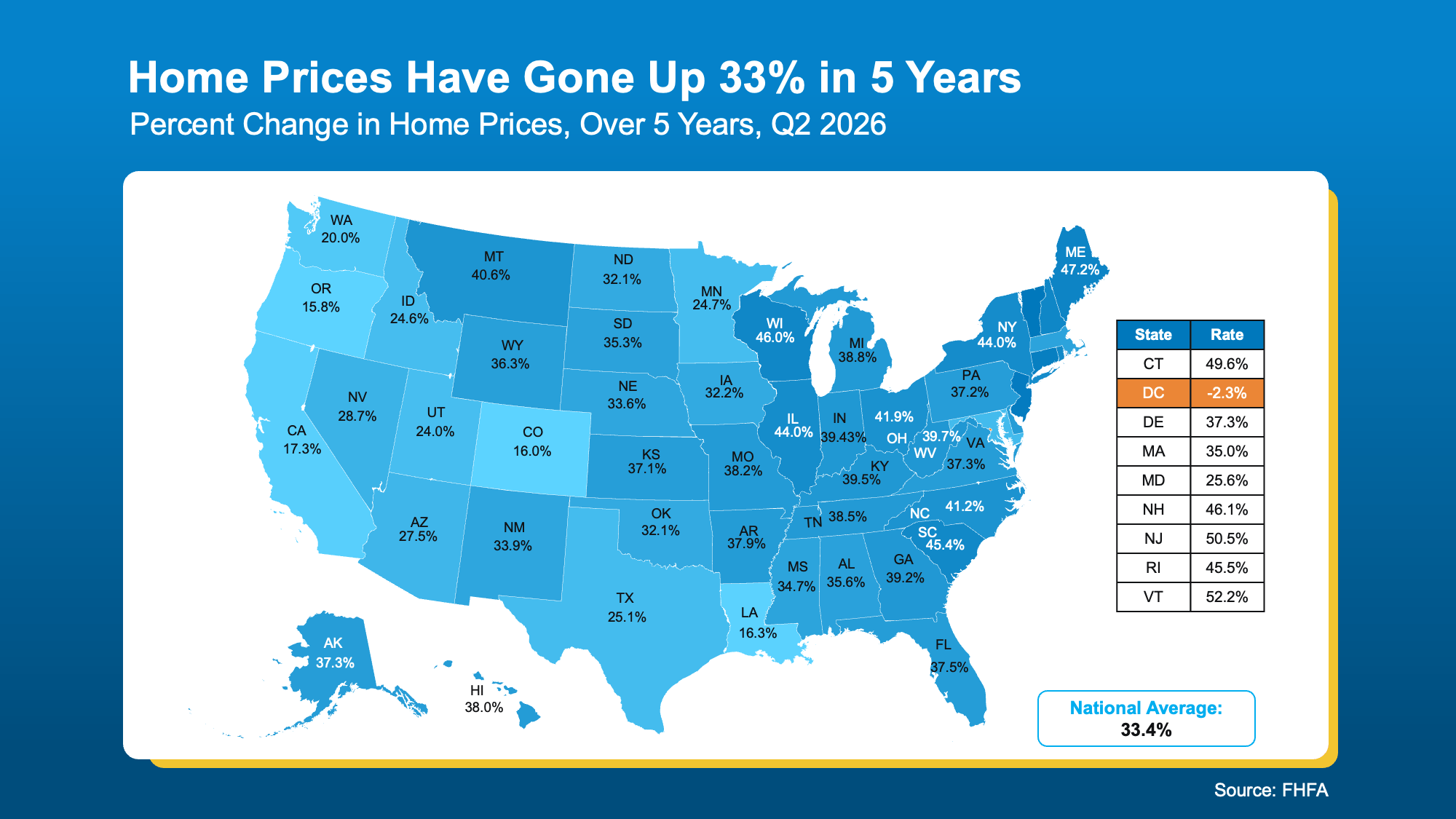
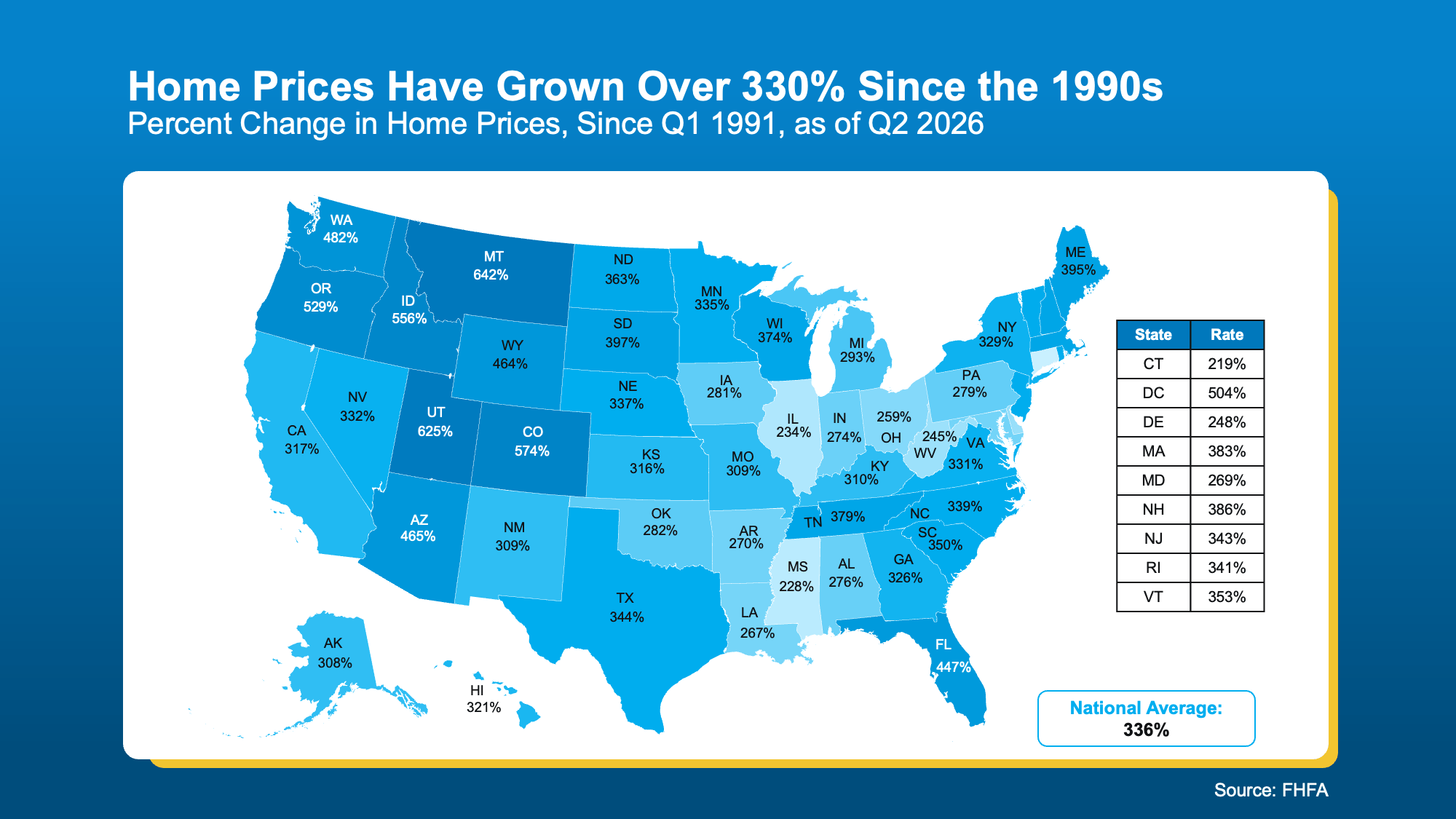
According to the Federal Housing Finance Agency (FHFA) figures cited in the original report, U.S. home prices increased approximately 33.4% over five years and 336% since 1991.
Those figures illustrate how significantly home values have grown over the long term. However, appreciation varies by location and time period, and past performance doesn’t guarantee future results.
So, what does this mean for you?
Imagine buying a home that fits your budget and staying there for several years. As you make mortgage payments and potentially benefit from appreciation, you may build equity that could help fund a future move, support other financial goals, or give you more options later in life.
Your home can be more than a place to live. It can become part of your long-term financial plan.
Just remember: equity isn’t the same as cash in your bank account. Selling costs, mortgage balances, market conditions, and other expenses affect how much you ultimately receive.
3. The Longer View Can Change Your Perspective
It’s easy to focus on what the housing market is doing this month. But what happens when you look five, ten, or twenty years ahead?
Home prices don’t rise in a straight line. Some markets experience corrections, and some homeowners may see their property values decline for a period of time.
That’s why your timeline matters.
If you buy a home you can comfortably afford and plan to stay for several years, you may have more time to weather market fluctuations than someone who needs to sell quickly.
Longer ownership can also give you more time to pay down your mortgage and potentially build equity.
Still, there are no guarantees. Job changes, unexpected expenses, maintenance costs, and personal circumstances can affect whether staying in a home remains practical.
The goal isn’t to buy simply because prices have historically risen. It’s to choose a property and payment that work for your life, with a plan that can withstand reasonable financial setbacks.
A smart home purchase starts with affordability—not fear of missing out.
4. Home Equity Could Open Doors to Your Next Move
What if your first home isn’t your forever home?
Maybe your family grows. Perhaps you want a larger yard, a different neighborhood, or a home that better fits your lifestyle. Eventually, you might even decide to downsize.
The equity you build could help make that next move possible.
When you sell, your proceeds may provide funds for the down payment on another property, depending on your remaining mortgage balance, selling expenses, and the price you receive.
For example, if your home gains value while you pay down your mortgage, you may have more financial flexibility when it’s time to move. You could use some of those proceeds toward your next home instead of starting from scratch.
Of course, your actual results will depend on the market and your financial circumstances.
But this is one reason many people view homeownership as a journey rather than a single transaction.
The home you buy today could help create options for tomorrow.
5. Buying Isn’t Always Better Than Renting—But Compare the Full Picture
Let’s be honest: homeownership comes with costs beyond the mortgage.
You’ll need to consider property taxes, homeowners insurance, maintenance, repairs, utilities, and possibly HOA fees. You’re also responsible for unexpected expenses that a landlord might otherwise handle.
Renting, on the other hand, can offer flexibility and fewer maintenance responsibilities. Depending on your local market, renting may even be more affordable in the short term.
That’s why the decision shouldn’t come down to whether renting is “throwing money away” or whether buying is always a better investment.
Instead, compare the complete cost of each option.
Ask yourself:
- Can I comfortably afford the monthly payment and other ownership costs?
- Do I have enough savings for closing costs, moving expenses, and emergencies?
- Am I likely to stay in the area long enough for buying to make sense?
- Would purchasing leave me financially stretched?
- Does owning a home fit my personal and financial goals?
If buying would drain your savings or leave you struggling to cover everyday expenses, waiting may be the smarter choice.
But if you’re financially prepared, exploring your options could reveal opportunities you haven’t considered.
The Bottom Line: Think Beyond Today’s Headlines
Many homeowners are glad they bought because homeownership can offer stability, personal freedom, and the potential to build equity over time. The key is understanding your finances, choosing a home that fits your needs, and having a realistic plan for the future.
You don’t need to predict the housing market perfectly. You need to know what works for you.
Call or text 855-935-MORE to connect with Made 4 More Realty.
Check out this article next