


Don’t let outdated listings or hidden fees get in the way. Download the Made 4 More app for accurate listings, better home search data, and no selling of your personal information—so you can compare your options and make confident decisions. Get started today!
Higher mortgage rates don’t just affect buyers. They can change the entire selling strategy for homeowners, too.
When mortgage rates rise, buyers start watching their monthly payment much more closely. A home that looked affordable at one interest rate can suddenly feel out of reach when the rate moves higher. So what happens next? Buyers start looking for ways to make the numbers work.
And that’s where sellers can feel the pressure.
Today’s buyers aren’t just comparing your home with the house down the street. In many markets, they’re also comparing it with brand-new homes that come with builder incentives, lower mortgage rates, closing-cost assistance, and other perks.
So if you’re thinking about selling, the question isn’t simply, “What is my home worth?”
It’s also: “What will make a buyer choose my home?”
Buyers Are Shopping for Monthly Payments, Not Just Home Prices
It’s easy to focus on the price tag of a home. But buyers are often thinking about something much more immediate: What will my monthly payment be?
Higher mortgage rates can make that payment jump, even when the purchase price hasn’t changed dramatically. That means buyers may become more selective, negotiate harder, or look for sellers who are willing to help with the upfront costs.
Think of it like this: Two homes can have similar prices, but if one gives the buyer a better overall financial package, that home may get more attention.
That’s why sellers need to understand the full picture of affordability—not just the list price.

New Construction Is Giving Buyers More Options
One of the biggest changes sellers need to watch is the competition coming from new construction.
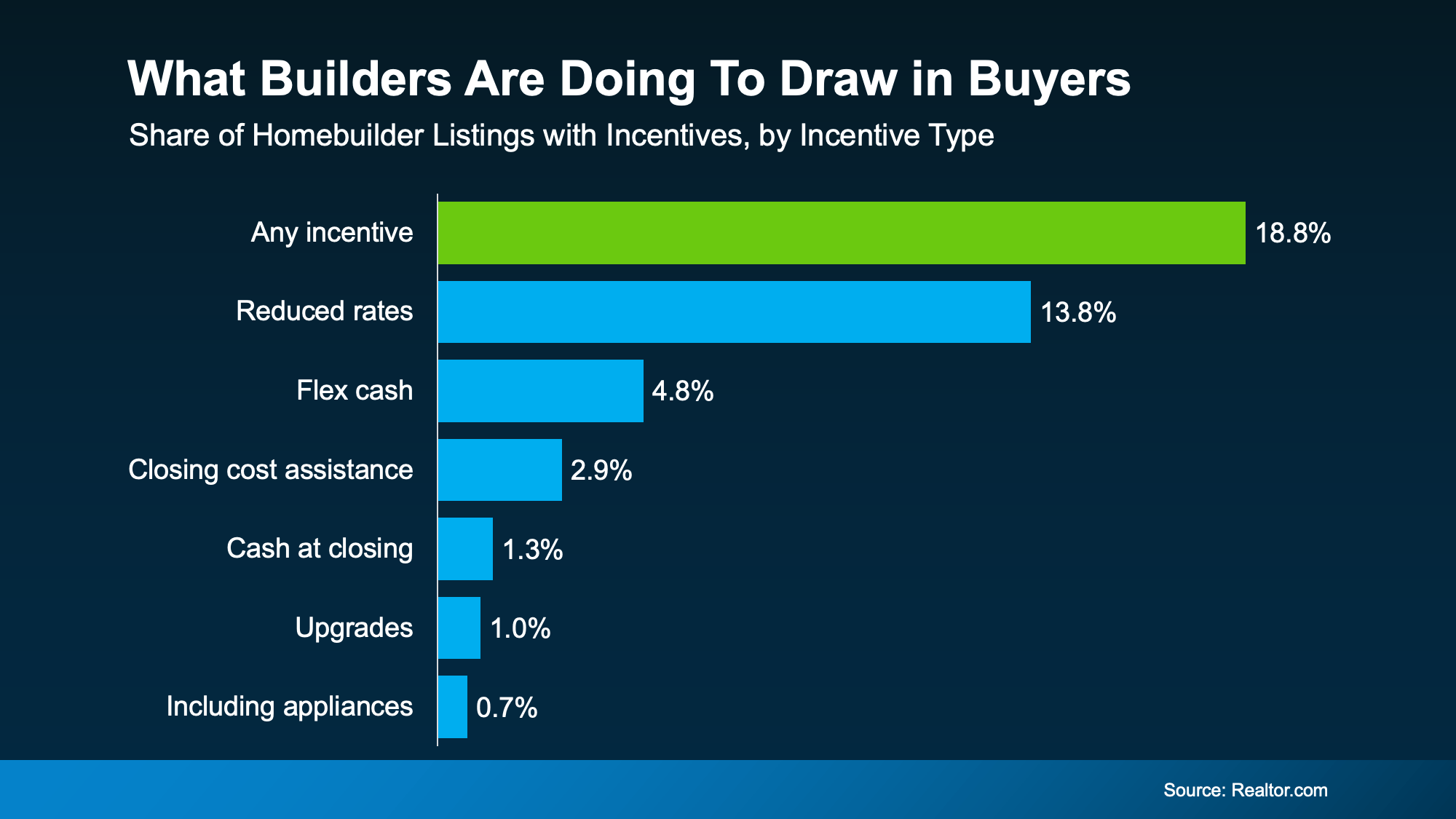
Builders have more flexibility than many individual homeowners when it comes to structuring incentives. Depending on the market, builders may offer reduced mortgage rates, closing-cost assistance, upgrades, price adjustments, or other incentives designed to make their homes easier to purchase.
For buyers dealing with higher rates, that can be a powerful selling point.
A new home might not necessarily be the better fit for every buyer, but an attractive incentive can make the monthly payment look more manageable.
That creates another question for resale sellers:
How does your home compete when a builder is offering buyers extra help?
Sellers Can Offer Incentives, Too
Here’s something many homeowners don’t realize: builders aren’t the only ones who can make concessions.
Depending on the buyer’s loan program and the terms of the transaction, a seller may be able to contribute toward certain closing costs or a mortgage rate buydown.
That doesn’t mean every seller should automatically offer a rate buydown.
Sometimes a strategic price adjustment makes more sense. In another situation, taking care of a repair could remove a buyer’s biggest objection. For someone else, contributing toward closing costs could be more valuable.
The right move depends on the property, the competition, the buyer pool, and what is happening in your local market.
There is no one-size-fits-all strategy.
Your Home Has Something a New Build May Not
This is where existing homeowners can have an advantage.
New construction may offer modern finishes and builder incentives, but your home already exists in an established neighborhood. Buyers may be getting mature landscaping, larger trees, nearby parks, established schools, shorter commutes, restaurants, shopping, community amenities, and a neighborhood with a history.
Those details matter.
If your home is close to the places buyers already want to be, that should be part of your marketing strategy.
Don’t just sell the four walls and the number of bedrooms. Sell the lifestyle that comes with the address.
What can buyers do within a few minutes of your front door? What makes the neighborhood convenient? What would they be giving up if they chose a new development farther away?
Those answers can help your home stand apart.
Pricing Matters More Than Ever
Higher mortgage rates can make buyers more sensitive to price, which means overpricing a home can create an even bigger problem.
A few years ago, sellers may have been able to test a higher price and wait. Today, depending on the market, buyers may have more options and less willingness to stretch beyond their comfort zone.
That doesn’t mean you need to slash your price.
It means your pricing strategy should be based on today’s competition and today’s buyer, not yesterday’s market.
Look at recently sold homes. Look at active listings. Study pending sales. Pay attention to new construction. Then ask the most important question:
If I were the buyer, why would I choose this home over the alternatives?
If the answer isn’t obvious, your marketing may need some work.
Small Seller Concessions Can Make a Big Difference
Sometimes the difference between a buyer saying “yes” and walking away isn’t a massive price reduction.
It could be a repair.
A closing-cost contribution.
A rate buydown.
An allowance for updates.
Or simply making sure the home is presented in a way that feels worth the price.
Think of your listing as a package. Buyers are weighing the price, condition, location, monthly payment, competition, and overall value all at once.
The goal isn’t to give everything away.
The goal is to understand which adjustment creates the most value for the buyer while still protecting your bottom line.
The Bottom Line for Home Sellers
Higher mortgage rates are changing how buyers shop. They’re paying closer attention to monthly payments, incentives, condition, location, and overall value.
Builders have responded by using incentives to make their homes more affordable. As a resale seller, you have options, too—but the right strategy depends on your specific property and local competition.
You don’t necessarily need to drop your price or offer a major concession. You need a clear understanding of what buyers want and what competing homes are offering.
Call or text Made 4 More at 855-935-MORE to get started.
Check out this article next