


🏡 Buying? Know Your Market
Different price points mean different opportunities. Download the Made 4 More app for accurate listings, better data, and no hidden fees—so you can shop smarter and find the right home with confidence.
Ask two people how the housing market is doing right now, and you might get two completely different answers.
One person might tell you homes are sitting longer, buyers are cautious, and sellers are cutting prices. Someone else might say homes are moving quickly and buyers are competing for the right property.
So, who’s right?
Both of them.
The housing market has become increasingly divided by price point. What’s happening to a home under $500,000 can look very different from what’s happening to a home priced at $750,000, $1 million, or more.
That difference matters if you’re thinking about selling.
Your price range can influence how many buyers you have, how quickly your home gets attention, how much competition you face, and ultimately how you should price and market the property.
Let’s take a closer look.
The Housing Market Isn’t Moving at One Speed
For a long time, it was easy to talk about the housing market as if it were one big machine.
Today? Not so much.
Higher mortgage rates, years of home-price appreciation, and a shortage of affordable homes have created very different experiences for buyers at different price points.
At the lower end of the market, affordability is a major roadblock. A buyer who could afford a starter home a few years ago may now find that the same type of home requires a much larger monthly payment.
That’s especially challenging for first-time buyers who don’t already have substantial home equity.
Meanwhile, higher-end buyers often have more financial flexibility. Some are bringing significant equity from a previous home, while others have stronger investment portfolios or simply more room in their budgets.
Think of it like two lanes on the same highway.
Both lanes are moving, but one may be moving a lot faster than the other.
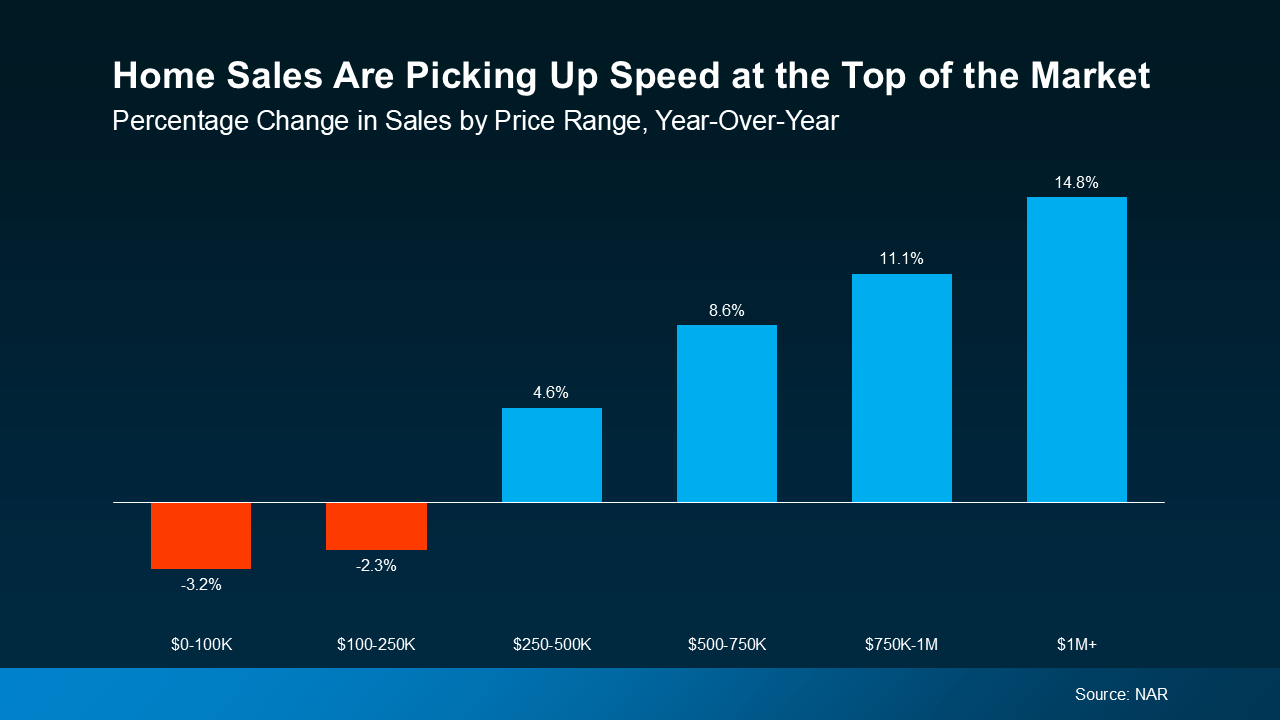

Higher-Priced Homes Are Getting More Attention
Recent national housing data shows that sales activity has been stronger at the upper end of the market, while lower-priced homes have faced more affordability pressure.
That doesn’t mean affordable homes aren’t selling. They absolutely are.
It means buyers in those price ranges have become more selective.
When a buyer has a limited budget, every dollar matters. A home that needs $20,000 in repairs, has dated finishes, or is priced even slightly above comparable homes can quickly fall off their list.
On the other hand, a well-priced home that checks the right boxes can still stand out.
That’s why sellers in the entry-level and mid-range market need to pay close attention to pricing, condition, presentation, and marketing.
You may not be able to control mortgage rates.
You can control how your home is positioned.
Why Some Homes Sell Fast While Others Sit
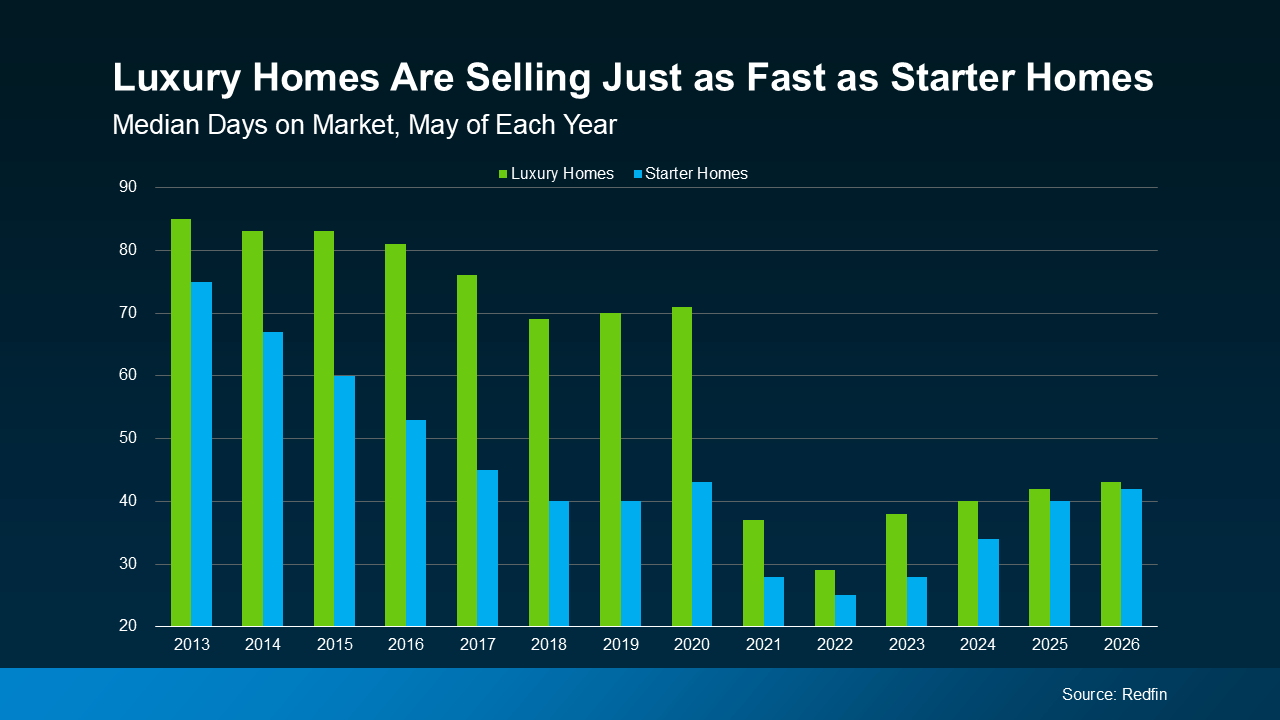
Here’s another interesting part of the market: days on market are changing too.
Luxury homes traditionally took longer to sell than starter homes. But that gap has narrowed in some markets as higher-end buyers become more active and inventory remains limited.
And when buyers have fewer choices, a great listing can create urgency.
Imagine a buyer has been searching for months. They finally find a home that checks the boxes, is priced correctly, looks great online, and is located where they want to be.
Are they going to wait around?
Probably not.
That’s when you can see stronger activity, faster offers, and sometimes multiple buyers competing for the same property.
But there’s an important lesson here:
A higher price tag doesn’t automatically mean an easy sale.
The home still has to be priced according to the market and marketed to the right audience.
What This Means If You’re Selling Your Home
If you’re selling an entry-level home, don’t panic.
Your home is still valuable. There are still buyers looking. But affordability constraints mean you need to make every opportunity count.
That starts with pricing correctly from day one.
Overpricing with the idea that you can “always come down later” can backfire. Your listing may sit, buyers may wonder what’s wrong with it, and you could end up chasing the market instead of leading it.
Presentation matters, too.
Professional photography, a clean and inviting appearance, strategic repairs, and strong online marketing can help your property compete for the buyers who are actually shopping in your price range.
If you’re selling a move-up or luxury property, the picture may look different.
There may be more financially flexible buyers in your price range, and a desirable property can attract serious attention quickly. But that doesn’t mean you should simply pick the highest number you can imagine.
The goal isn’t to be the most expensive house on the market. The goal is to be the house buyers don’t want to miss.
Your Price Point Changes the Strategy
This is where having a clear pricing strategy becomes especially important.
Two homes can be only a few hundred thousand dollars apart and still have completely different buyer pools.
A $450,000 home may compete for buyers who are extremely payment-conscious.
A $950,000 home may attract buyers who are more focused on location, lifestyle, condition, schools, space, or specific features.
The marketing strategy should reflect that.
So before putting a number on your home, ask:
Who is most likely to buy this property?
What are they comparing it against?
What would make them choose my home instead of the competition?
Those questions can be more valuable than simply looking at what your neighbor’s house sold for.
The Biggest Mistake? Treating Every Home the Same
There is no one-size-fits-all strategy in today’s housing market.
A pricing approach that works for a $400,000 home may not make sense for a $900,000 home. Likewise, the marketing that attracts a first-time buyer isn’t necessarily what will grab the attention of a luxury buyer.
That’s why understanding your local market, price point, competition, and likely buyer pool matters so much.
The national headlines can give you a general idea of what’s happening.
Your neighborhood tells you what’s happening to your house.
Bottom Line: Which Side of the Market Are You On?
The housing market isn’t simply “hot” or “cold.” It’s more like a patchwork quilt, with different sections moving at different speeds.
Some buyers are struggling with affordability. Others are actively searching and ready to move when the right home appears.
So if you’re thinking about selling, don’t get too caught up in broad headlines.
Start with your home. Your price point. Your neighborhood. Your competition.
That’s where the real story begins.
If you want to know where your home fits in today’s market and what it could take to attract the right buyers, call or text us at 855-935-MORE.
Check out this article next