


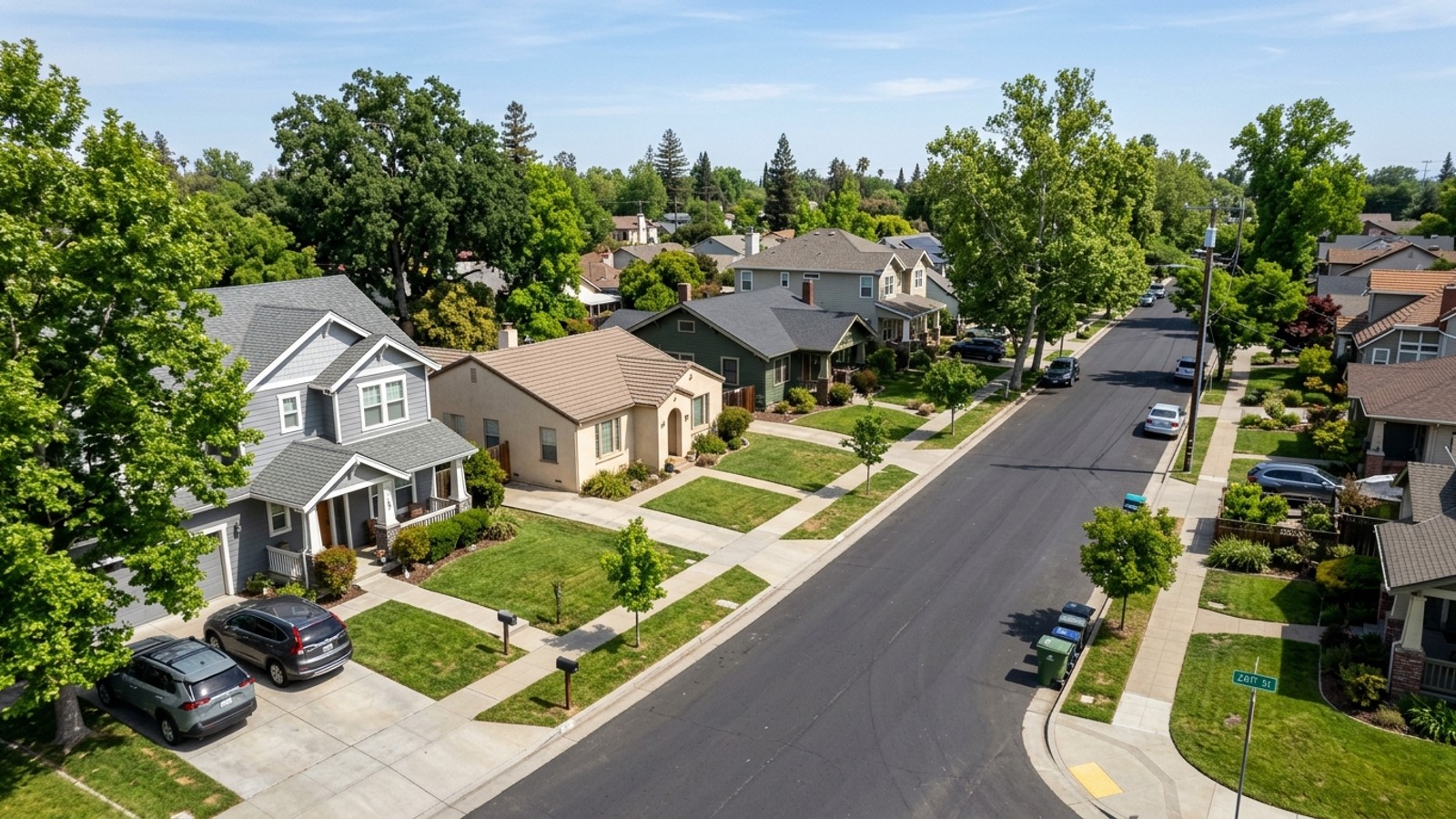
Sacramento's housing market moves at a steady pace - various types of homes in Sacramento spend roughly 33 days on the market before selling, and the median sale price for the metro area sits at approximately $598,209 as of mid-2026.
That sticker price is only part of what you'll need to budget for. Before you get keys, you're also on the hook for the fees required to fund the loan, transfer the title, and record the deed with Sacramento County. Buyers who don't plan for those costs upfront tend to feel blindsided at the closing table.
Understanding Closing Costs in California
Closing costs are the administrative, legal, and lending fees that make a real estate transaction actually happen. They go to third parties - title companies, escrow officers, local government offices, and your mortgage lender - not to the seller.
Both sides of the deal pay a share. The exact breakdown depends on local customs, what you negotiate in the purchase agreement, and the type of financing you're using.
How Closing Costs Differ From Your Down Payment
Your down payment is equity - money applied directly to the purchase price. Closing costs are a separate bill that covers the mechanics of the transaction itself. They don't reduce what you owe on the house; they're just the cost of getting the deal done.
Lenders want to see that you have enough liquid cash to handle both. You can't fold most of these fees into your down payment.
Buyer Fees Versus Seller Fees
Sellers generally handle the real estate agent commissions and certain local transfer taxes. They also often cover the owner's title insurance policy, depending on the county.
Buyers carry the costs tied to securing the mortgage and evaluating the property - appraisal fees, loan origination charges, and the initial deposits for property taxes and homeowners insurance.
Average Buyer Closing Costs in the Sacramento Area
Statewide, buyer closing costs in California typically land between 2% and 5% of the purchase price. Lender data puts the practical average closer to roughly 2.1% of the sale price once you back the down payment out.
On a median-priced Sacramento home near $598,000, that 2.1% figure works out to a little over $12,500 in transaction fees. The exact percentage shifts depending on your loan type, which lender you use, and when during the year you close.
Typical Percentage of the Purchase Price
For early budgeting purposes, 3% is a reasonable rule of thumb. If you're buying at the higher end of the market, the total dollar amount grows - but the percentage relative to price tends to edge down slightly.
Cash buyers see a meaningfully lower percentage. Without origination fees, appraisal requirements, and lender title policies in the mix, a cash transaction really does strip the closing bill down to basic escrow and recording fees.
Regional Cost Factors in Greater Sacramento
Sacramento County has its own recording fees and transfer taxes that differ from neighboring areas. And if the home sits within the City of Sacramento, there's an additional city transfer tax on top of the county charge - something buyers from outside the region don't always anticipate.
Property taxes and homeowners insurance premiums also vary by neighborhood and directly affect the prepaid portion of your closing bill. Buyers purchasing in areas with higher assessed values or specific insurance requirements will need larger escrow reserves.
Estimated Costs by Home Price Tier
Scaling the standard 2% to 5% range across different price points gives you a useful baseline for the Sacramento, CA market. No single source pins down an exact fixed dollar figure, but these estimates help you set realistic savings goals before you start making offers.
Some line items, like local transfer taxes, scale directly with the purchase price. Others, like recording fees, stay flat regardless of what you pay for the home.
Example Breakdowns from $100,000 to $600,000
On a $100,000 property, expect roughly $2,000 to $5,000 in closing costs. At $300,000, that range shifts to between $6,000 and $15,000.
For a $600,000 home - which closely mirrors the current Sacramento median - you're looking at roughly $12,000 to $30,000 in closing fees. To give you a sense of scale, just the escrow fee alone on a $600,000 purchase typically runs about $1,450.
Calculating Your Specific Baseline
Within three business days of submitting your mortgage application, your lender is required to send you a Loan Estimate. That document lays out the exact fees tied to your specific loan product and the property's purchase price - it's the most accurate cost picture you'll get until you're close to closing.
Review it carefully. Some services on that estimate - the title company, the pest inspector - you can shop around for. Taking the time to compare quotes on those can trim your total.
The Fees Buyers Pay in Sacramento County
A typical closing statement has dozens of individual line items. Knowing what each one covers helps you catch errors and spot where you might have room to save.
Most of these costs fall into four buckets: loan processing, title and escrow services, government taxes, and prepaid property expenses.
Loan Origination and Appraisal Fees
Your lender charges origination fees to underwrite and process your application. That category can include application fees, credit report pulls, and any points you pay to buy down your interest rate.
The lender also requires a professional appraisal to confirm the home's market value. You pay that fee - either upfront or at closing - so the lender knows the property provides sufficient collateral for the loan amount you're requesting.
Title Insurance Customs in Northern California
Title insurance protects against past defects in the property's legal ownership record. There's some conflict in the industry guides on this one: some sources say buyers in Northern California typically pay for both the owner's and lender's policies, while a specific Sacramento County fee chart lists the owner's title insurance as a customary seller-paid cost.
Regardless of how that shakes out for your deal, if you're financing, you'll pay for the lender's title insurance policy. That's not negotiable - it protects the mortgage company's interest in the property.
Escrow Fees and Transfer Taxes
Escrow fees go to the neutral third party who manages the funds and paperwork. In Sacramento County, buyers and sellers customarily split those fees evenly.
The county charges a documentary transfer tax of $1.10 per $1,000 of the property's value ($0.55 per $500). If the home is within the City of Sacramento, an additional city transfer tax of $2.75 per $1,000 applies, bringing the combined rate to $3.85 per $1,000. On top of that, buyers pay basic recording fees of $20 for the first page and $3 for each additional page, plus a potential $75 Building Homes and Jobs Act fee capped at $225.
Prepaids and Escrow Reserves
Your lender will require you to fund an escrow account at closing to cover upcoming property taxes and homeowners insurance - this ensures those bills get paid on time and the property stays protected.
You'll typically pay for the first full year of homeowners insurance at closing, plus a few months of property taxes to seed the reserve account. You'll also prepay the daily mortgage interest that accrues between your closing date and your first formal monthly payment.
How Buyers and Sellers Split the Bill
Local customs shape how fees get divided, but none of it is legally fixed. Everything is negotiable until both parties sign the purchase agreement.
Sacramento County has established norms that local title companies and agents use as a starting point. Understanding those norms helps you craft an offer that's realistic - and gives you a clearer sense of where you have room to push.
Customary Buyer Charges
Buyers in Sacramento customarily pay the recording fees to file the new deed with the county, along with everything tied to their mortgage - the appraisal, the credit report, the lender's title policy.
Any additional inspections you request, like a roof or sewer line check, you pay those professionals directly. And you fund your own prepaid property tax and insurance accounts.
Customary Seller Charges
Sellers traditionally cover real estate agent commissions for both sides. Per Sacramento County fee charts, they also customarily pay the owner's title insurance policy.
Sellers clear their existing liens, pay off their current mortgage, and handle their half of the split escrow fees.
Asking the Seller to Contribute
You can ask the seller to cover a portion of your closing costs - these are called seller concessions or seller credits. It's a reasonable ask, but the market context matters.
With Sacramento homes currently selling for roughly 99.2% of their list price, sellers aren't always eager to hand out large credits. You'll have better luck negotiating them after an inspection turns up needed repairs, or in exchange for offering a slightly higher purchase price.
Estimating Your Total Out-of-Pocket Expense
The earlier you get a realistic handle on your total cash requirement, the fewer surprises you'll face at the closing table. These costs need to be part of your budget before you start touring homes - not something you figure out after you're already in contract.
A few tools and strategies can help you project these expenses based on current Sacramento market conditions.
Using a Closing Cost Calculator
Online closing cost calculators let you plug in a target home price and down payment to get an estimated fee breakdown. They're a useful starting point.
For the most useful results, look for calculators that let you input local property tax rates and Sacramento County's specific transfer taxes. That said, no online tool replaces the official Loan Estimate your lender will provide once you've applied.
Adjusting for Cash Purchases
Paying cash eliminates all lender-related fees, and your total closing costs drop accordingly. No origination charges, no appraisal, no lender title policy - the bill gets considerably smaller.
You'll still need to budget for your half of the escrow fees, county recording fees, and any inspections you choose to order. Property taxes and insurance are still your responsibility, though you won't be required to fund a lender-mandated reserve account.
Ways to Lower Your Closing Bill
Some government taxes and third-party fees are fixed - you're not negotiating your way out of them. But buyers do have real options for reducing the total out-of-pocket requirement, and it's worth exploring those early rather than scrambling at the end.
Talk to your real estate agent and mortgage broker about these strategies before you're deep into a transaction.
Seller Concessions and Credits
A seller credit directly reduces the cash you need to bring to closing. The seller agrees to allocate a portion of their proceeds toward your specific loan or escrow fees.
Lenders cap how much a seller can contribute - typically between 3% and 6% of the purchase price, depending on the loan type and your down payment. Your agent can advise on whether asking for concessions makes sense given how long the property has been sitting.
Shopping for Lender Credits
You can also take a lender credit, where the mortgage company covers some or all of your closing costs in exchange for a higher interest rate over the life of the loan.
It preserves your cash today, but your monthly payment goes up. The right move depends on how long you plan to stay in the home - run the break-even math before you commit.
Asking for Fee Reductions
On certain third-party services listed in your Loan Estimate, you have the right to shop around. Getting competing quotes from title companies or pest inspectors can turn up better rates.
You can also ask your lender directly to waive or reduce specific origination or application fees. Lenders competing for your business sometimes adjust their pricing to win the loan.
Frequently Asked Questions
What is the average percentage a buyer pays for closing costs in Sacramento, CA?
Buyer closing costs in California typically range from 2% to 5% of the purchase price. Lender data suggests the practical average is closer to roughly 2.1% of the home's sale price, excluding the down payment.
Who typically pays the city and county transfer taxes in Sacramento, the buyer or the seller?
According to Sacramento County industry charts, sellers customarily pay the documentary transfer tax. The final split is always negotiable between the buyer and seller in the purchase agreement.
Are there local first-time homebuyer programs in Sacramento that help cover closing fees?
Check directly with the California Housing Finance Agency (CalHFA) or local Sacramento housing authorities for current closing cost assistance options. These agencies update their available grants and loan programs periodically.
Is it common to ask the seller for closing cost credits in the current Sacramento housing market?
With Sacramento homes currently spending roughly 33 days on the market and selling for about 99.2% of their list price, sellers may be less inclined to offer large credits upfront. Buyers can still negotiate them during the inspection phase if repairs are needed.
Can I roll my buyer closing costs into my mortgage when purchasing a home in Sacramento?
Standard purchase mortgages generally don't allow you to roll closing costs into the loan amount. You can accept a higher interest rate in exchange for a lender credit that covers those upfront fees.
When exactly do I need to wire the final funds for my closing costs during a Sacramento escrow?
Your escrow officer will provide exact instructions for wiring your final funds. Coordinate directly with the escrow company to make sure the transfer clears before the official recording date.
Check out this article next