



Download the Made 4 More app for the most accurate listings—without your info being sold.
See the real opportunities, shop smarter, and move with confidence. Get started today!
Scroll social media for five minutes and you’ll see it everywhere:
“Big investors are buying all the houses. Regular buyers don’t stand a chance.”
And if you’ve lost out on a home or two, that story probably feels true. When prices are high and inventory is tight, it’s easy to imagine hedge funds swooping in with unlimited cash.
But here’s the reality check most headlines skip: the data tells a very different story.
Let’s break it down, plain and simple
The Stat No One’s Posting on Instagram
According to John Burns Research & Consulting, large institutional investors (companies owning 100+ homes) accounted for just 1.2% of all home purchases in Q3 of 2025.
Read that again.
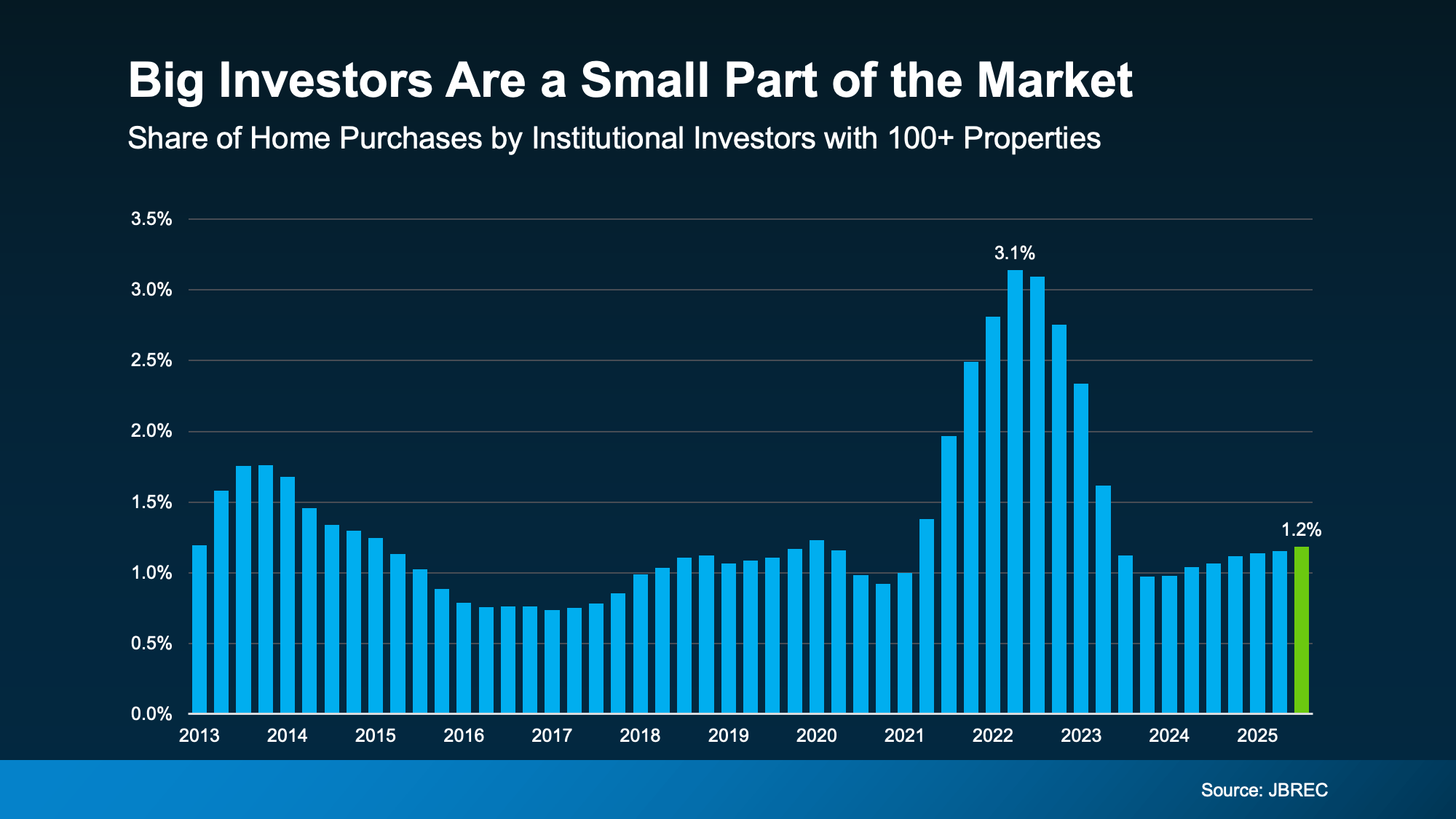

Out of every 100 homes sold, only ONE went to a big institutional investor.
Even more telling?
That number is:
- Well within historical norms
- Far below the 2022 peak of 3.1%
- Nowhere near market domination
If big investors were “buying everything,” the numbers would scream it. They don’t.
Why It Feels Like Investors Are Everywhere
So why does this myth stick around? Two big reasons:
Investor Activity Is Hyper-Local
National stats don’t always match local experiences. In certain pockets, investor activity is more visible, which can make competition feel brutal.
But nationally?
Large investors own around 1% of all single-family homes. That’s not a takeover — it’s a rounding error.
Not All Investors Are the Same
Here’s where headlines get sneaky.
“Investor” often includes:
- Wall Street firms
- Small mom-and-pop landlords
- Your neighbor with one rental
When these get lumped together, the numbers look inflated. But most investors are small, local owners, not mega-corporations with skyscrapers and spreadsheets.
The Real Issue Isn’t Investors — It’s Inventory
The bigger challenge in today’s market isn’t hedge funds. It’s:
- Years of underbuilding
- High demand
- Limited supply
Blaming big investors is easy. Fixing inventory is harder.
And when you understand that, the market starts to make a lot more sense.
What This Means for Buyers and Sellers
If you’re a buyer:
You’re not losing every home to Wall Street. Strategy, timing, and local insight matter more than ever.
If you’re a seller:
Investor headlines shouldn’t dictate your pricing or expectations. Real data should.
Context beats clickbait — every time.
Bottom Line
Big investors make noise, but they don’t make up the market.
📞 Call or text us at 855-935-MORE — sometimes one honest conversation cuts through all the online chaos.
Check out this article next